
Apple Patents a System for Placing Remote Users in Shared 3D Environments
When some people are in the same room and others are joining remotely, where do you put the remote person's avatar in a shared 3D space? Apple has a patent that answers exactly that question.
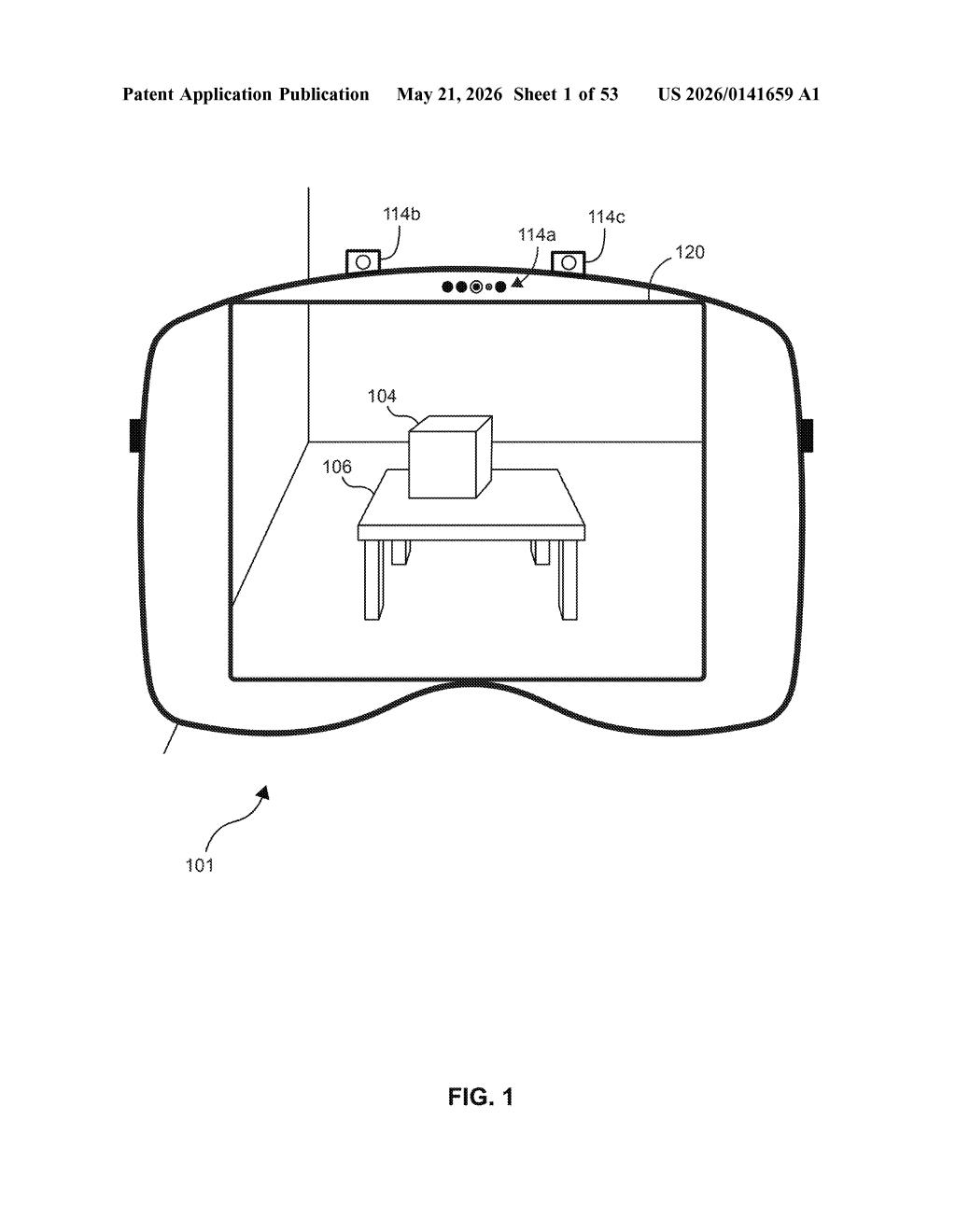
What Apple's spatial video call placement actually does
Imagine you and a colleague are both wearing Apple Vision Pro headsets in the same conference room, looking at a shared 3D model floating between you. A third person — working from home — wants to join. The question becomes: where does their virtual presence appear in your shared space?
Apple's patent describes a system that figures out the right spot for that remote user's visual representation automatically. Instead of dropping the remote person's avatar somewhere arbitrary, the system looks at where the two collocated users physically are in the room and uses those positions to calculate a sensible placement — one that feels natural relative to the shared object everyone is looking at.
The goal is to make mixed-presence meetings — where some people share a physical space and others dial in — feel less awkward and more spatially coherent. Think of it as the digital equivalent of pulling up a chair at a table that already has people sitting around it.
How Apple calculates where the remote avatar lands
The patent describes a method running on a first device (say, your Vision Pro) that is already in an active multi-user session with a collocated second device — meaning both headsets are in the same physical room and aware of each other's positions.
When a request arrives to add a non-collocated third device (someone remote), the system doesn't just slap their avatar anywhere. It uses:
- The physical location of device one in the room
- The physical location of device two in the same room
- The position of the shared object in the 3D environment
From those three data points, it calculates a placement location relative to the shared object — essentially deciding where in the virtual scene the remote user's representation should appear so it feels geometrically coherent to both in-room participants.
The result is that the remote user's avatar is presented at that derived location, anchored to the shared content rather than floating arbitrarily. This is a spatial reasoning problem: the system is doing the work of figuring out where a 'seat at the table' would logically be, given the physical arrangement of the people already there.
What this means for Vision Pro group collaboration
For Apple Vision Pro — or any future spatial computing headset — this kind of detail is critical to making mixed-presence collaboration actually usable. Right now, video calls in AR/VR can feel spatially incoherent: remote participants pop in without any sense of where they 'are' relative to shared content or to each other. A well-placed avatar makes a big perceptual difference.
This also signals that Apple is thinking carefully about hybrid group scenarios — not just one-on-one spatial calls, but situations where some users share a physical space and others don't. Getting the placement logic right is foundational to any serious enterprise or creative collaboration use case on Vision Pro or its successors.
This is a focused, well-scoped patent that solves a real UX problem in spatial computing — and it's the kind of low-glamour detail that actually determines whether a product feels polished or broken. The fact that Apple is patenting the specific logic for collocated-vs-remote placement suggests they're building out a concrete system, not just exploring the idea space. Worth tracking as Vision Pro collaboration features mature.
There are more where this came from
We read every patent application Big Tech publishes and send you the ones worth knowing. Plain English, free, every week.
Want this weekly breakdown for a company we don't cover? Patentlyze Pro →