
Apple Patents a System That Compares Your Current Route to Your Past Trips in Real Time
Apple is working on a way for your phone to recognize that you're on a familiar route and instantly pull up how your past trips on that same path went, as you go.
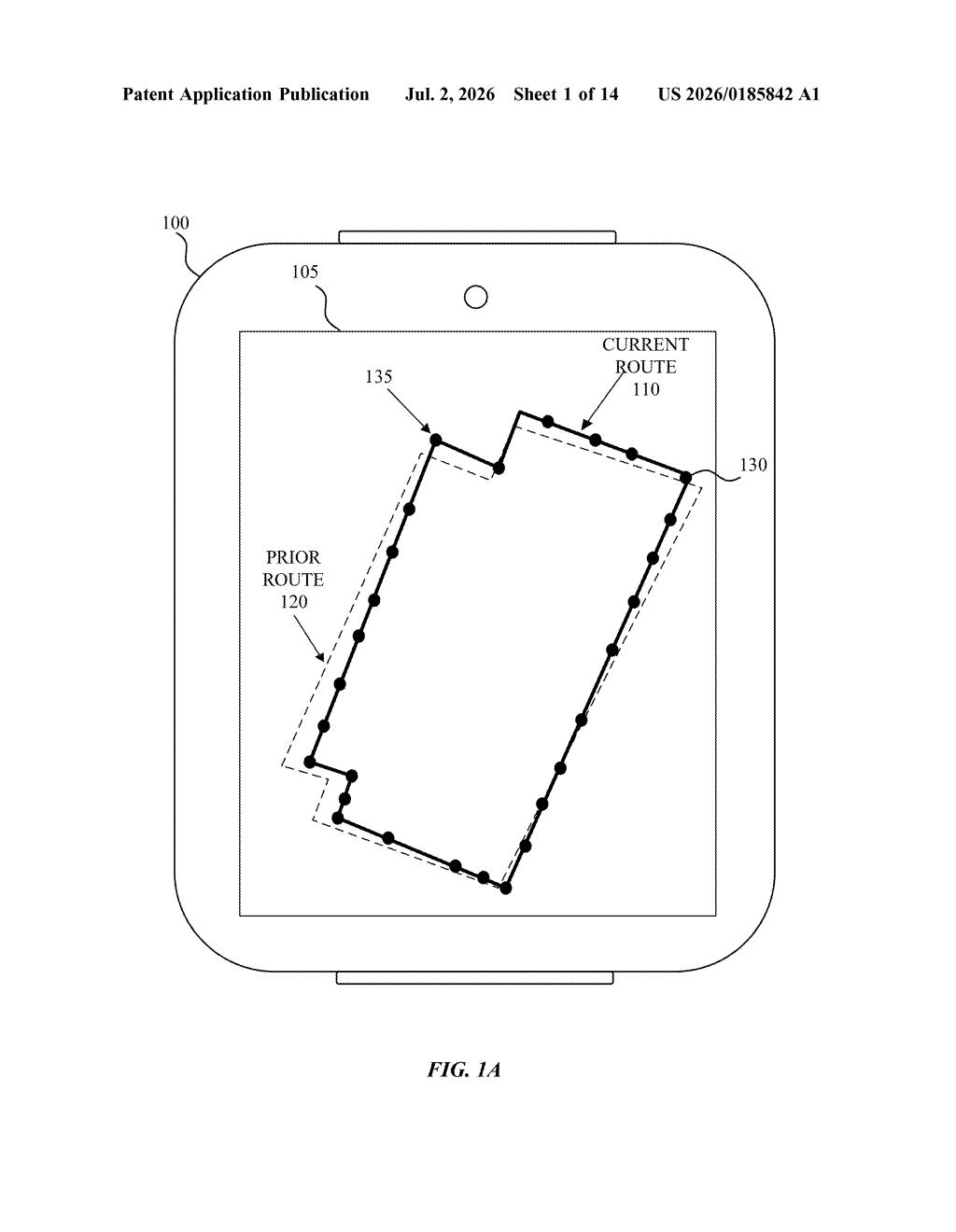
What Apple's real-time route clustering actually does
Imagine you're on your usual morning run. Halfway through, your phone tells you that you're 30 seconds behind your best time on this exact route, based on every previous run you've done here. That's the kind of experience this patent is trying to make happen.
Apple's filing describes a system that automatically groups your past routes into clusters, so when you start a new trip, your device can find the most relevant previous journeys and compare them to what you're doing right now. It's not just about fitness: the same logic could apply to any kind of navigation, whether you're commuting, cycling, or hiking.
The key idea is that the matching happens in real time, so instead of reviewing your stats after the fact, you'd get live comparisons against your own history as you move.
How Apple filters and matches prior routes to your current trip
The patent describes a pipeline that does three things: identifies prior routes stored on the device, clusters them into meaningful groups using similarity techniques, and then matches an ongoing trip against the most relevant cluster to generate live movement metrics.
Route clustering is the core step. Rather than comparing every new trip against every recorded one (which would be slow), the system groups past routes that share similar paths, distances, or other characteristics. When you start moving, it narrows down which cluster your current trip belongs to, then does a more precise comparison within that group.
Filtering trims irrelevant routes before the matching even starts, so a morning run in San Francisco doesn't get compared against a drive through Phoenix.
The patent also mentions movement metrics, real-time numbers like pace, progress, or time-relative-to-previous-performance, that get generated by layering your current tracked activity on top of the best-matching historical records. Think of it as a ghost racer system, but built into the operating system rather than a specific app.
What this means for Apple Maps and fitness tracking
For Apple Maps and the Fitness app, this kind of system could make both more useful without requiring you to set anything up. Your phone would learn your regular routes automatically and start surfacing comparisons without you logging a formal workout or saving a route manually.
The bigger picture is that Apple is trying to make location and activity data more actionable in the moment, not just in post-trip summaries. If this makes it into a future watchOS or iOS release, the result would feel less like checking a dashboard and more like having a pacer built into your device.
This is a practical, well-scoped idea that fits naturally into what Apple Maps and Apple Watch already do. The real-time comparison angle is the interesting part: most fitness apps surface this data after the fact, and building it into the OS level means it could work across third-party apps too. Worth watching.
There are more where this came from
We read every patent application Big Tech publishes and send you the ones worth knowing. Plain English, free, every week.
Want this weekly breakdown for a company we don't cover? Patentlyze Pro →
Be the first to weigh in