
Apple Patents a Triangle-Based Method to Build Sharper, Faster 3D Images
Apple is experimenting with a way to build 3D scenes out of layered, semi-transparent triangles, each carrying its own color and opacity, then blending them together to produce a final image. It's a fresh take on a technique that's been getting a lot of attention in real-time graphics research.
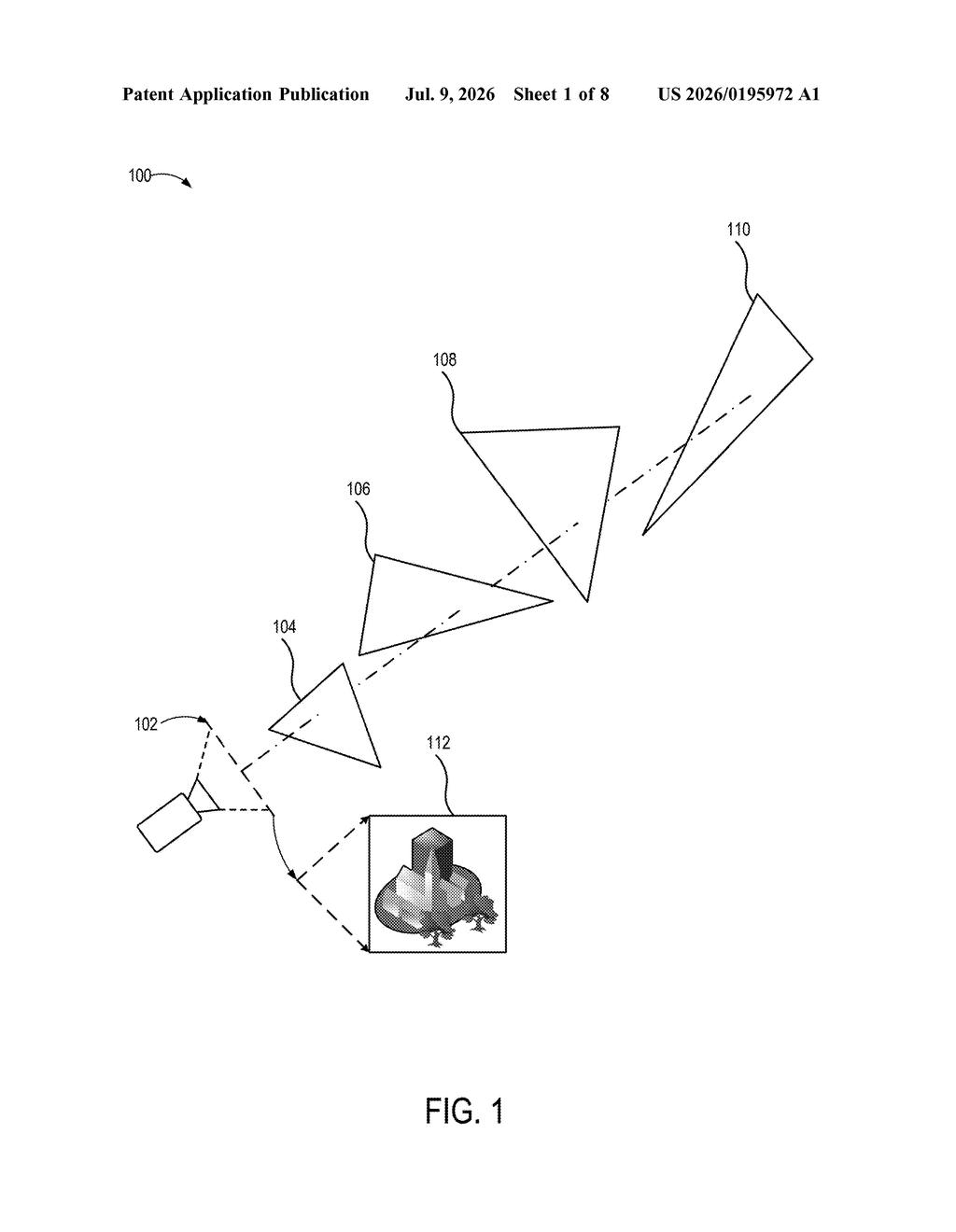
How Apple's triangle-splatting renderer builds 3D images
Imagine a stained-glass window made of thousands of overlapping colored panes, each one slightly see-through. When light passes through, the colors mix depending on how opaque or transparent each pane is. Apple's patent describes something similar for generating 3D images on a screen.
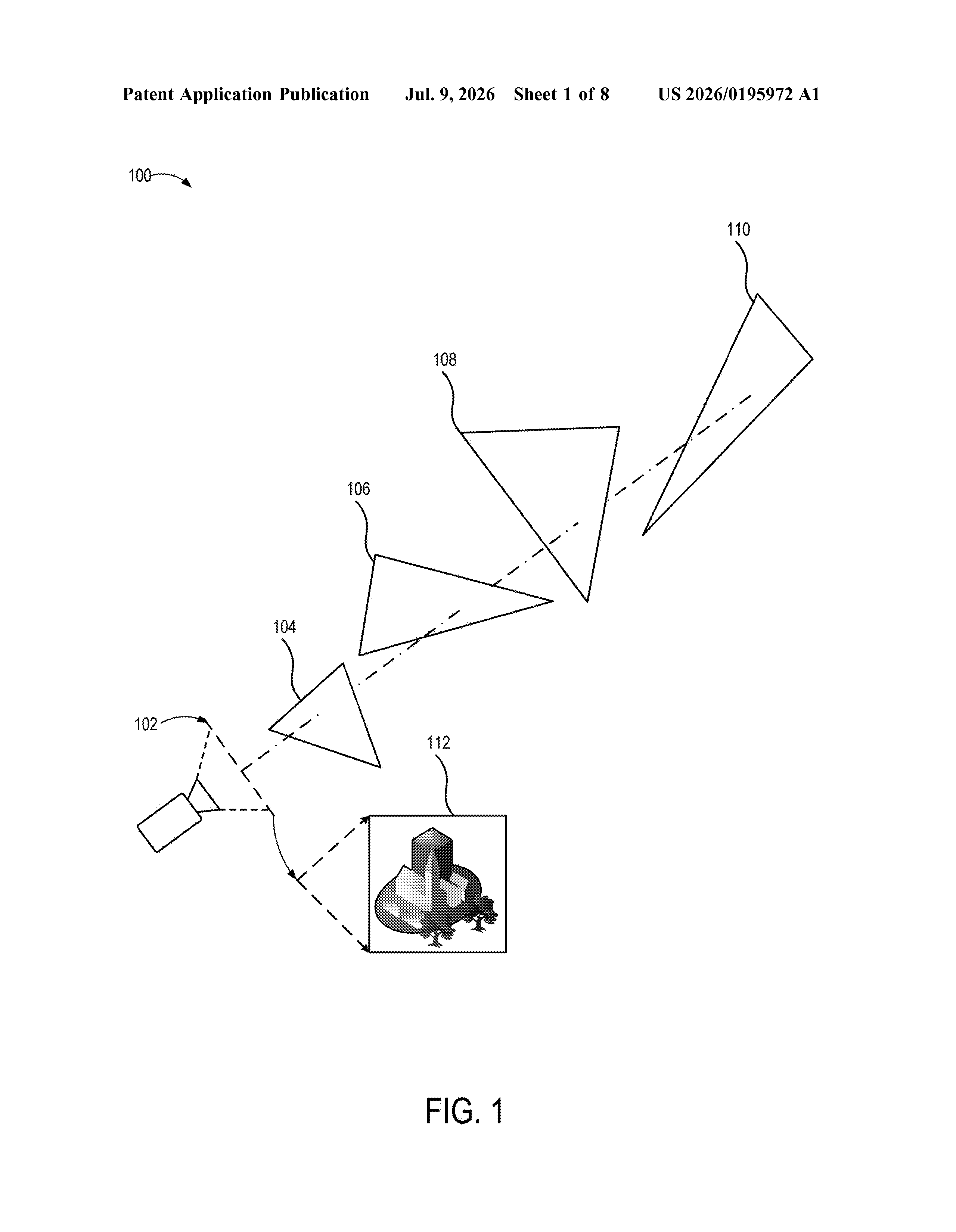
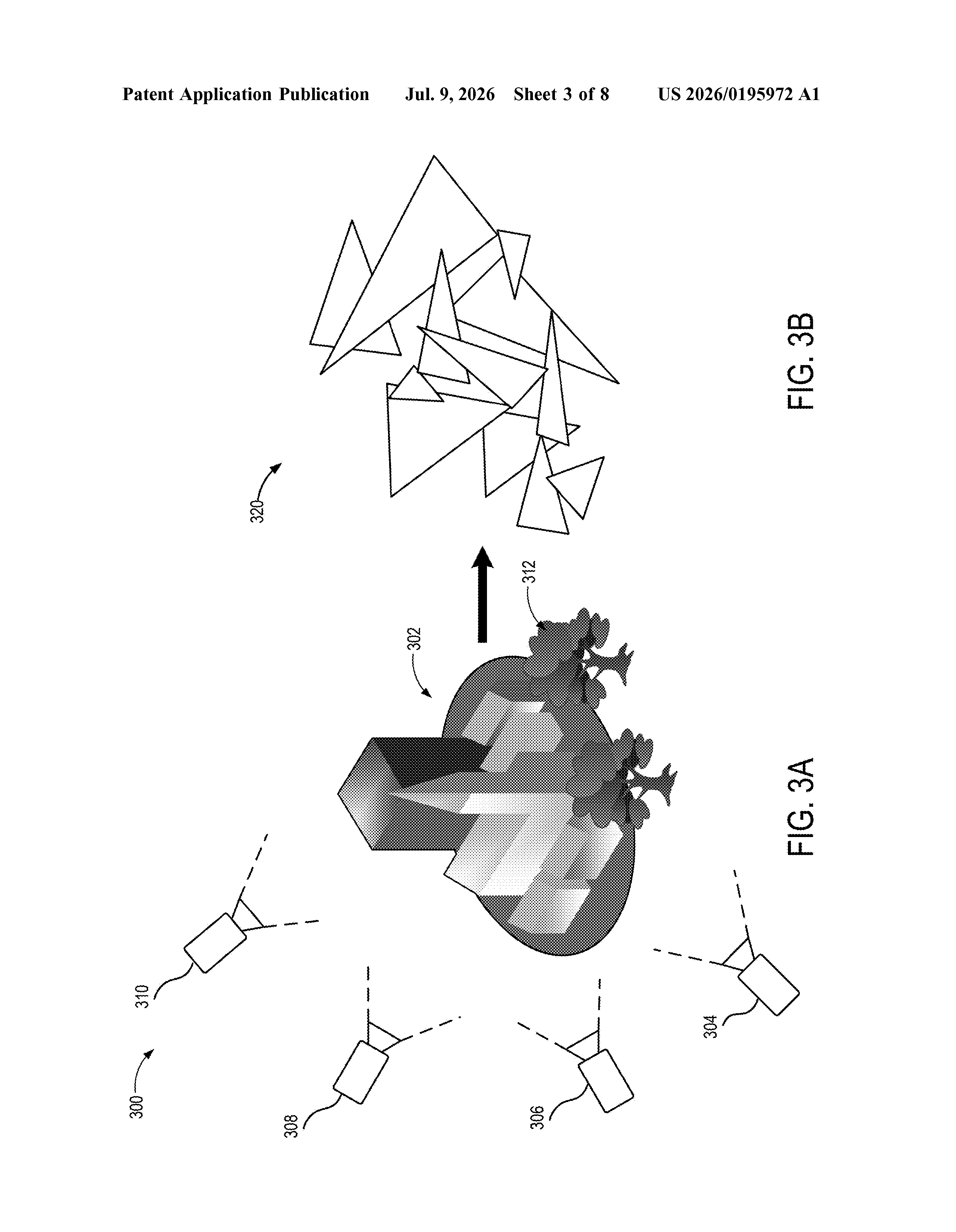
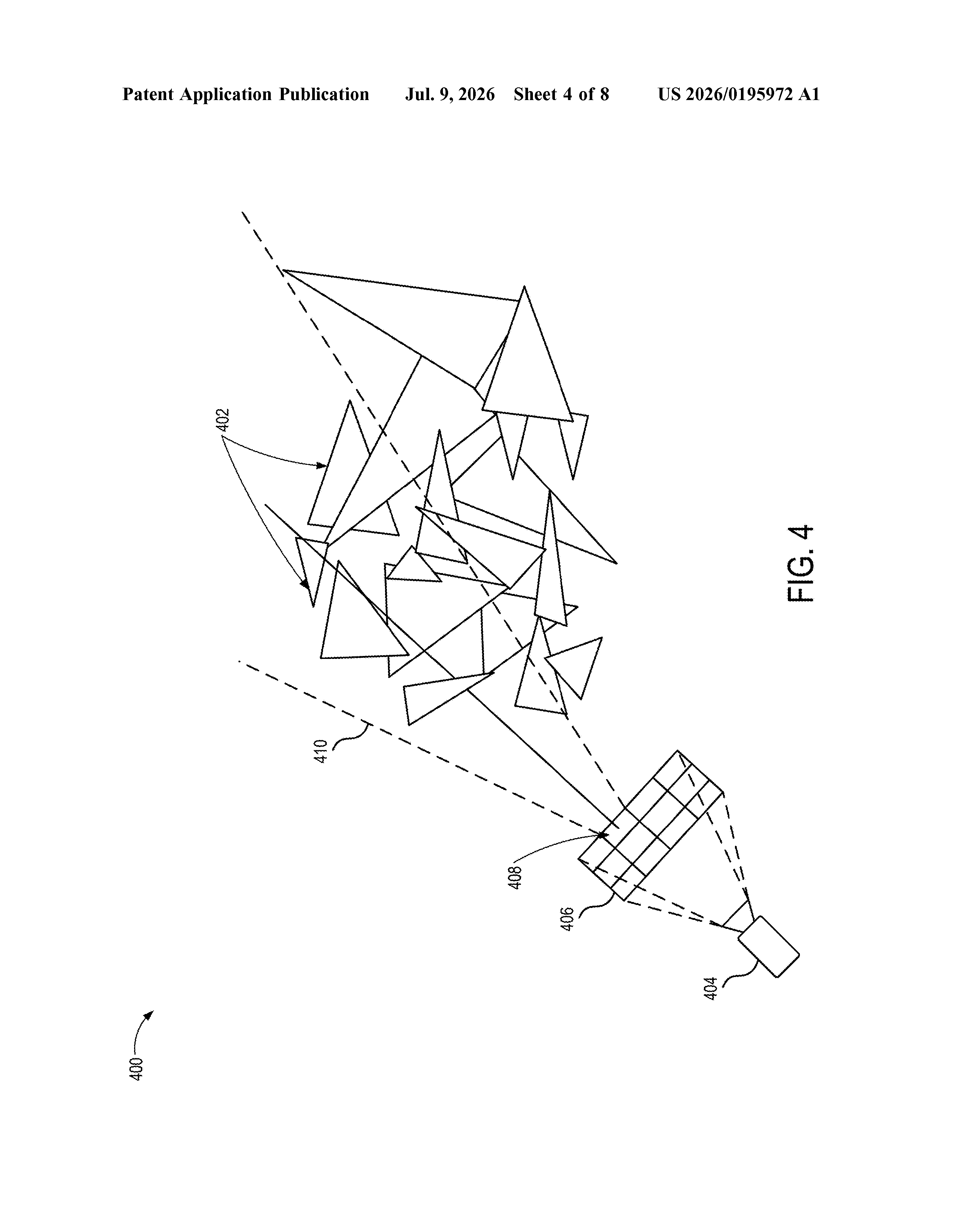
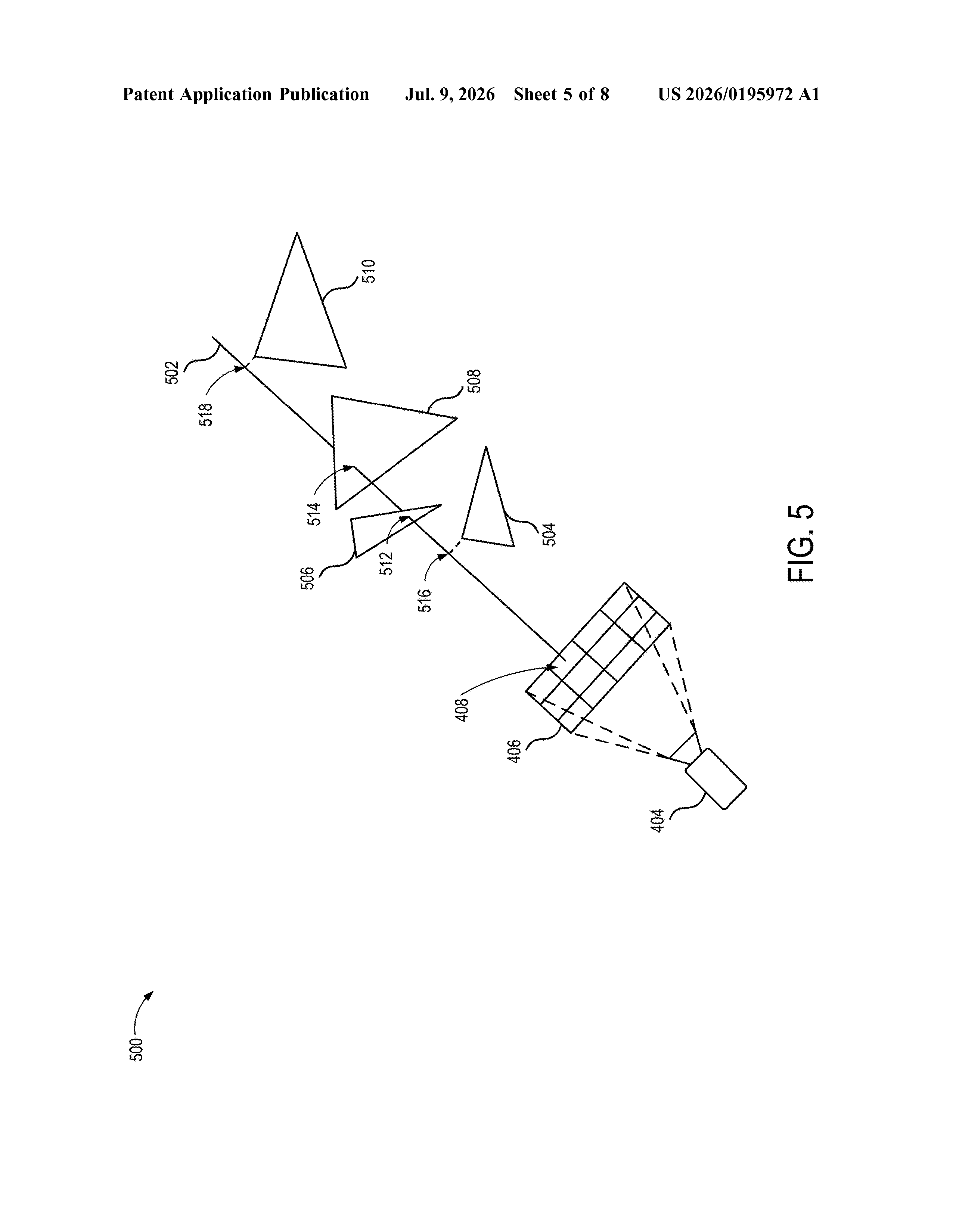
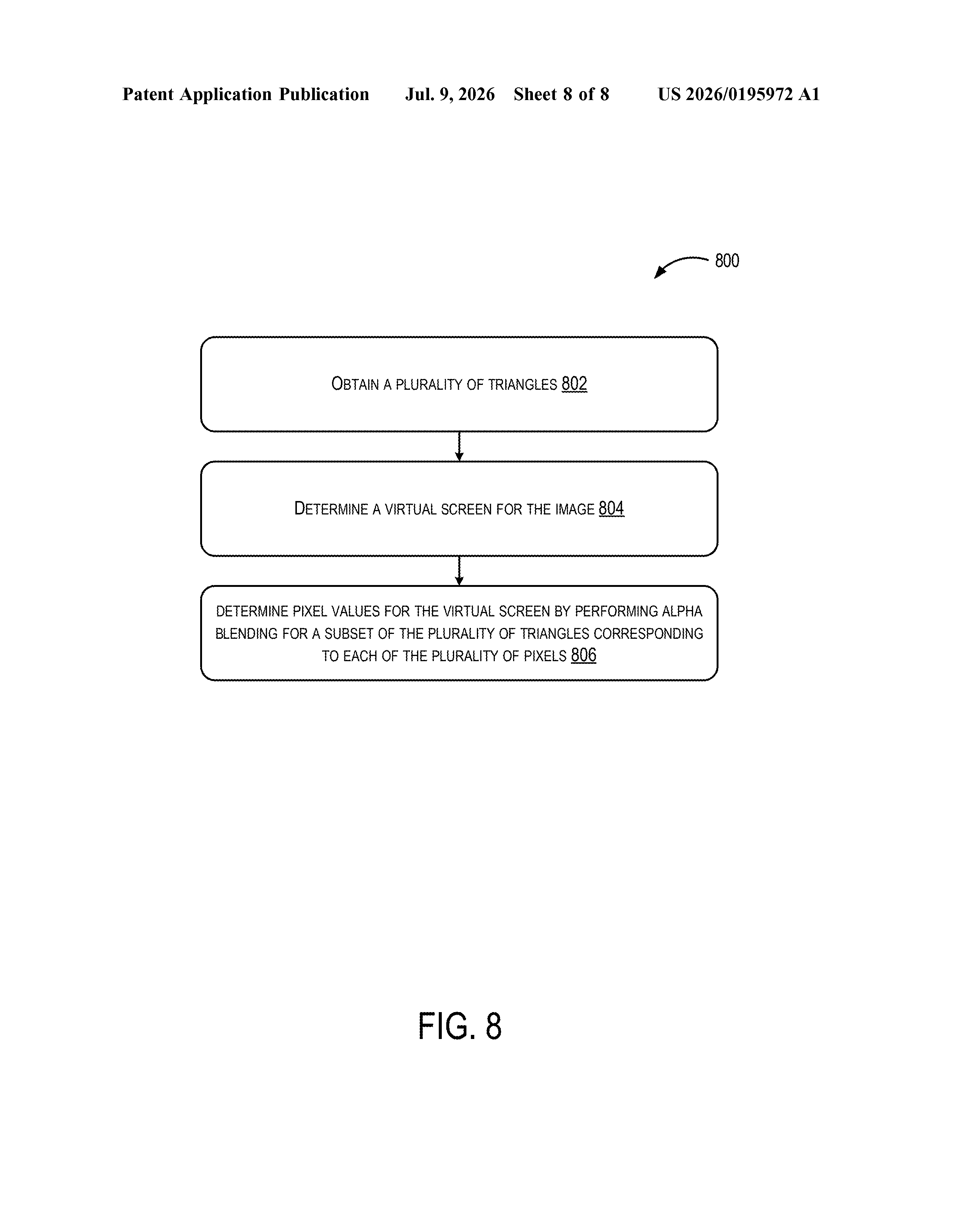
The system breaks a scene down into many small triangles. Each triangle has a color and a transparency level. The screen is divided into a grid of small tiles, and for each tile the system figures out which triangles fall within that tile's view, orders them by how far away they are, and then blends their colors together, front to back, to produce the final pixel colors you see.
This kind of approach, sometimes called splatting, has become popular in advanced 3D reconstruction research because it can produce photo-realistic results faster than traditional methods. Apple filing a patent around it suggests the company is thinking carefully about where and how to apply it in its own devices.
How triangles are sorted and blended into pixels
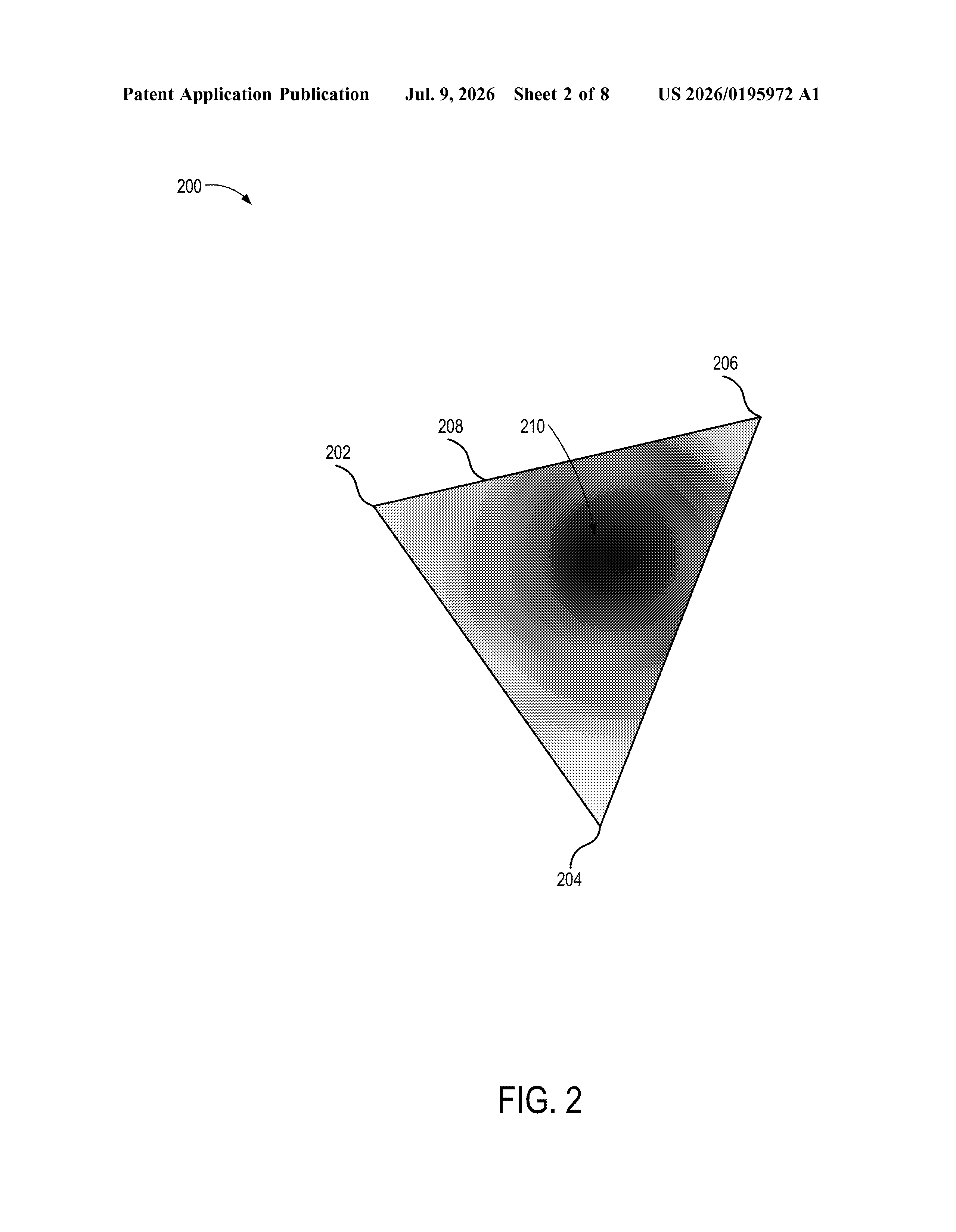
The patent describes a rendering pipeline built around triangle primitives as the core building block of a 3D scene. In traditional 3D graphics, triangles are opaque surfaces that form solid meshes. Here, each triangle carries multiple opacity values (transparency levels that can vary across the shape) and a single color value, making them more like soft, translucent patches than hard surfaces.
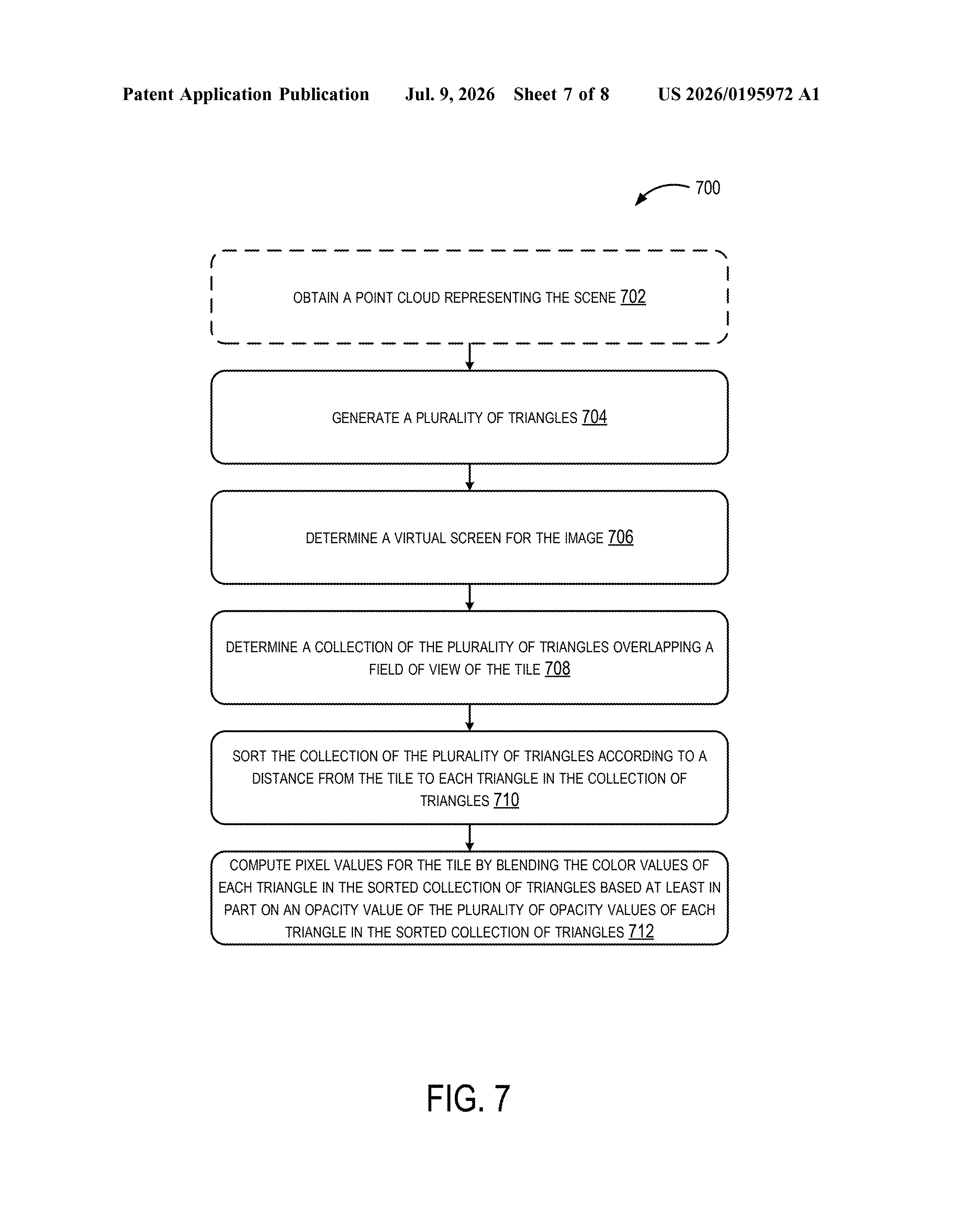
The rendering process works in stages:
- Generate a set of triangles that together represent a scene.
- Define a virtual screen with a specific position and orientation relative to the scene (its "pose").
- Divide that screen into a grid of tiles (small sub-regions of pixels).
- For each tile, collect every triangle whose footprint overlaps that tile's field of view, sort them by distance from the screen (closest first or farthest first), and blend their colors using their opacity values to arrive at final pixel colors.
This per-tile sorting and blending is the key step. Because triangles can be semi-transparent and overlap each other, the order in which you blend them changes the result. Sorting by depth and compositing in order ensures the layering looks physically correct, the way real translucent objects stack in front of each other.
What this means for Apple's graphics and spatial computing
Splatting-based rendering has taken off in research circles thanks to techniques like 3D Gaussian Splatting, which can reconstruct a photorealistic 3D scene from ordinary photos and render it in real time. Apple swapping Gaussians for triangles is notable because triangles are the native geometry type that graphics hardware, including Apple's own chips, is already optimized to process at enormous speed.
If Apple can get splatting quality out of triangle-native hardware pipelines, that could be meaningful for products like Vision Pro, where rendering realistic 3D environments quickly and efficiently is a constant engineering challenge. It also fits Apple's broader push to reconstruct and display real-world spaces on device.
This is a genuinely interesting patent, not because the idea of splatting is new, but because routing it through triangle primitives is a smart hardware-alignment move. Apple's GPUs are built around triangle processing, so making a modern neural-rendering technique speak that language natively could unlock real performance gains. Worth watching.
Get our take in your Top Stories
Liked this breakdown? Add Patentlyze as a preferred source on Google, and our plain-English take shows up more often in your Top Stories the next time Apple patent news breaks.
There are more where this came from
We read every patent application Big Tech publishes and send you the ones worth knowing. Plain English, free, every week.
The drawings
8 drawing sheets from US 2026/0195972 A1 · click any drawing to enlarge
Want this weekly breakdown for a company we don't cover? Patentlyze Pro →