
Meta's New Patent Wants Its Smart Glasses to Take Your Meeting Notes for You
Imagine walking out of a meeting and finding a full transcript, a summary, and a to-do list already waiting for you, generated in real time by the glasses on your face. That's exactly what Meta is patenting.
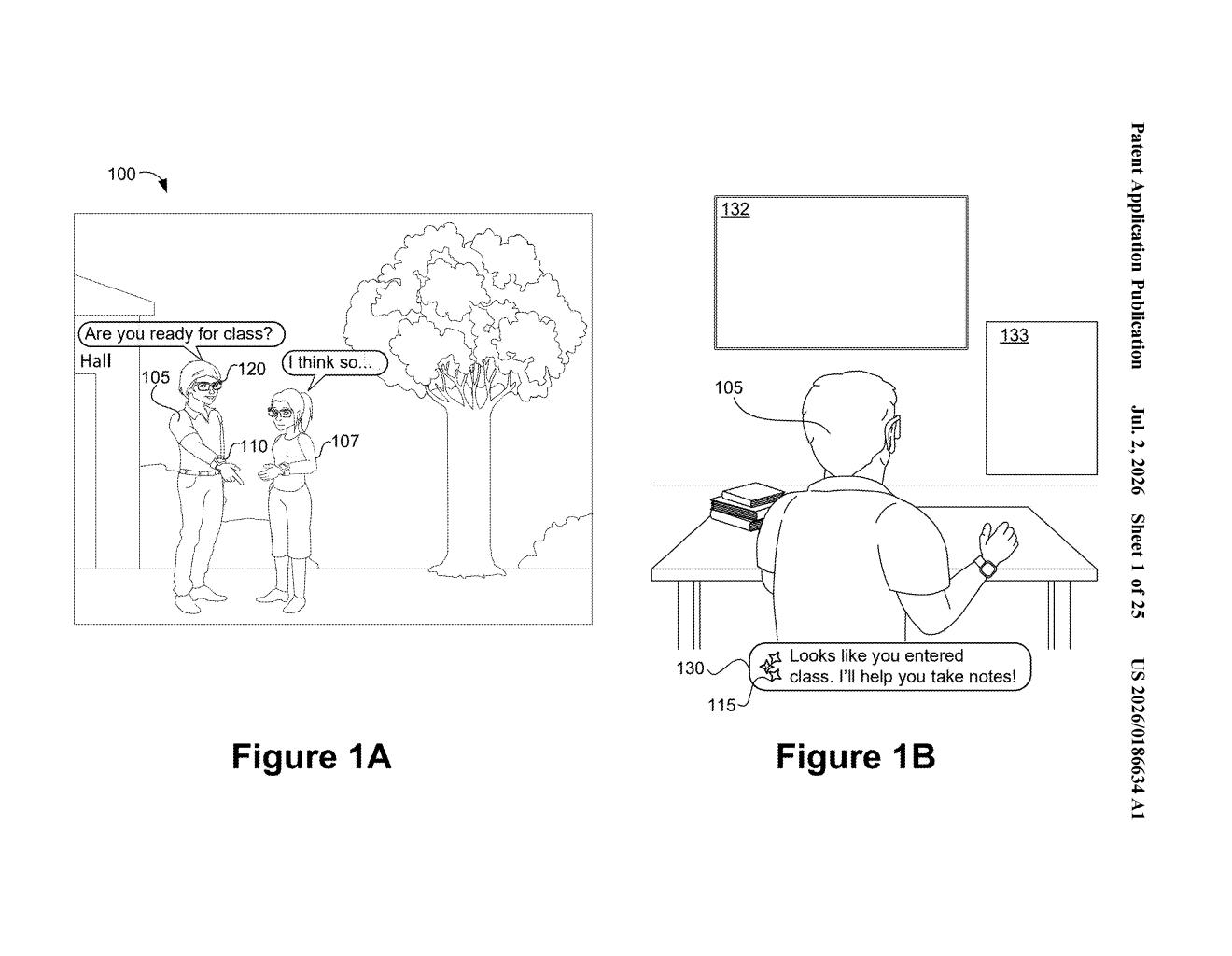
What Meta's AI note-taking glasses actually do
Picture yourself sitting in a work meeting or a college lecture. You're trying to pay attention, but you're also scribbling notes, and you keep missing things. Meta's new patent describes smart glasses that handle all of that for you automatically.
When you start an "information sharing event" (a meeting, a class, a presentation), the glasses kick into action. Their built-in camera captures what's happening in the room, and their microphone records everything being said. An AI agent then processes all of that and assembles a neat package: an audio recording, a written transcript, a plain-language summary, images from the session, and even a list of action items.
You don't have to press record, open an app, or remember to do anything. The system detects that a meeting is happening and takes over from there.
How the glasses capture, process, and package a meeting
The system pairs a head-wearable device (smart glasses) with an onboard or connected AI agent that watches and listens during any structured information-sharing session.
Once triggered, the glasses coordinate three things at once:
- The camera captures image data, which could include slides, whiteboards, or visual materials on display.
- The microphone records spoken audio throughout the session.
- The AI agent receives both streams and produces a structured notes package.
That notes package can contain multiple components: a raw audio recording, a transcription of what was said, a condensed summary, image representations of visual content captured during the meeting, and action items extracted from the conversation (essentially, the AI's best guess at what you're supposed to do next).
The patent doesn't lock the system into a single trigger method. The "indication" that a meeting is starting could come from a calendar event, a verbal cue, a detected change in environment, or a manual prompt. The claim is intentionally broad on that point.
What this means for Ray-Ban Meta and workplace AI
Meta already sells the Ray-Ban Meta smart glasses, which have a camera and microphone built in. This patent describes the kind of software layer that could make those glasses genuinely useful as a productivity tool rather than just a novelty. If this ships, you'd get an experience closer to having a personal assistant in the room with you.
There's also a broader competitive angle here. Apps like Otter.ai, Fireflies, and even Microsoft Copilot already do AI meeting transcription on your laptop or phone. Meta's bet is that wearing the recording device changes the experience entirely, capturing the physical room, the visual context, and the ambient conversation in a way a laptop mic simply can't match.
This is a genuinely interesting patent because it connects Meta's actual hardware (the Ray-Ban smart glasses line) to a clear productivity use case that real people would pay for. The technical lift here isn't exotic, but the form factor makes it distinct from every other meeting-transcription tool on the market. Whether Meta can navigate the consent and privacy questions that come with recording devices in workplaces and classrooms is a much harder problem than the engineering.
There are more where this came from
We read every patent application Big Tech publishes and send you the ones worth knowing. Plain English, free, every week.
Want this weekly breakdown for a company we don't cover? Patentlyze Pro →