
AMD Patents a Way to Find the Sweet Spot in How AI Checks Its Own Work
AMD has filed a patent for a system that figures out the optimal number of "guesses" a small AI model should make before a larger one checks its work — squeezing more speed out of the same hardware without manual tuning.
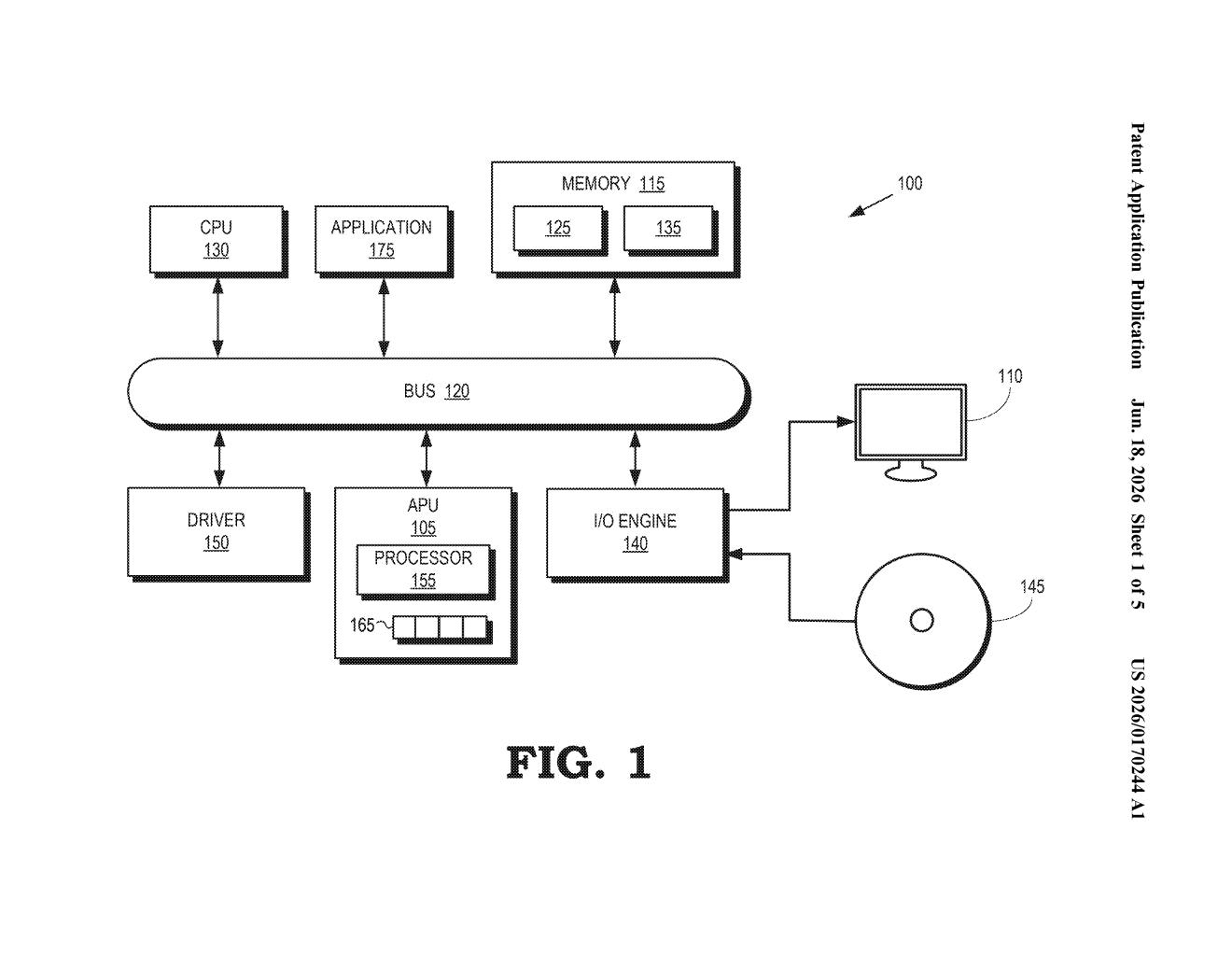
How AMD's draft-model tuning speeds up AI responses
Here's a simple way to think about it: imagine a junior employee who drafts emails for their boss. If the draft is too short, the boss wastes time waiting for more. If it's too long, the boss has to rewrite most of it anyway. The sweet spot — the right number of draft sentences — depends on how well the junior employee knows the boss's style.
AMD's patent applies the same idea to AI text generation. Modern AI systems often use a small, fast "draft" model to guess what the big, accurate model will say next. The big model then checks those guesses and accepts or rejects them. Right now, figuring out how many guesses the draft model should produce usually requires manual trial and error.
This patent describes an automatic process: split your data into two batches, use the first to measure how often the big model accepts the draft model's guesses, then use that measurement to set the right guess count for the second batch. No human tuning required.
How AMD calibrates the look-ahead window size
The patent describes a calibration method for speculative decoding — a technique where a small, fast draft model generates several candidate tokens (word fragments) at once, and a larger target model then validates them in a single pass (instead of generating one token at a time, which is slower).
The key variable is the look-ahead window size: how many tokens the draft model produces per call to the target model. Too few, and you leave speed gains on the table. Too many, and the target model rejects most of them, wasting compute.
AMD's method works in two phases:
- Calibration phase (first data split): Run speculative decoding with an initial window size, measure how many draft tokens the target model actually accepts on average, and compute an optimal window size from that acceptance rate.
- Inference phase (second data split): Run speculative decoding again using the newly calculated window size.
The core math involves computing an expected acceptance count — essentially a statistical estimate of how productive each draft token is, given this particular model pair and dataset. The window size is then adjusted to match that expected productivity.
What this means for AI inference costs and chip efficiency
Every major AI lab and cloud provider running large language models cares deeply about inference cost — the money spent generating each response. Speculative decoding is already one of the more effective techniques for cutting that cost, but it typically requires engineers to manually tune the look-ahead window for each model pair and workload. AMD's approach automates that tuning step, which means less hand-holding per deployment.
For AMD specifically, this is part of a broader push to make its Instinct GPU line and ROCm software stack more competitive with Nvidia's CUDA ecosystem for AI inference workloads. Better out-of-the-box efficiency could matter a lot to cloud customers evaluating hardware.
This is genuinely useful infrastructure work, not a flashy AI capability. Automating speculative decoding tuning removes a real friction point for teams deploying large language models at scale. It won't make headlines at a consumer level, but for AMD's enterprise and cloud customers, shaving inference costs without manual effort is exactly the kind of thing that wins hardware contracts.
There are more where this came from
We read every patent application Big Tech publishes and send you the ones worth knowing. Plain English, free, every week.
Want this weekly breakdown for a company we don't cover? Patentlyze Pro →