
Qualcomm Patents Compression That Keeps Virtual Faces Sharp During Live Video Calls
When you're on a video call as a 3D avatar, your face has to move in real time across a live connection. Qualcomm's new patent tackles the surprisingly tricky problem of sending those facial expressions efficiently without blowing up your bandwidth.
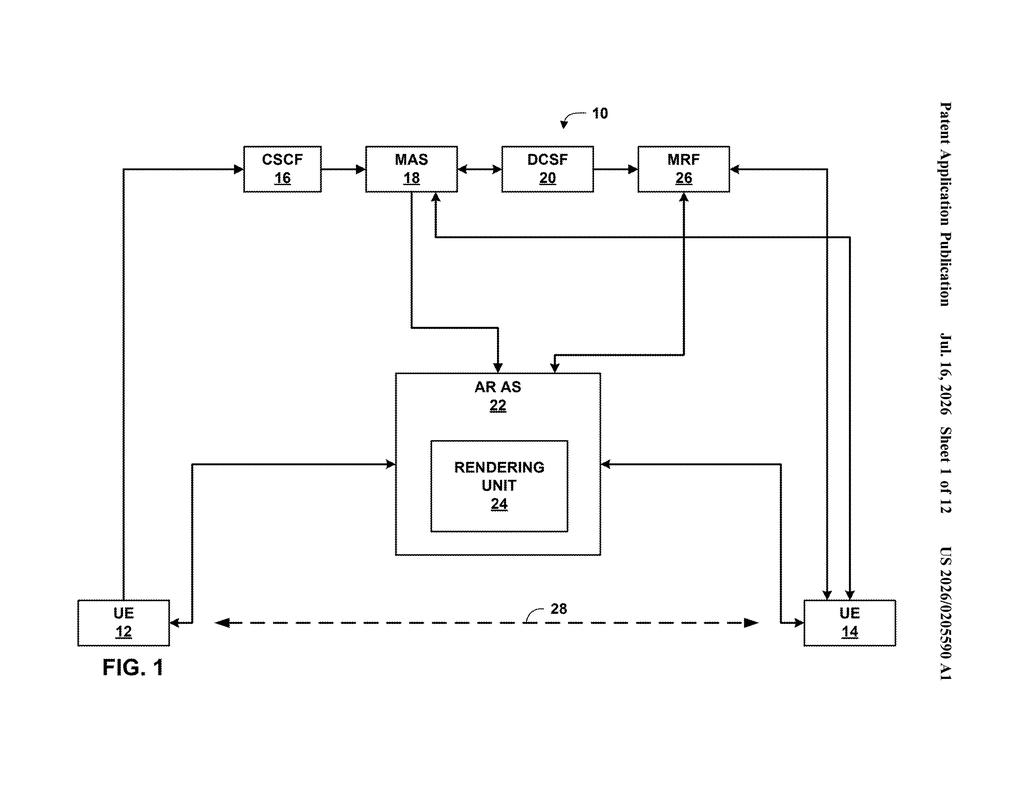
What Qualcomm's AR avatar compression actually does
Imagine you're on a video call, but instead of your actual face, both sides see 3D animated avatars. Your avatar has to mirror your expressions, live, as you talk. The problem is that a 3D face is made up of thousands of tiny points that all have to shift position every time you raise an eyebrow or smile.
Sending all those point positions constantly over a network connection takes a lot of data. Qualcomm's patent describes a system that compresses those facial movements before sending them, much like how a ZIP file shrinks a document by cutting out redundancy, so only the changes from a base face shape get transmitted rather than the entire face from scratch each time.
On the receiving end, your device unpacks those compressed changes and rebuilds the facial expression locally. The goal is to make AR avatar calls feel smooth and responsive even on connections that aren't particularly fast.
How blendshapes get encoded and sent over a network
The technical piece at the center of this patent is something called a blendshape. In 3D animation, a blendshape is a snapshot of a face in a specific expression, like a smile or a raised eyebrow, defined by how far each point on the face mesh has moved from its neutral position. Video games and animated films use blendshapes constantly.
Qualcomm's system starts with a base mesh, a neutral 3D face shape that both sender and receiver already have. Instead of sending the full face for each expression, it only sends the differences between the base mesh and the new expression. Those differences are then:
- Quantized (rounded to compact numerical values to reduce file size)
- Normalized (scaled to a standard range so they compress predictably)
- Paired with indices that tell the receiver which specific face points actually moved (so unchanged points don't need to be sent at all)
A transformation matrix (a compact mathematical description of how the whole face or a region of it has rotated or scaled) is also encoded and sent alongside those difference values. The receiving device decodes all of this and reconstructs the full facial expression locally, without needing the full geometry every frame.
What this means for real-time AR video calling
AR video calling, where participants appear as 3D avatars rather than flat video feeds, is a direction several companies are actively building toward. The technical barrier is real: lifelike 3D faces require far more data than a standard video stream, and that data has to arrive fast enough to stay in sync with a live conversation.
This kind of compression work is the unglamorous plumbing that makes those experiences actually usable. If Qualcomm builds this approach into its chips or codec standards, it could influence how AR communication works across a wide range of devices, from phones to headsets, particularly on mobile networks where bandwidth is limited and variable.
This is practical infrastructure work, not a flashy consumer feature. Blendshape compression for AR calls is the kind of problem that has to be solved before immersive avatar communication becomes mainstream, and Qualcomm is in a strong position to influence the underlying standards. Worth watching if you follow codec standardization or AR hardware.
Get our take in your Top Stories
Liked this breakdown? Add Patentlyze as a preferred source on Google, and our plain-English take shows up more often in your Top Stories the next time Qualcomm patent news breaks.
There are more where this came from
We read every patent application Big Tech publishes and send you the ones worth knowing. Plain English, free, every week.
Want this weekly breakdown for a company we don't cover? Patentlyze Pro →