
Qualcomm Patents an Encryption Layer for Live Augmented Reality Calls
Qualcomm is patenting a way to lock down the 3D digital objects inside an AR call — so only the people who are supposed to see a virtual asset can actually render it.
What Qualcomm's AR call content protection actually does
Imagine you're on a video call, but instead of a flat screen you're wearing AR glasses and a 3D model of a product — or a confidential document — is floating in the shared space between you and your colleagues. Right now there's no standard way to make sure only the people on that call can see and interact with those virtual objects.
Qualcomm's patent describes a system where those digital AR assets are encrypted before they're transmitted. When your device joins the call, it requests a decryption key from a server. If you're authorized, you get the key, your device decrypts the 3D content, and it renders normally in your AR view. If you're not authorized — or if someone tries to intercept the stream — they just get scrambled data.
This is essentially HTTPS-style access control, but applied to the 3D objects and scene descriptions that make up an AR call rather than to a webpage.
How the key request and decrypt flow works in AR calls
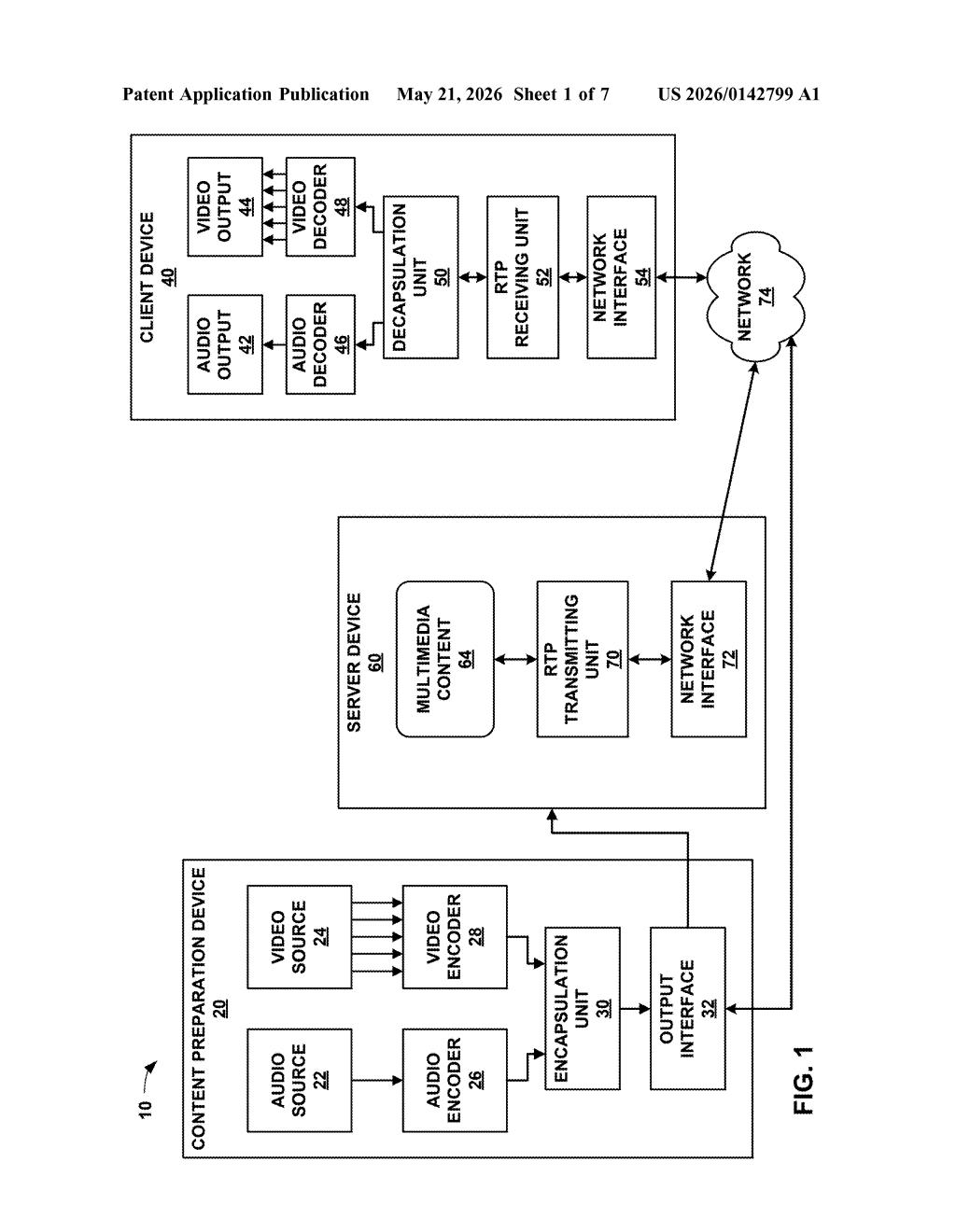
The patent describes an end-to-end pipeline for secure AR calls involving at least three roles: a content preparation device (the sender), a server device (the relay and key manager), and one or more client devices (the AR viewers).
The sender packages a scene description — essentially a manifest that lists all the 3D assets, their positions, and their properties — and encrypts the individual digital assets within it before transmission. The scene description itself can travel openly, but the actual content payloads are locked.
When a client device joins the AR call, it reads the scene description, identifies that certain assets are encrypted, and sends an authorization request to the server. The server validates the request and, if approved, returns the decryption key (or key data). The client then decrypts the assets locally and renders them in the AR environment.
The patent uses RTP (Real-Time Protocol) — the same low-latency transport layer used in standard video calls — for streaming the AR content, with encapsulation and decapsulation units managing the packaging and unpacking of data. This means the security layer is designed to slot into existing real-time communications infrastructure rather than requiring a brand-new stack.
What this means for enterprise and consumer AR calling
AR calls are moving from novelty toward real enterprise use cases — think remote surgery guidance, confidential design reviews, or training simulations. Without a content-protection layer, any encrypted AR platform today is essentially rolling its own DRM from scratch. A standardized, protocol-level approach like this one could become the baseline that future AR communication specs are built on, especially given Qualcomm's deep involvement in wireless and multimedia standards bodies.
For you as a user, this is the kind of infrastructure work that would eventually let your employer confidently put sensitive 3D models into an AR meeting without worrying about stream interception. It's not flashy, but secure AR calls can't exist at scale without this kind of plumbing.
This is foundational infrastructure work, not a consumer feature — and that's exactly why it's worth noting. Qualcomm has the standards clout to push something like this into MPEG or 3GPP specs, which would matter far more than any single product launch. The patent itself is fairly narrow in its first independent claim, but the broader system described in the abstract is the real signal about where Qualcomm sees AR communications heading.
There are more where this came from
We read every patent application Big Tech publishes and send you the ones worth knowing. Plain English, free, every week.
Want this weekly breakdown for a company we don't cover? Patentlyze Pro →