
Samsung Patents a Cross-Device Voice Activity Routing System
Samsung is patenting a way for two devices to listen together and decide which one should handle audio output — based on how much voice activity is happening near each one.
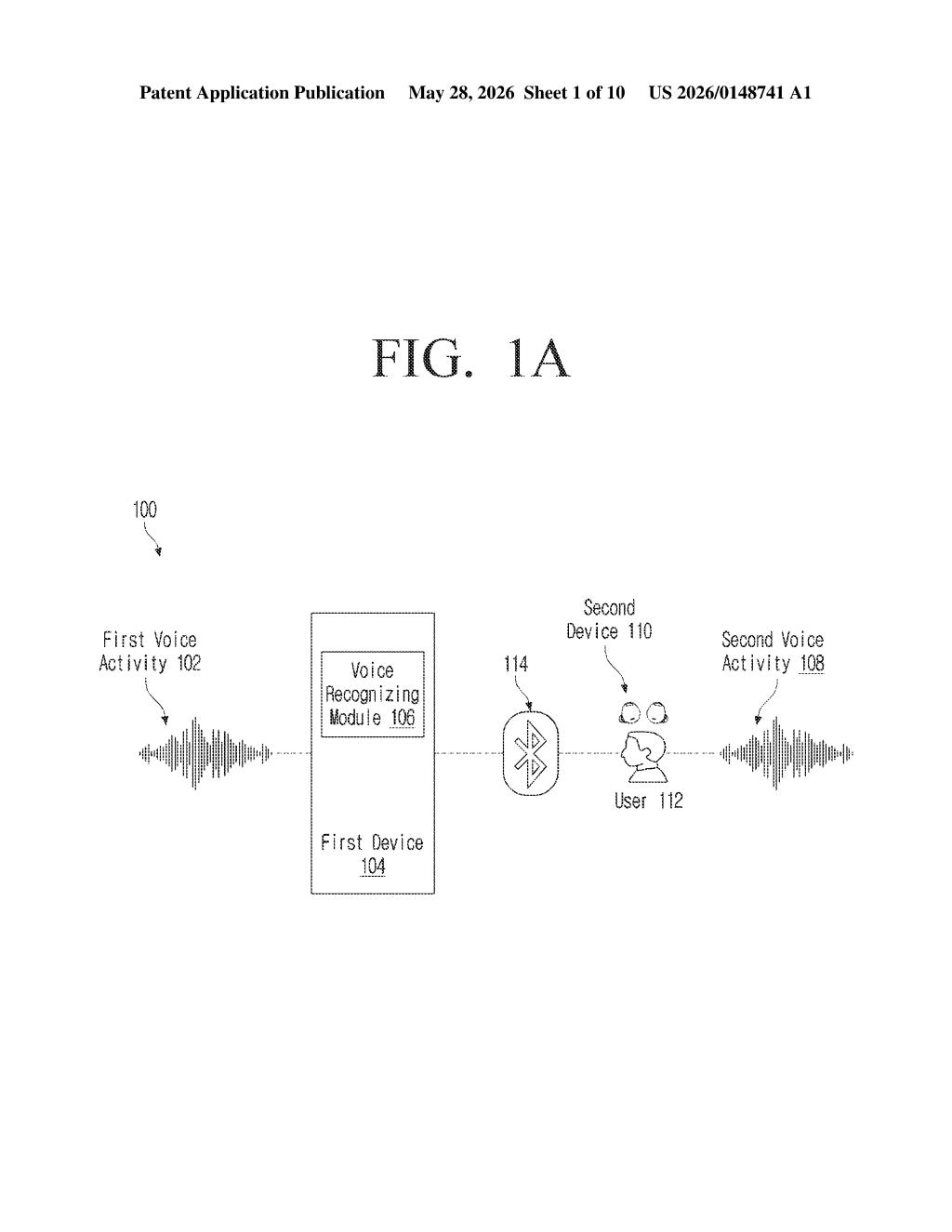
What Samsung's dual-device voice routing actually does
Imagine you're on a call on your phone, but you walk into a room where your tablet is sitting. Both devices are picking up voices. Which one should be playing or relaying audio? Right now, that's usually a manual decision — you tap a button, or switch devices yourself.
This Samsung patent describes a system where a voice recognition module on one device monitors voice activity happening near both devices simultaneously. It then compares that activity against a preset threshold to figure out when audio is worth routing through the second device.
In plain terms: if enough talking is happening near both your phone and your tablet, the system can automatically send audio output to whichever device makes more sense. It's a small quality-of-life fix, but it points toward a future where your Samsung devices coordinate more fluidly around the sound in your environment.
How the voice threshold triggers cross-device audio output
The patent describes a method where a first device (say, a phone) runs a voice recognition module that monitors voice activity near itself and near a second device (like a tablet or smart speaker) at the same time.
The core logic works in three steps:
- Detection: The first device's voice recognition module picks up audio signals — 'voice activity' — from the vicinity of both devices.
- Comparison: It measures whether the detected voice activity at either or both locations exceeds a predetermined threshold (a minimum activity level set in advance).
- Output routing: If the threshold is met, the system pushes audio output through the second device instead of — or in addition to — the first.
The key architectural detail is that the first device handles all the intelligence. It's doing the sensing and the decision-making, while the second device is essentially a passive output endpoint. This avoids requiring both devices to run heavy processing simultaneously, which would drain battery on both ends.
What this means for Samsung's connected device ecosystem
For Samsung's Galaxy ecosystem — phones, tablets, buds, smart speakers — this kind of automatic coordination is the connective tissue that makes owning multiple devices feel worthwhile rather than annoying. Right now, multi-device audio handoff is clunky. This patent suggests Samsung is building smarter rules for when and how audio migrates between devices based on real-world context like proximity and voice presence.
The practical ceiling here is modest: this is infrastructure, not a headline feature. But it's the kind of low-level plumbing that, if it works well, disappears into the background and just makes Galaxy connected devices feel more cohesive. If Samsung ships something like this in One UI or its Galaxy AI layer, most users will never notice it — and that's the point.
This is routine multi-device audio coordination work — useful plumbing, but not particularly novel or exciting. Samsung is clearly investing in making its device ecosystem feel more seamless, and patents like this are the unglamorous building blocks of that effort. It's worth a quick read if you follow Samsung's connected device strategy, but don't expect this one to show up in a keynote.
There are more where this came from
We read every patent application Big Tech publishes and send you the ones worth knowing. Plain English, free, every week.
Want this weekly breakdown for a company we don't cover? Patentlyze Pro →