
Samsung Patents a Context-Aware AI That Converts One Sensor Type Into Another
Samsung is patenting a system that lets a device take one type of sensor input — say, audio — and reconstruct a completely different type of data from it, like an image or a depth map, using a stored map of how those data types relate to each other.
What Samsung's cross-modality conversion actually does
Imagine your phone only has a microphone available, but it still needs to figure out what's in front of you. Samsung's patent describes a system where a device can take one kind of data — let's call it a modality, which just means a type of sensor input like audio, video, depth, or touch — and use AI to generate a completely different kind of data from it.
The trick is a stored "dependency map" that captures how different modalities relate to each other. The system looks at the current context, figures out which relationship matters right now, and feeds both your input data and that relationship info into a neural network to produce the target output.
You might think of it as a translator that doesn't just know two languages — it knows when to apply which translation rules depending on the situation. This could be useful anywhere a device is missing a sensor, has a broken one, or is trying to save power by running only some sensors at once.
How the neural network maps one modality to another
At its core, the patent describes an electronic apparatus that can perform cross-modality synthesis — taking data in one format (say, an RGB camera frame) and producing data in a different format (say, an infrared depth map or a thermal image) without necessarily having the hardware sensor for that second format present or active.
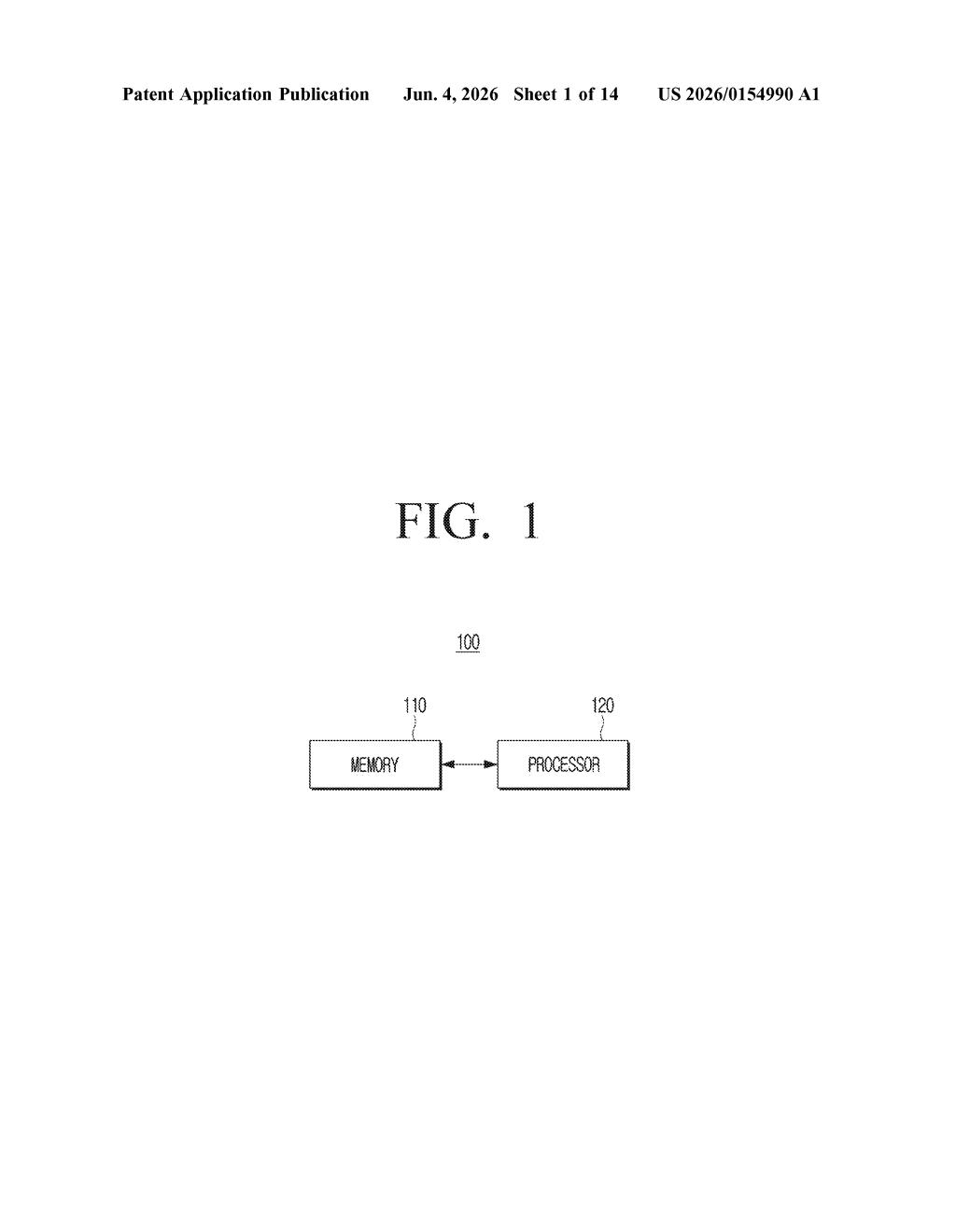
The system relies on three components stored in memory:
- Cross-modality dependency information — a structured dataset encoding correlations between different modality types (how audio relates to video, how RGB relates to depth, etc.)
- A neural network model — the generative engine that does the actual conversion
- Context-awareness logic — the processor identifies which specific correlation entry to use based on the current situation before running inference
The context-sensitivity is the notable wrinkle here. Rather than applying a single fixed mapping, the device selects the appropriate correlation rule dynamically. This means the same neural network could theoretically handle multiple source-to-target modality pairs, guided by which dependency entry the processor selects.
The claim is broad — it covers any "plurality of modality types," meaning this framework isn't tied to a specific sensor combination. The architecture is designed to be modality-agnostic.
What this means for Samsung's sensor-heavy devices
For Samsung, whose device portfolio spans phones, tablets, TVs, AR glasses, and home sensors, a general-purpose cross-modality engine could reduce hardware redundancy. If a device can infer depth from RGB using learned correlations, you don't always need a dedicated depth sensor running — which translates to lower power consumption and fewer components.
It also has implications for accessibility and degraded-sensor scenarios: if one sensor fails or is unavailable, synthetic modality generation could fill the gap. The breadth of the claim — covering any modality pair, not just camera-depth — suggests Samsung is positioning this as infrastructure-level AI that could run across many product lines rather than solving one narrow problem.
This is a broad, foundational patent on a capability that's genuinely useful across Samsung's hardware lineup — but the claim is so abstract that it reads more like a platform-level stake in the ground than a specific product feature. The context-aware modality selection is the most interesting part; without it, this would be routine generative AI work. Worth tracking as a signal that Samsung is building modality-conversion as a reusable AI primitive, not a one-off camera trick.
There are more where this came from
We read every patent application Big Tech publishes and send you the ones worth knowing. Plain English, free, every week.
Want this weekly breakdown for a company we don't cover? Patentlyze Pro →