
Samsung Display Patents a Touch Panel That Shares Its Middle Zone Between Two Drivers
Samsung Display is patenting a touchscreen architecture that lets two separate sensor drivers co-manage a shared middle region of the panel — a design that could reduce latency and dead zones on large or foldable displays.
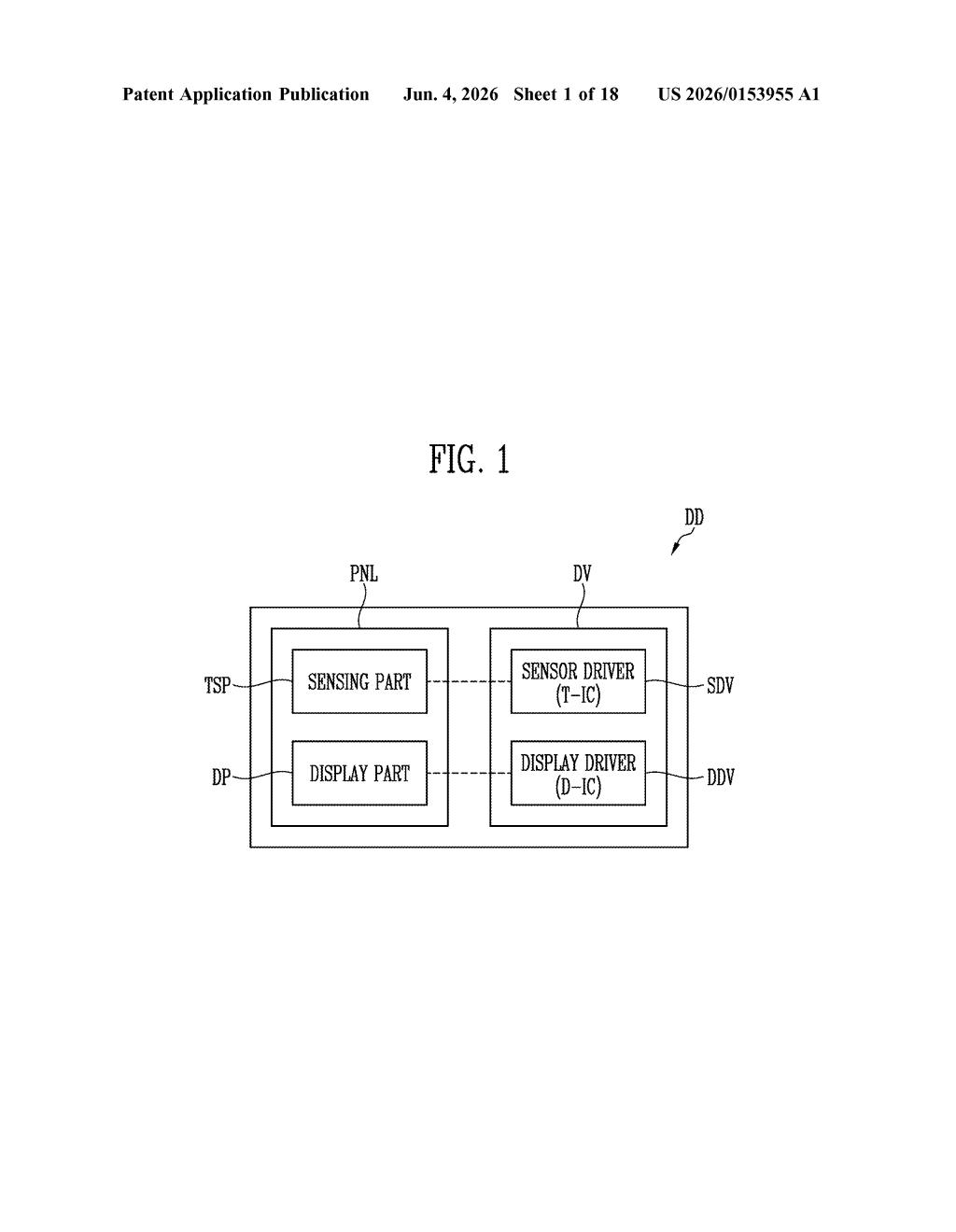
What Samsung's split-zone touch sensor panel actually does
Imagine a touchscreen divided into three zones: a left side, a right side, and a strip down the middle. Normally, one controller handles everything, or you split duties cleanly at a boundary. But that middle strip can become a problem — it's the hardest part to assign cleanly, and any delay or gap there shows up as a sluggish or unresponsive region right where your fingers often land.
Samsung Display's approach is to let both controllers share that middle strip. The left controller owns the left zone outright and also handles half the sensors in the middle. The right controller owns the right zone and handles the other half of the middle sensors. No sensor is left uncovered, and no single controller is a bottleneck for that tricky shared area.
The result is a panel where responsibility is distributed more evenly across the whole surface. That's especially useful in devices where the display itself is physically large, or where the panel folds — exactly the kind of screens Samsung builds.
How the two drivers divide the shared middle sensing area
The patent describes a sensor panel whose touch-sensing area is divided into three logical regions: a first area, a second area, and a third area sandwiched between them. Each individual sensor in the matrix has its own dedicated sensing line (a one-to-one wiring scheme), which keeps signal paths clean and avoids multiplexing noise.
Two independent sensor drivers handle the readout:
- The first sensor driver reads all sensors in the first area via one set of lines, and also reads a subset of sensors in the shared third area via a second set of lines.
- The second sensor driver mirrors this — it owns the second area entirely, and claims the remaining sensors in the third area.
The key innovation is how the third (middle) area is partitioned. Rather than assigning it wholly to one driver or requiring a complex arbitration circuit, each driver gets a predetermined slice. This means the middle zone can be scanned in parallel by both drivers, cutting the time needed to fully read the panel and eliminating any single point of failure at the seam.
The USPC classification (345/173) places this squarely in touch-sensitive display panels, confirming this is aimed at production display hardware rather than a pure signal-processing invention.
What this means for foldable and large-panel displays
For foldable displays — Samsung's most ambitious product category — the fold line sits roughly where this patent's third area would be. That's historically been a zone where touch responsiveness can degrade, either from mechanical stress on the panel or from the awkward boundary between two independently driven halves. A dual-driver architecture that cooperatively covers that zone rather than splitting at it could meaningfully improve touch accuracy right along the crease.
More broadly, as display panels get larger (think tablets, rollable screens, or in-car displays), a single sensor driver scanning the whole surface becomes a throughput constraint. Distributing that work across two coordinated drivers is a practical scalability fix — and this patent locks in a specific wiring topology for doing it.
This is solid, unglamorous display engineering. It won't make headlines at a product launch, but it's exactly the kind of infrastructure patent that shows up quietly in a Galaxy Z Fold's display stack a generation or two later. The specific contribution — giving both drivers a share of the middle zone rather than forcing a hard boundary — is narrow but real.
There are more where this came from
We read every patent application Big Tech publishes and send you the ones worth knowing. Plain English, free, every week.
Want this weekly breakdown for a company we don't cover? Patentlyze Pro →