
Filing: Two Clocks in Every Photo End Arguments Over When It Was Taken
Every photo you take has a timestamp, but that timestamp is only as trustworthy as your camera's clock. Sony's new patent wants to fix that by baking two independent time records into every image file.
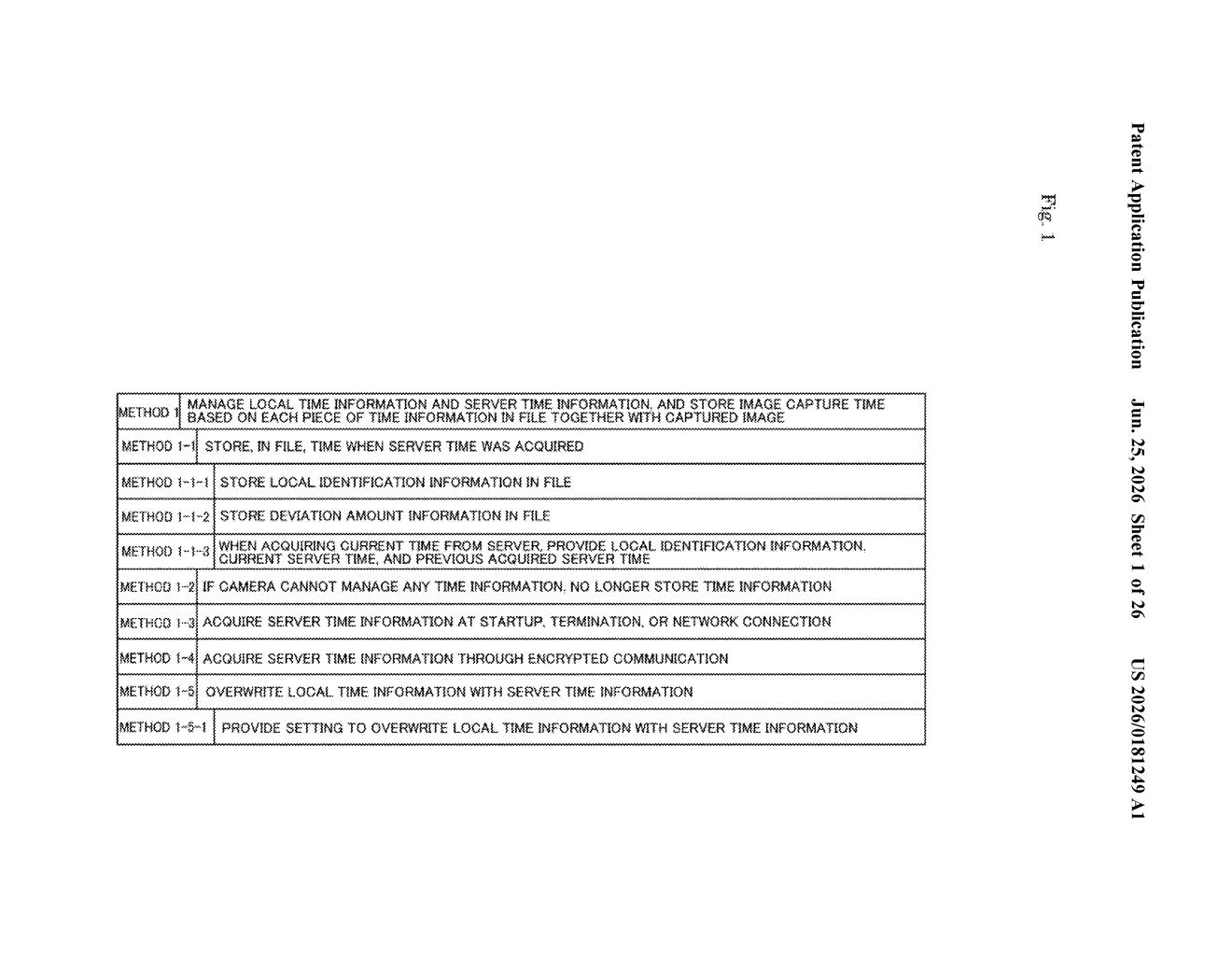
What Sony's dual-timestamp photo system actually does
Imagine you take a photo that ends up as evidence in a legal dispute, an insurance claim, or a news story. The question comes up: when was this really taken? Your camera's internal clock might be wrong, out of sync, or even tampered with. That single timestamp suddenly becomes a problem.
Sony's patent describes a camera that solves this by recording two separate timestamps in every image file. The first comes from the camera's own internal clock, set by the user or the device itself. The second is pulled from an external server, like an internet time service, giving you an independently verified reference point.
Both timestamps are stored together inside the photo file. So anyone who later looks at that image can compare the two. If they match, great. If they don't, at least you have the server-verified time to fall back on. It's a simple idea, but it adds a meaningful layer of trustworthiness to photos used in professional, legal, or journalistic contexts.
How the device manages two separate time sources per image
The patent describes an image processing device with five coordinated parts working together at the moment a photo is taken:
- A setting unit that establishes a "first time" from the device itself (the camera's internal clock, set manually or automatically).
- An acquisition unit that fetches a "second time" from an external server (think of a network time protocol server, an internet service that broadcasts highly accurate time).
- A time management unit that takes both of those starting times and tracks them separately using the device's own internal clock going forward. So even if connectivity drops after the initial sync, both time streams keep running in parallel.
- An imaging unit that captures the photo.
- A file generation unit that bundles the image together with both timestamps, labeled as a "first image capture time" and a "second image capture time."
The key detail is that both time references are tracked from their respective starting points using the same local clock inside the device. This means the gap between the two times stays consistent and measurable, even when the camera is offline.
What this means for photo authenticity and legal use cases
Photos are increasingly used as evidence, and the credibility of a timestamp can make or break an argument. Insurance claims, journalism, court proceedings, and content authentication systems all depend on knowing when an image was genuinely captured. A single device-side clock is easy to manipulate or accidentally misconfigure, which undermines the whole record. Having a server-sourced timestamp embedded alongside the local one gives any image file a built-in cross-reference.
For Sony, this fits a broader industry push toward verifiable media, particularly as AI-generated images make authentic provenance more valuable. This kind of dual-timestamp system could work alongside existing standards like C2PA (the Coalition for Content Provenance and Authenticity), which major camera makers including Sony have already joined. It's less about consumer snapshots and more about professional cameras, security systems, and any context where you need to prove when something happened.
This is a quiet but genuinely useful idea. The engineering here is not complicated, but the problem it addresses is real: a single camera clock is a weak link in photo credibility chains. Sony filing this suggests it is thinking seriously about how its cameras fit into professional workflows where provenance matters, not just image quality.
There are more where this came from
We read every patent application Big Tech publishes and send you the ones worth knowing. Plain English, free, every week.
Want this weekly breakdown for a company we don't cover? Patentlyze Pro →