
Samsung Patents an AI That Learns to Predict Only the Changes That Matter
Most AI systems that model the world try to track everything at once — Samsung's new patent takes a different approach, teaching an AI to zero in on only the causes most relevant to its next action.
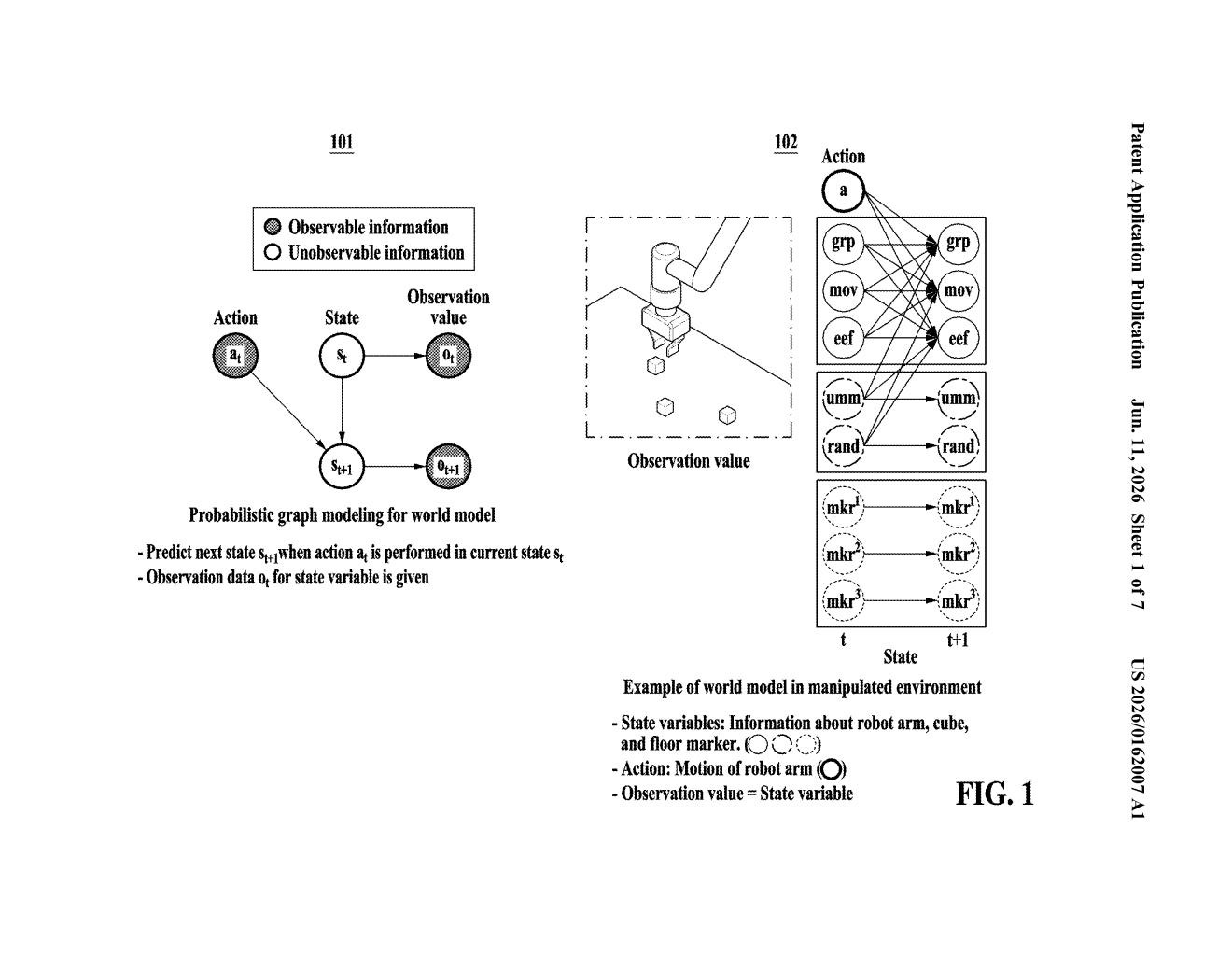
What Samsung's cause-filtering AI model actually does
Imagine you're teaching a robot to navigate a busy kitchen. Instead of making it pay equal attention to every pot, door, and person in the room, you'd want it to focus on whatever is actually about to affect what it does next. That's roughly the problem Samsung's new patent tries to solve.
The system works by having an AI observe its environment, take an action, and then predict what will change — but only by tracking the factors that caused that change, not every detail in the scene. It then checks its prediction against what actually happened and uses that feedback to get better over time.
The practical goal is a more efficient AI agent: one that doesn't waste computing power on irrelevant details and can build an accurate mental model of a changing environment with far less data than traditional approaches.
How the system selects causal variables dynamically
The patent describes a training method for what Samsung calls a dynamic causal environment model — an AI system that learns to predict how the world around it will change based on its own actions.
Here's how the loop works:
- The AI reads its current environment as a state variable — a compressed description of what's going on right now.
- It selects an action based on a policy (a set of rules or learned behaviors guiding its decisions).
- Rather than considering every possible factor, the system dynamically selects a subset of causal variables — the specific elements most likely to influence what happens next given the current state and chosen action.
- It predicts the resulting new state, then compares that prediction to what the environment actually looks like afterward.
- The gap between prediction and reality is used to train the model, tightening it over time.
The key novelty is that variable selection isn't fixed — it shifts depending on context. A robot reaching for an object on a crowded shelf would weight different causal factors than the same robot walking across an open room. This context-sensitive filtering is what distinguishes the approach from simpler world-modeling systems.
What this means for Samsung's robotics and AI ambitions
World modeling — teaching an AI to simulate what will happen next — is a foundational challenge for robotics, autonomous systems, and any AI agent that has to act in a physical or complex simulated environment. Systems that try to track everything are computationally expensive and often brittle. A model that learns which causes to care about in each specific moment could be more data-efficient and more accurate.
For Samsung, which has been building out its robotics hardware and AI research divisions, a patent like this fits into a broader push to make AI agents that can operate reliably in real-world, unpredictable settings. If this approach works at scale, it could improve everything from warehouse robots to smart home devices that adapt to changing household routines.
This is foundational AI research, not a near-term product feature — the kind of patent that matters if Samsung's robotics ambitions are serious, but easy to overlook because it doesn't attach neatly to a specific device. The causal-filtering angle is a legitimate research direction with real traction in the academic world, so this isn't just patent-stuffing. Watch for follow-on filings that apply it to specific hardware.
There are more where this came from
We read every patent application Big Tech publishes and send you the ones worth knowing. Plain English, free, every week.
Want this weekly breakdown for a company we don't cover? Patentlyze Pro →