
Microsoft Patent Aims to Speed AI Responses by Removing Redundant Words First
Every word you send to an AI model costs money and time. Microsoft has filed a patent for a system that figures out which words actually matter, strips out the rest, and sends a leaner package to the model.
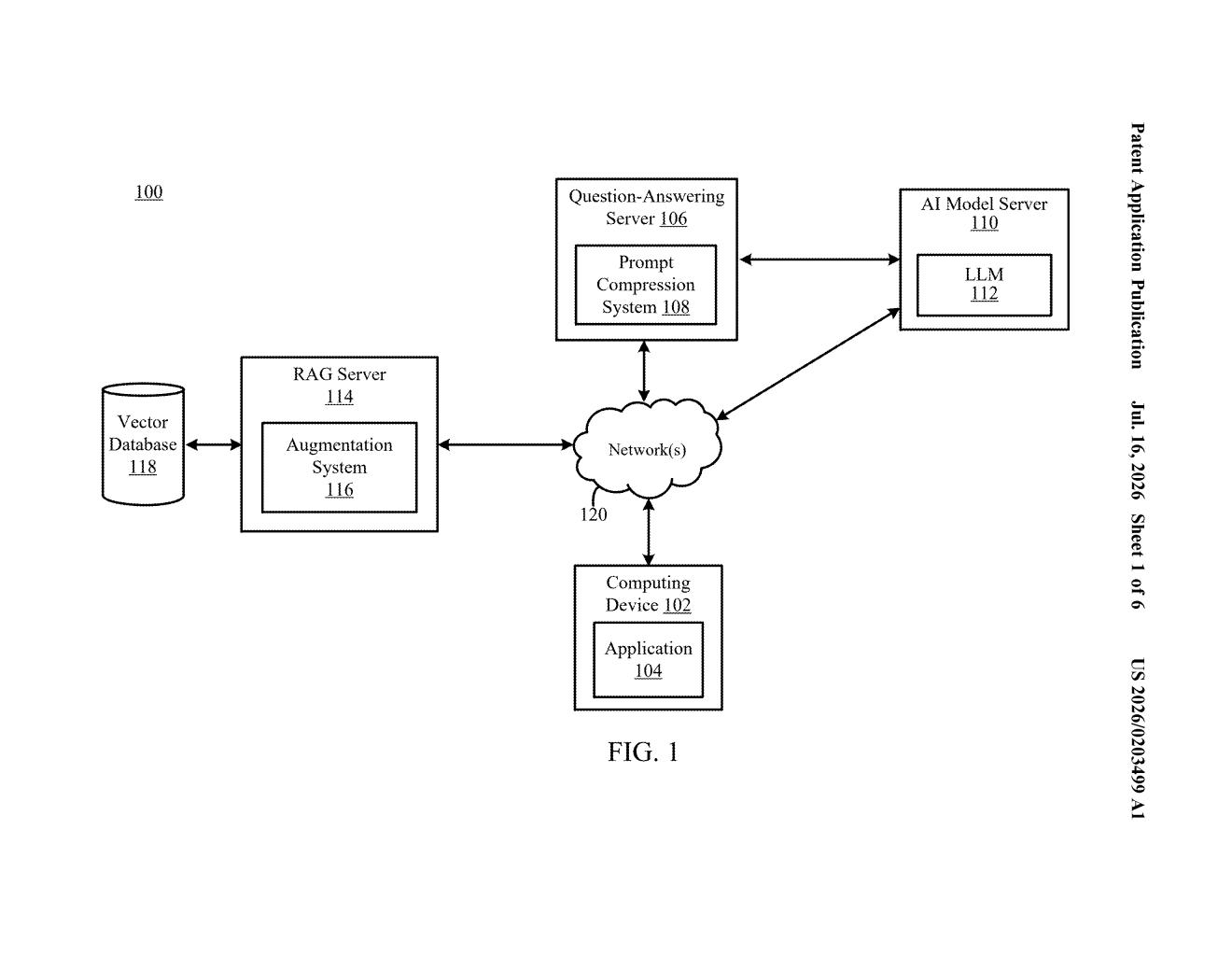
How Microsoft's prompt compression system works
Imagine you're asking an AI assistant a question, but instead of asking it directly, your app first has to stuff in a pile of background documents to help the AI answer well. That approach, called retrieval-augmented generation, works great but can get expensive fast because AI services typically charge by the word.
Microsoft's patent describes a system that reads those background documents, assigns each word an "importance score," and then compresses the text by trimming the low-scoring words before anything gets sent to the AI. The idea is that not every word in a document is equally useful for answering your specific question, so why pay to send them all?
The system uses a reusable template to decide what to keep and what to cut, so the compression is consistent and can be tuned to different types of content. The result is a shorter prompt that still carries the key information, in theory giving you a faster and cheaper AI response without sacrificing accuracy.
How keyword scoring drives the compression process
The patent describes a pipeline built around what Microsoft calls an abstract prompt template, a reusable structural pattern with placeholder slots. When a chunk of text needs to be compressed, the system fills in those slots with content from the current document fragment.
Before compression happens, the system consults an importance score listing, essentially a pre-computed table that ranks how useful each keyword in the dataset tends to be. Think of it like a frequency-weighted relevance map: words that consistently help answer questions score high, while filler words or redundant phrases score low.
The compression step then uses those scores to decide what survives the cut:
- High-importance keywords are preserved in the compressed output.
- Low-importance words and phrases are dropped or condensed.
- The resulting compressed fragment is assembled and packaged into the final prompt.
That compressed prompt is what actually gets sent to the large language model (LLM), the AI system that generates the answer. The patent situates this inside a retrieval-augmented generation (RAG) system, which is the standard architecture where an AI first pulls relevant documents from a database, then uses them as context to answer a question. This patent targets the step between retrieval and generation, making the retrieved context leaner before it hits the model.
What this means for AI costs and response quality
RAG systems are now a standard part of enterprise AI products, from customer support bots to internal knowledge tools. The bottleneck is often cost and speed: the more text you feed an AI model, the more you pay per query and the longer you wait. A compression layer that reliably trims prompts without losing the signal could make those products meaningfully cheaper to run at scale.
For Microsoft, which is embedding AI deeply into products like Copilot and Azure OpenAI Service, any efficiency gain at the prompt level compounds across millions of daily queries. Whether this compression approach holds up in practice depends heavily on how well the keyword scoring generalizes, but the basic problem it addresses is one every enterprise AI team is wrestling with right now.
This is infrastructure-level plumbing, not a headline feature, but it addresses a real and expensive problem in how modern AI products are built. Prompt costs are a genuine pain point for companies running RAG systems at scale, and a data-driven compression layer is a sensible engineering response. The first claim is canceled, which is a procedural note that suggests the patent may still be in active prosecution, so its final scope is genuinely unclear.
Get our take in your Top Stories
Liked this breakdown? Add Patentlyze as a preferred source on Google, and our plain-English take shows up more often in your Top Stories the next time Microsoft patent news breaks.
There are more where this came from
We read every patent application Big Tech publishes and send you the ones worth knowing. Plain English, free, every week.
Want this weekly breakdown for a company we don't cover? Patentlyze Pro →