
Qualcomm Patents a System That Adjusts Car Computer Power Based on How You Drive
Every time you start your car, the onboard computer has to wake up and get to work. Qualcomm's new patent describes a way to make that process smarter about power, depending on how often and how heavily you actually use the vehicle.
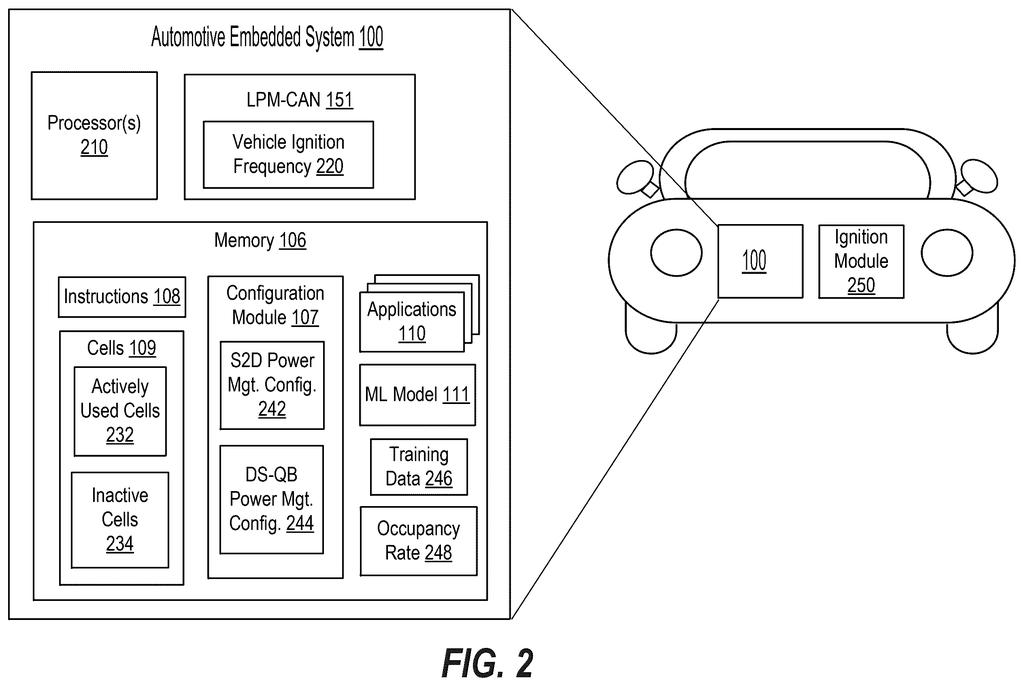
What Qualcomm's ignition-aware car chip power system does
Imagine two drivers: one who commutes daily and starts their car twice a day, and another who only drives on weekends. The computer chip running your car's infotainment, navigation, and sensors doesn't currently know the difference. It manages power the same way regardless.
Qualcomm's patent describes a system that watches two things: how often your car gets started, and how much of the chip's working memory is in use at any given moment. Based on those two signals, it picks a power management mode that fits your actual driving habits.
The practical payoff is that a rarely used car wouldn't drain its battery keeping chips in a high-power standby state, while a heavily used car could stay ready to go without sluggish wake-up times. It's a small but concrete improvement in how automotive electronics balance readiness against energy use.
How ignition frequency and memory use shape the power mode
The patent describes a method running on a processor inside an automotive embedded system (the computing hardware built into a vehicle for tasks like navigation, driver assistance, and connectivity). That processor continuously tracks two metrics:
- Vehicle ignition frequency: how often the car is started over a given time window, which signals whether the vehicle is used daily, occasionally, or rarely.
- Dynamic memory occupancy rate: how full the chip's working memory (RAM) is at any point, which reflects how demanding the current software workload is.
From those two inputs, the system selects a power management mode, then configures the embedded system accordingly. The claim doesn't prescribe a fixed set of modes; the method is general enough to apply to whatever power states the hardware supports, from deep sleep to full active operation.
The core insight is that neither signal alone is enough. A car started frequently but running light software might still benefit from a lower-power idle state. A rarely started car with high memory demands at ignition needs a different approach. Combining both signals gives a more accurate picture of what the chip actually needs.
What this means for connected-car chips and battery drain
For car manufacturers and chip designers, this kind of adaptive power management becomes more important as vehicles carry more onboard computing. A modern infotainment or driver-assistance chip can draw meaningful current even while the car sits in a driveway, and repeated shallow battery drains are a known ownership headache.
For you as a driver, the promise is a car that stays responsive when you need it and stops draining your battery when you don't. Qualcomm supplies chips to a wide range of automakers through its Snapdragon Automotive platform, so a method like this could eventually land in production vehicles without much fanfare.
This is incremental systems engineering, not a headline moment. The idea of using ignition frequency and memory occupancy to pick a power mode is straightforward, and the patent claim is intentionally broad. Its real value is as a building block inside Qualcomm's automotive chip software stack, the kind of thing that ships and saves a few milliamps across millions of cars.
There are more where this came from
We read every patent application Big Tech publishes and send you the ones worth knowing. Plain English, free, every week.
The drawings
5 drawing sheets from US 2026/0220989 A1 · click any drawing to enlarge


Want this weekly breakdown for a company we don't cover? Patentlyze Pro →
Be the first to weigh in