
Qualcomm Patent Bundles Sparse AR Layers to Cut Split Display Bandwidth
Sending AR graphics wirelessly to a headset display is surprisingly wasteful when each floating label, icon, or overlay travels as its own separate stream. Qualcomm's new patent describes a way to pack all those thin, mostly-empty layers into one tight bundle before transmission.
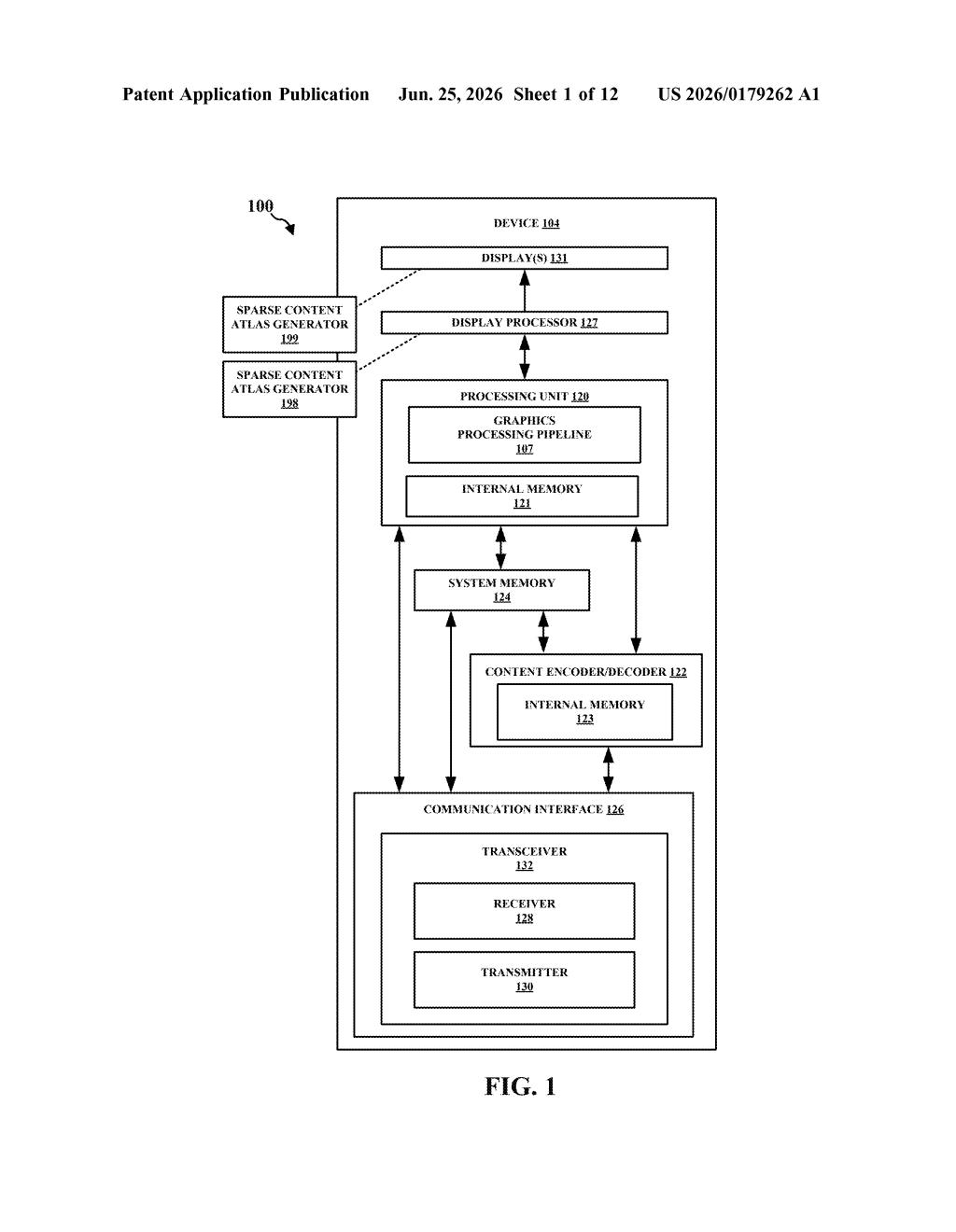
What Qualcomm's AR layer-bundling system actually does
Imagine your AR glasses are showing you a city map, floating street names, a battery indicator, and a navigation arrow, all at once. Right now, each of those elements might be sent as its own image layer over the wireless link between the processing unit and the lenses, even if most of each layer is blank space.
Qualcomm's patent describes a system that collects all those sparse, mostly-empty layers and stitches them into a single combined image, called an atlas, before compressing and sending it. The receiving display unpacks that one bundle and separates the layers back out. Instead of encoding four half-empty images, you encode one efficiently packed image.
The target here is split AR/MR hardware, where the heavy computing happens in a separate box or phone and the result is streamed wirelessly to lightweight glasses. Cutting the data that needs to travel that link means lower power use and less chance of visible lag.
How the atlas encoder merges and compresses sparse layers
The patent describes a display processor (the compute side of a split AR device) that identifies which image layers contain sparse content (meaning most of the layer is transparent or empty, like a floating UI element against a clear background).
Rather than encoding each sparse layer individually, the processor merges them into a single atlas, a combined texture map that packs all the non-empty regions together. That atlas is then encoded in one compression session and transmitted as a single encoded stream. On the other end, the display decodes the atlas in one pass and reconstructs the individual layers.
Key components described in the patent:
- Atlas generation: merger of multiple sparse layers into one packed image
- Single encoding session: one compression pass instead of one per layer
- Atlas decoding: the display reverses the process to recover the original layers
- Split architecture support: designed for devices where processing and display are physically separate units communicating over a wireless or wired link
The efficiency gain comes from the fact that video codecs are much better at compressing one dense image than many mostly-blank ones, and bundling multiple sessions into one reduces encoding overhead.
What this means for wireless AR glasses and split-render headsets
For consumer AR and mixed-reality glasses, the wireless link between a companion compute device (a phone, a puck, or an edge server) and the actual lenses is one of the biggest bottlenecks. Every extra megabit you send burns battery and risks frame drops that make overlays look jittery. A scheme that reduces how much data needs to cross that link, without degrading visual quality, directly affects how long your glasses stay charged and how stable the display feels.
Qualcomm supplies the chips inside many AR and XR devices, so a compression method like this would likely appear at the silicon level, available to any headset manufacturer using Qualcomm's platform. That makes it a quiet but practical building block for the next wave of lightweight AR glasses.
This is unglamorous infrastructure work, but it's exactly the kind of low-level efficiency patent that actually ships. Qualcomm's position as the dominant AR/XR chipmaker means this atlas-compression approach could show up in a wide range of devices without anyone knowing it's there. Worth tracking if you follow the AR hardware stack.
There are more where this came from
We read every patent application Big Tech publishes and send you the ones worth knowing. Plain English, free, every week.
Want this weekly breakdown for a company we don't cover? Patentlyze Pro →