
Qualcomm Patents a Configurable FMCW Waveform Scheme for Wireless Nodes
Qualcomm is filing patents around FMCW — the same radar waveform technique used in self-driving cars — but applied to wireless communication nodes. This one focuses on letting two devices agree on a precise, multi-slope frequency sweep before transmitting it.
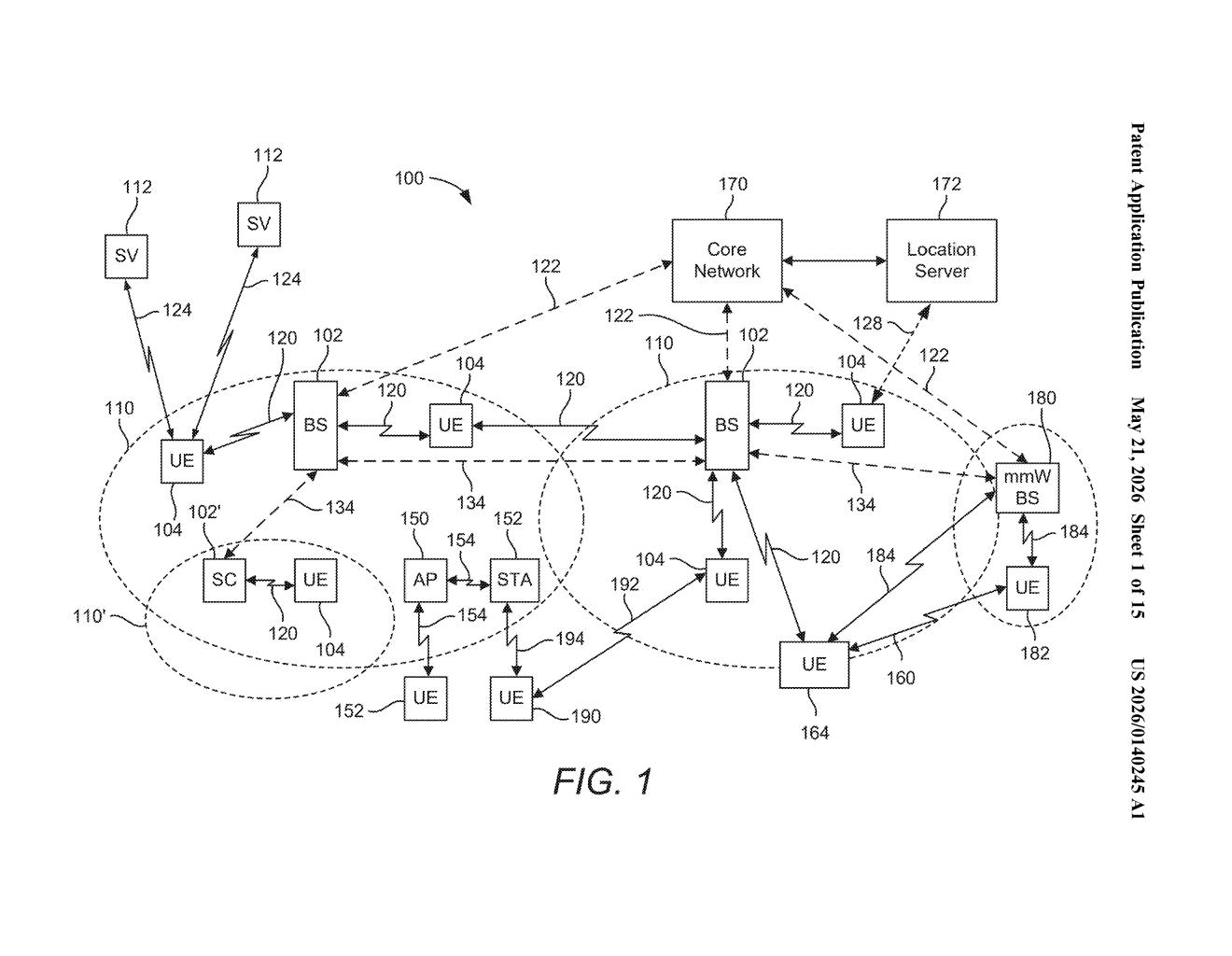
What Qualcomm's multi-slope FMCW radar signal actually does
Imagine a bat using sonar to find a moth — it sends out a chirp, and the echo tells it exactly how far away the moth is and how fast it's moving. FMCW (Frequency Modulated Continuous Wave) radar works the same way: instead of a single tone, it sweeps through a range of frequencies, and the reflected signal carries distance and velocity information.
Qualcomm's patent describes a system where one wireless node tells another exactly how to sweep those frequencies — specifically, using two back-to-back ramps with potentially different slopes. Think of it like telling a friend: "go from low to high at this speed, then continue to an even higher frequency at a different speed."
This kind of coordinated waveform signaling is the plumbing that would let your phone, a base station, or a connected device do radar-style sensing — not just communicate data — using the same radio hardware.
How the two-slope frequency sweep gets configured and transmitted
The patent describes a protocol for transmitting and receiving a FMCW waveform configuration — essentially a structured message that tells a receiving node the exact shape of the radar chirp it should expect or generate.
The configuration specifies:
- A first slope: how fast the signal ramps from a starting frequency (F1) to a middle frequency (F2)
- A second slope: how fast it continues ramping from F2 to a third frequency (F3)
Using two slopes rather than one is important. Different slopes offer different tradeoffs between range resolution (how finely you can distinguish distances) and velocity resolution (how finely you can distinguish speeds). A single-slope chirp optimizes for one at the expense of the other; a two-slope design can balance or extend both.
The abstract's fragmented timing notation (T_A, T_B, S1, S2, etc.) suggests the full patent details explicit time-domain sequencing parameters — precise start times, durations, and transition points for each slope segment. In practice, this means two nodes can synchronize their FMCW activity tightly enough to do cooperative sensing or avoid interference.
What this means for integrated sensing in 5G and 6G devices
Integrated sensing and communication — often called ISAC — is one of the defining features being designed into 6G standards right now. The idea is that the same radio that carries your data can also act as a radar, detecting objects, measuring distances, or tracking motion without dedicated sensing hardware. Qualcomm filing patents on FMCW waveform coordination is squarely in that space.
For you as a user, this kind of technology is what could eventually let a phone detect a fall, a base station sense pedestrian traffic, or a Wi-Fi router double as a presence detector — all without extra sensors. This particular patent is relatively narrow (just the waveform configuration signaling), but it's the kind of foundational piece that gets bundled into a larger standards portfolio.
This is a focused, infrastructure-level patent — not a flashy consumer feature, but exactly the kind of building block Qualcomm files to stake out territory in the ISAC space ahead of 6G standardization. The two-slope FMCW approach is a real technical distinction worth noting; it's not just paperwork.
There are more where this came from
We read every patent application Big Tech publishes and send you the ones worth knowing. Plain English, free, every week.
Want this weekly breakdown for a company we don't cover? Patentlyze Pro →