
Google Patents an AI Assistant That Plays Audio From the Direction You're Facing
When you ask your phone a vague question like "what's that building?", Google's patent describes a system that figures out which building you mean just by knowing where you're looking, then plays the answer as if the sound is coming from the building itself.
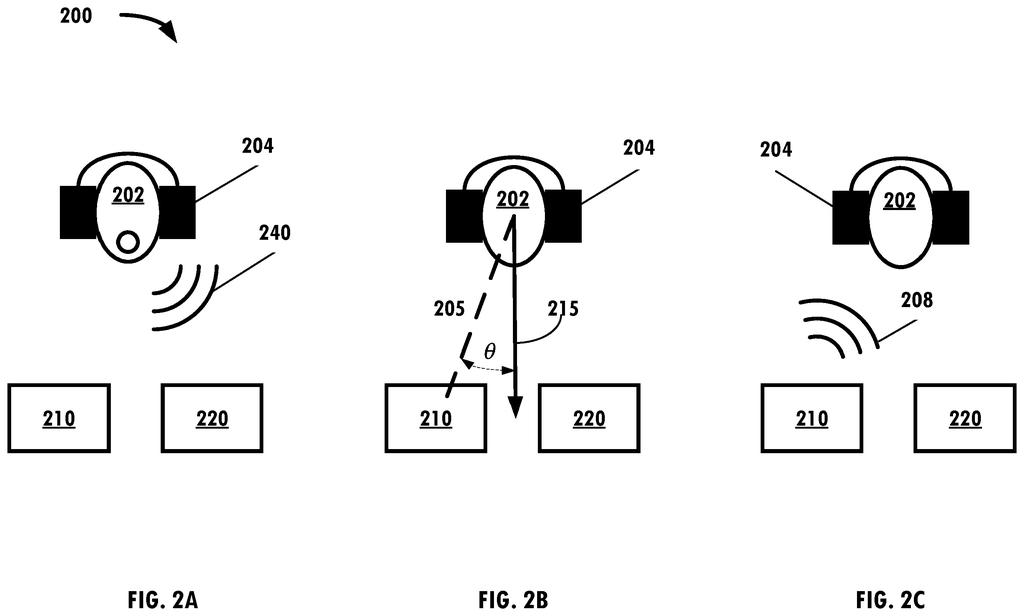
What Google's directional voice assistant actually does
You're walking down an unfamiliar street and you ask your phone, "Hey, what's that place?" without pointing or naming anything. Right now, your assistant has no idea what you mean.
Google's patent describes a system that solves this by combining two things: your phone's sensors to understand what's around you and which direction you're facing, and spatial audio, the same technology that makes headphone sound feel three-dimensional. When the assistant responds, it plays the answer as if the audio is coming from the actual spot you were looking at, like the building "talking back" to you.
The result is that "that place" stops being ambiguous. Your orientation does the pointing for you, and the reply is grounded in physical space rather than just floating out of your earbuds.
… resolving the ambiguous reference to a particular point of interest, of the one or more points of interest, based on the orientation of the user …
Translation: The system figures out what you are looking at based on which way you are facing.
How the system maps your surroundings and angles the audio
The patent outlines a method that runs on a client device, most likely a phone or wearable, and works in four main steps:
- Detect user input with an ambiguous reference: The user says something like "what is that?" or "tell me about this building" without naming a specific target.
- Map the environment using sensor data: The device uses cameras, GPS, motion sensors, or other inputs to identify nearby points of interest (specific places or objects in the real world) and calculate the user's orientation relative to each one.
- Resolve the ambiguity: Rather than asking the user to clarify, the system uses the user's facing direction to pick the most likely target. If you're turned toward a coffee shop, the assistant assumes you mean the coffee shop.
- Render the reply with spatial audio parameters: The audio response is processed so it sounds as though it originates from the physical direction of that point of interest. If the building is to your left, the answer sounds like it comes from your left.
The claim is specific about the ambiguous-reference case, meaning the system is designed to handle real conversational language rather than requiring precise commands. The sensor data does the disambiguation silently, in the background.
… determining, based on the orientation of the user of the client device relative to the particular point of interest, one or more spatial audio parameters to be used to provision the natural language response to the user …
Translation: The device calculates how to direct the sound so the voice seems to come from whatever object you are facing.
What this means for AR glasses and hands-free navigation
The problem this addresses is real: voice assistants are frustratingly literal, and casual human speech is full of vague references like "that," "this," and "over there." Making an assistant understand spatial context the way a person standing next to you would is a meaningful step toward making AI feel less like a search box and more like a guide.
The spatial audio angle is the part that stands out. Grounding a response in physical direction isn't just a novelty; it could make information easier to absorb when your eyes and hands are busy. the pattern in Google's AR and ambient-computing filings points toward a future where your assistant lives in the world around you, not just on a screen. That future needs exactly this kind of location-aware, direction-aware audio layer.
Google's 65th filing we've tracked in our AI assistant and agent work since May adds to a run that includes a two-model robot system and an AI video sharpening filter.
The problem this patent attacks is one of the most persistent friction points in voice AI: people don't talk like search queries. "What's that?" is perfectly natural human speech, but it's been essentially useless as a voice command. Solving ambient reference-resolution without making the user do extra work is a real challenge, and the approach here (let orientation do the pointing) is a clean fit for the problem.
The spatial audio component deserves credit too. Playing a response from the direction of the thing being described isn't decorative. When you're navigating on foot or in a store, hearing information spatially could genuinely reduce cognitive load compared to a voice that comes from nowhere in particular.
The limitation worth noting is hardware dependency. This works best with sensors accurate enough to know not just that you're near a row of shops, but which specific shop you're facing. That's a harder bar to clear on a phone than on AR glasses with dedicated spatial sensors. The patent is doing real work on a real problem, but its full payoff may be a device generation away.
There are more where this came from
We read every patent application Big Tech publishes and send you the ones worth knowing. Plain English, free, every week.
The drawings
5 drawing sheets from US 2026/0304067 A1 · click any drawing to enlarge


Want this weekly breakdown for a company we don't cover? Patentlyze Pro →
Be the first to weigh in