
Google Patents an AI That Reads a Form and Fills It Out for You
Filling out a long form usually means reading every field label, inferring what's allowed, and typing something that fits — Google wants an AI to do all of that for you, automatically, without breaking any of the form's rules.
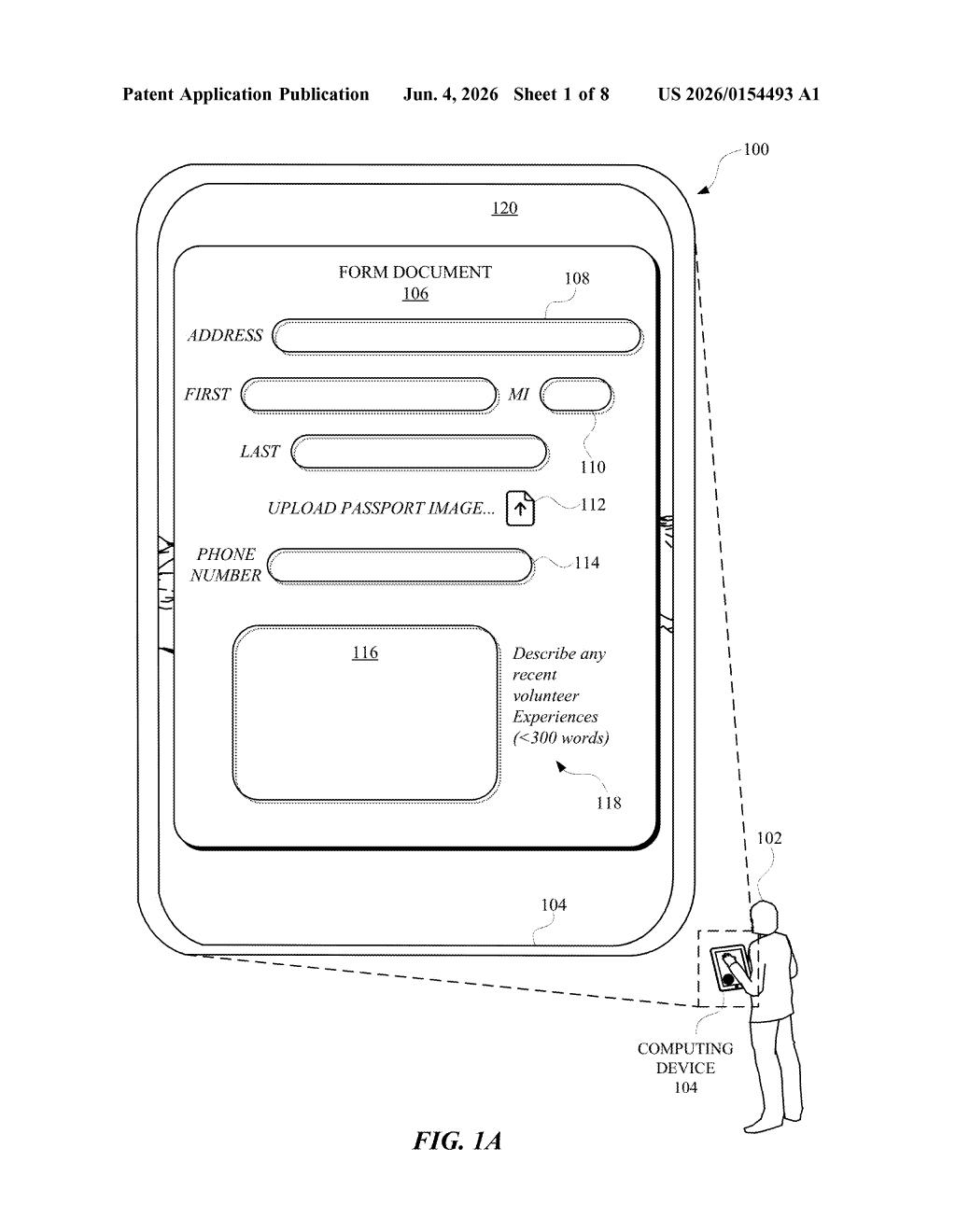
What Google's constraint-aware form AI actually does
Imagine you're filling out a vendor intake form or a legal document with dozens of fields. Some fields have obvious rules written out — 'max 250 characters' or 'select a department name' — but others just imply what's acceptable based on context. You have to figure that out yourself, which wastes time and often means switching between apps to look things up.
Google's patent describes an AI assistant that reads the form first, figures out both the written rules and the implied ones, and then quietly offers to fill each field with generated text that already fits those rules. A small indicator appears near the field to let you know AI-generated content is ready and waiting.
When you accept the suggestion, the AI doesn't just dump in generic text — it tailors the output to whatever constraints it detected for that specific field. The goal is to keep you in one place, filling the form faster, without you having to manually verify whether your answer is even compliant.
How the model infers limits and generates compliant text
The system works in two phases: constraint detection and constrained generation.
In the first phase, a generative model processes the entire form document — field labels, helper text, surrounding context, and any explicit validation rules — to build a picture of what each field expects. The patent distinguishes between two types of constraints:
- Express limitations: rules explicitly written into the form, like character limits, required formats, or dropdown options.
- Generative limitations: implicit rules the model infers from context — for example, a field labeled 'Project Justification' on a budget form probably expects formal, business-appropriate language even if no such rule is stated.
In the second phase, once constraints are known, the system renders a UI hint near eligible fields — essentially a nudge that AI-generated content is available. When the user signals interest (a click, a tap, a keyboard shortcut), the model generates content shaped by those constraints and inserts it into the field.
The claim also covers storing the generated content in association with the field, which implies the system can persist suggestions as part of the document's data model rather than just injecting raw text.
What this means for Google Workspace and Docs users
For anyone who lives in Google Workspace — Docs, Forms, or third-party apps built on Google's APIs — this could mean a future where filling out structured documents is far less tedious. The practical value isn't just speed; it's compliance. If the AI already knows what a field allows, it's much harder to accidentally submit something invalid.
The patent also gestures at a broader strategy: Google embedding its generative AI (almost certainly Gemini) deeper into document workflows, not just as a writing assistant you invoke manually, but as a proactive layer that reads context and acts before you even ask. That's a meaningful shift from 'AI you pull' to 'AI that pushes.'
This is a practical, unglamorous patent that could quietly become one of the more useful things Google ships into Workspace. Constraint-aware form filling is a real pain point — especially in enterprise settings where forms have both written rules and unwritten norms — and an AI that handles both is genuinely useful. Whether Google executes on it well is a different question, but the idea is sound.
There are more where this came from
We read every patent application Big Tech publishes and send you the ones worth knowing. Plain English, free, every week.
Want this weekly breakdown for a company we don't cover? Patentlyze Pro →