
Google Patents a System That Builds Custom Phone Shortcuts From Plain-English Requests
Instead of hunting through app settings to pin information to your home screen, Google is patenting a way to let you just ask for it in plain English and have the widget appear automatically.
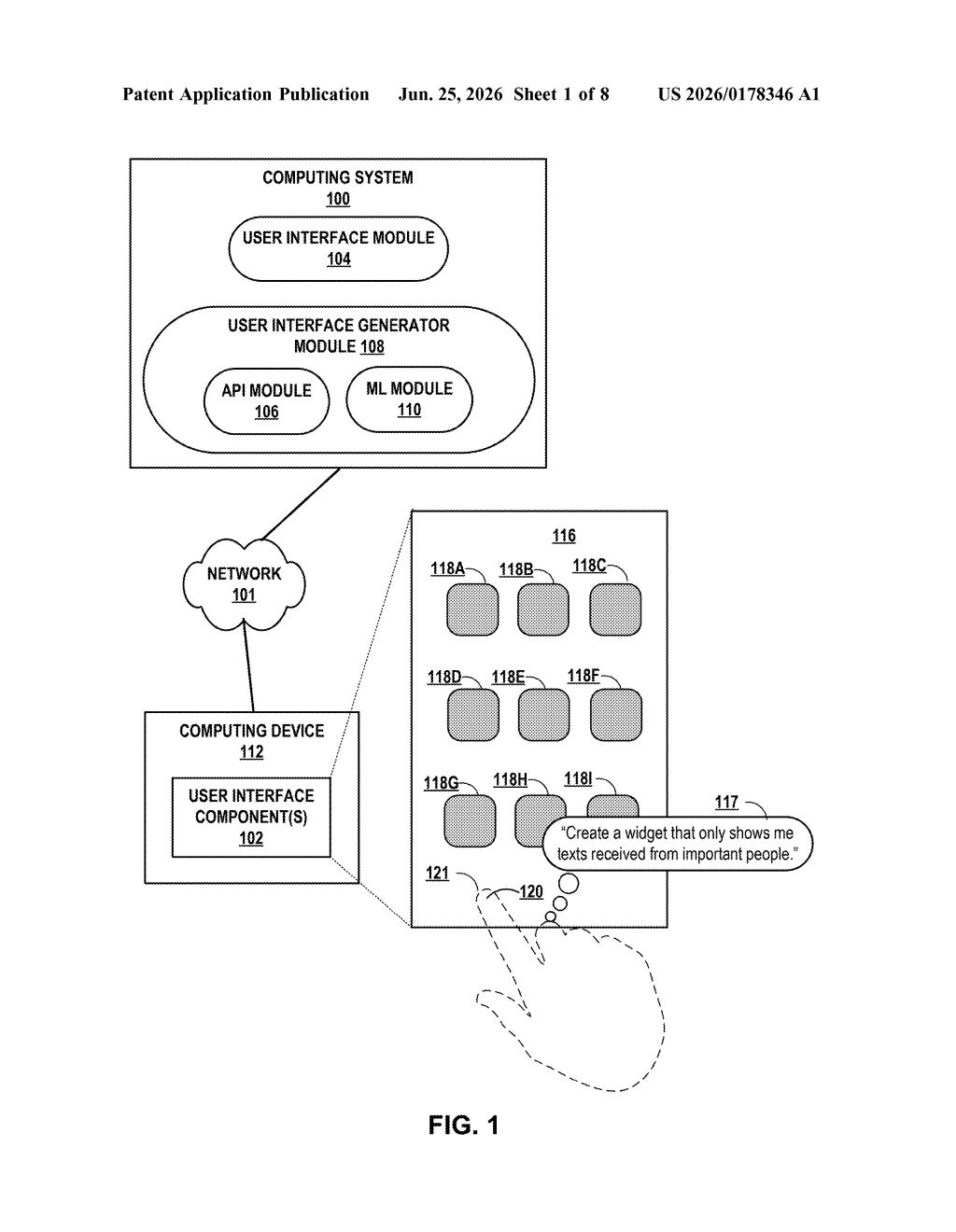
What Google's on-demand widget builder actually does
Imagine you want a widget on your phone's home screen that shows today's commute time alongside your first calendar meeting. Right now, you'd dig through apps, find widgets that roughly match, and hope they work together. Google's patent describes a system where you could just say what you want, and the phone builds the widget for you.
The system reads data from your apps, like your calendar, maps, or fitness tracker, to understand your personal context. When you make a request, an AI figures out what you're actually trying to accomplish, then assembles a custom graphical panel using the relevant information it already has access to.
The result is a widget built around your situation, not a generic template someone designed months ago. Think of it as asking a very well-informed assistant to put together a custom dashboard tile, rather than rummaging through an app store.
How the system turns a request into a working widget
The patent describes a three-stage pipeline running on a computing system, most likely a phone or a cloud backend connected to one.
- Data retrieval: The system calls out to installed apps via APIs (application programming interfaces, the standard way software talks to other software) to pull live information, things like upcoming events, traffic conditions, or recent health stats.
- Context building: It combines that raw app data into a personal context profile for the user, a running picture of what's relevant to you right now.
- Intent resolution and code generation: When you make a natural-language request (typed or spoken), a machine learning model interprets your intent (what you actually want, not just the literal words), then generates a set of instructions that produce a graphical component, specifically a widget, tailored to that intent.
The claim is deliberately broad: the "graphical component" could be a classic Android home-screen widget, but the language doesn't rule out other UI panels or cards. The key move is that no pre-built template is required: the instructions are generated fresh based on the combination of your request and your live data.
What this means for how you customize your phone
Android already supports widgets, but building or customizing them is a developer job. This patent describes shifting that work to an AI layer, meaning ordinary users could get purpose-built UI elements without any manual configuration. If it ships, the home screen stops being a static grid you arrange once and becomes something that responds to what you ask for.
For Google, this fits neatly into the broader Gemini push: on-device AI that knows your apps and can act on that knowledge in visible, tangible ways. A widget you asked for in plain English is a much clearer demonstration of AI usefulness than a chatbot answer, and it sticks around on your screen where you see it every time you unlock your phone.
This is one of the more concrete AI-assistant patents Google has filed recently, because the output is something you can actually see and touch rather than a background process. The hard part will be making widget generation reliable enough that users trust it the first time; one confusing or wrong widget and the feature becomes a novelty. Still, the concept is genuinely useful and the timing lines up with Google's Gemini-in-Android roadmap.
There are more where this came from
We read every patent application Big Tech publishes and send you the ones worth knowing. Plain English, free, every week.
Want this weekly breakdown for a company we don't cover? Patentlyze Pro →