
Google Patents a Shortcut That Skips Repeated Work in AI Image Generation
Every time an AI image model generates a picture, it repeats many of the same calculations over and over. Google's new patent describes a way to remember those repeated results so the chip doesn't have to redo them.
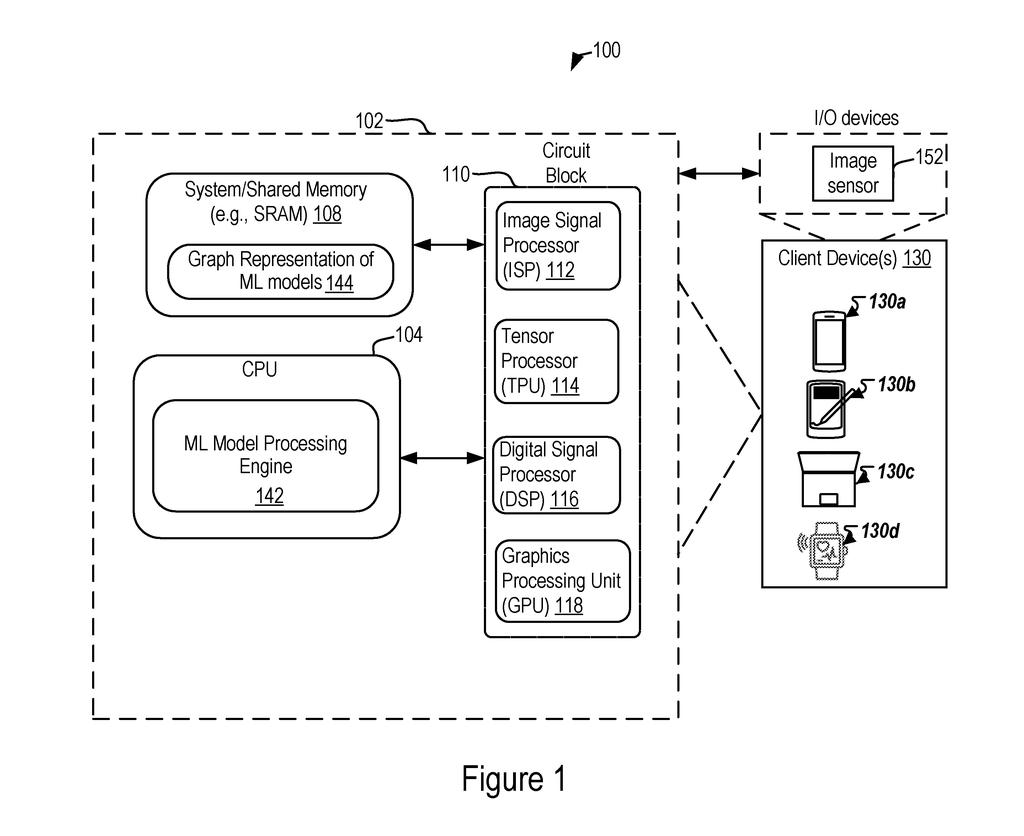
How Google's caching shortcut speeds up AI image models
Imagine a chef who has to bake 50 identical cake layers before assembling a wedding cake. If the recipe for the bottom layer never changes, the chef could bake it once, store it, and reuse it every time instead of starting from scratch. Google's patent applies the same logic to AI image generation.
When an AI creates an image (think of tools like Google's own image generators), it runs the same math-heavy neural network dozens or even hundreds of times in a row, each pass refining the picture from noise into a clear image. A big portion of those passes involves identical or near-identical calculations. This patent proposes inserting "cache nodes" into the process, which are basically memory slots that save the result of a calculation so the chip can skip rerunning it.
The result is that the AI accelerator chip, Google's TPU-style hardware, does less redundant work on each image-generation cycle. Fewer steps means faster output and lower energy use, which matters a lot when you're running millions of image requests.
How the execution graph skips repeated subgraph runs
The patent targets denoising diffusion models, the class of AI behind most modern image generators (stable diffusion, Imagen, and similar tools). These models work by iteratively removing noise from a random image until a coherent picture emerges, a process that can require 20 to 1,000 separate passes through the same neural network.
Google's approach starts by breaking the neural network into a partitioned graph, a map of the model split into connected sections called subgraphs, each representing one or more layers of the network. The system then checks that this map forms a directed acyclic graph (meaning the data flows in one direction with no loops), which is a prerequisite for the optimization to work safely.
Once the structure is confirmed, the system inserts cache nodes at strategic points. Each cache node sits next to a subgraph and stores that subgraph's output the first time it runs. On subsequent passes through the network where that subgraph's inputs haven't changed, the execution plan simply reads from the cache and skips rerunning the subgraph entirely.
Finally, the system separately compiles each distinct subgraph into runtime code tailored for the ML accelerator hardware. This static compilation approach (deciding the execution plan ahead of time rather than on the fly) is standard practice for Google's TPUs, and the caching layer slots into that existing workflow.
What this means for AI image generation at Google's scale
Diffusion models are notoriously slow and power-hungry compared to other AI architectures, and the repeated-pass design is the core reason why. Any meaningful reduction in redundant computation directly translates to faster generation times and lower server costs, both of which matter if Google wants to run image generation at the scale of Search or Workspace.
For end users, the practical promise is quicker image output without a change in quality. For Google's infrastructure teams, skipping redundant chip work on millions of daily requests adds up to real energy and cost savings. This kind of compiler-level optimization is also largely invisible to competitors, making it a defensible efficiency advantage tied tightly to Google's own accelerator hardware.
This is unglamorous but genuinely useful engineering work. The idea of caching intermediate results isn't new in computer science, but applying it systematically inside a compiled ML execution graph for diffusion models is a real optimization with measurable impact. It's the kind of patent that shows up in production TPU software and saves Google millions in compute costs without anyone outside the company ever noticing.
There are more where this came from
We read every patent application Big Tech publishes and send you the ones worth knowing. Plain English, free, every week.
The drawings
8 drawing sheets from US 2026/0220439 A1 · click any drawing to enlarge


Want this weekly breakdown for a company we don't cover? Patentlyze Pro →
Be the first to weigh in