
Google Patents a Text-Driven Photo Editing System That Learns by Studying Subtle Image Differences
Telling an AI to 'make the sky stormy' sounds simple, but getting it to change only the sky without wrecking everything else is genuinely hard. Google's new patent describes a training approach that teaches an image-editing network exactly how much to change, by comparing how two versions of an image differ in the eyes of a separate AI.
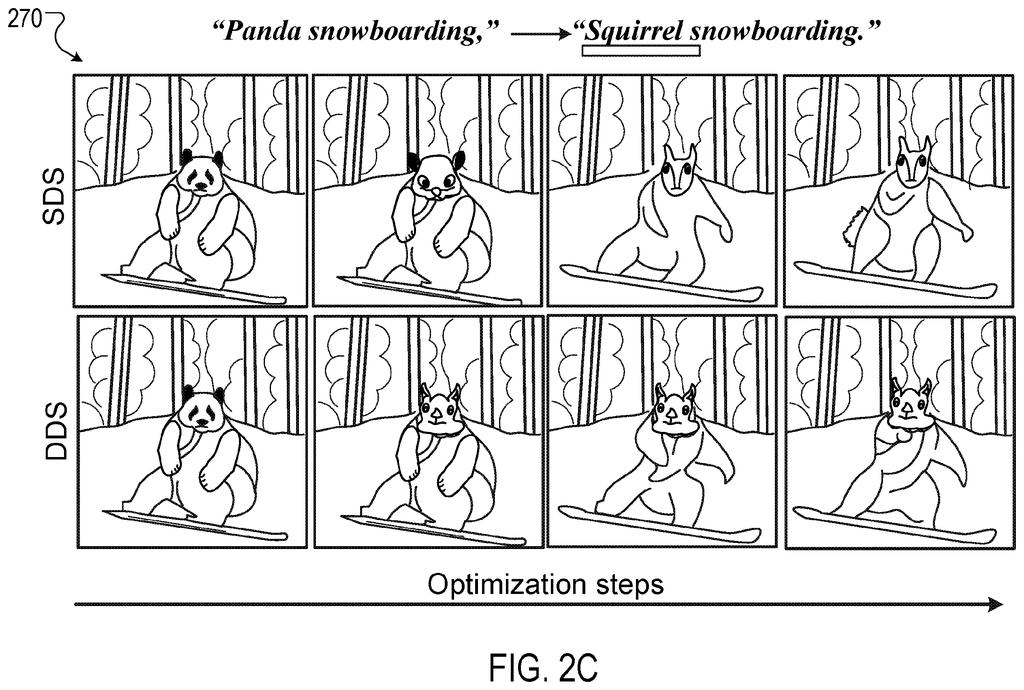
What Google's AI photo-editing training method actually does
Imagine you hand a photo editor a picture of a sunny park and say, 'Now make it look like autumn.' A good editor changes the leaves, maybe the light, but leaves everything else alone. Getting an AI to do the same thing consistently has been one of the trickier problems in image generation.
Google's patent describes a way to train an AI network to do those kinds of targeted edits. The trick is using a second, already-trained AI (a diffusion model, the same family of models behind tools like Stable Diffusion) as a judge. During training, that judge looks at both the original photo and the AI's edited version, and compares how differently each one appears under its own noise-based analysis. The gap between those two readings becomes the signal that tells the editing network whether it went too far, not far enough, or changed the wrong things.
The result is a network that learns to follow a text instruction like 'add snow' or 'change the jacket to red' without needing a human to label thousands of before-and-after pairs by hand.
Methods, systems, and apparatus, including computer programs encoded on computer storage media, for editing images using delta denoising scores.
Translation: The patent covers computer tools that edit digital photos by calculating small score changes.
How the delta denoising score guides each editing step
The patent describes a training pipeline for an image-to-image translation neural network (an AI that takes one image and produces a modified version). The core challenge: how do you tell a network whether its edit was any good, when 'good' depends on subjective text descriptions?
Google's answer is a technique called delta denoising scores. A separate, pre-trained diffusion model (the type of AI that generates images by gradually removing noise from a random starting point) is used as an evaluator. For each training example, the diffusion model processes two inputs:
- The original image, paired with a text description of what it shows.
- The edited image produced by the network being trained, paired with a text description of what the target should look like.
Both runs produce a denoising output (essentially, a prediction of how the diffusion model would clean up each image). The difference between those two outputs, the delta, becomes the training signal. It tells the editing network's training process which direction to adjust its internal settings (its parameters) to produce edits that better match what the target text describes.
Because this signal comes from a powerful pre-trained model rather than hand-labeled data, the training process can generalize across many different editing tasks, such as style changes, object swaps, or lighting adjustments, without needing a separate labeled dataset for each one.
What this means for AI tools that edit photos from text prompts
The practical problem here is real and expensive. Building reliable AI photo editing today typically requires large collections of matched before-and-after images, which are costly and slow to produce. A training method that instead uses a pre-trained diffusion model as its quality judge could make it much cheaper to teach an AI new types of edits.
For you as a user, this kind of research is what sits behind text-prompt editing features in tools like Google Photos or Gemini-powered apps. If the underlying training is more efficient and generalizable, those features become more reliable across a wider range of photos and instructions, rather than working well only on the specific scenarios the developers happened to label.
Google's 55th filing we've tracked since May in the AI photo editing race adds to earlier work like their faster image compression and a tap-to-cut object tool.
Ask an AI photo editor to soften a shadow and it shifts the mood of the entire image. That gap between what a user requests and what the tool actually changes is one of the most persistent frustrations in practical photo editing, and it gets worse the more precise the professional requirement.
Closing that gap normally requires thousands of carefully labeled before-and-after image pairs, which are expensive and slow to produce. This patent sidesteps that bottleneck by using an already-capable image-generation model as a stand-in teacher, letting it supply the training signal rather than human annotators.
The open question is whether a model trained this way learns to follow instructions broadly or only in the narrow categories it practiced on. Precision editing matters most exactly where the requests are unusual, and that is where any shortcut in training tends to show its limits.
There are more where this came from
We read every patent application Big Tech publishes and send you the ones worth knowing. Plain English, free, every week.
The drawings
7 drawing sheets from US 2026/0278879 A1 · click any drawing to enlarge


Want this weekly breakdown for a company we don't cover? Patentlyze Pro →