
Google Patents a Way to Feed Different Text Instructions to Each Layer of Its AI Image Generator
Most AI image generators take a single text prompt and feed the same instructions to every part of the model. Google is patenting a system that gives each layer its own separate set of instructions, potentially giving creators far finer control over the final result.
What Google's per-layer image prompting actually does
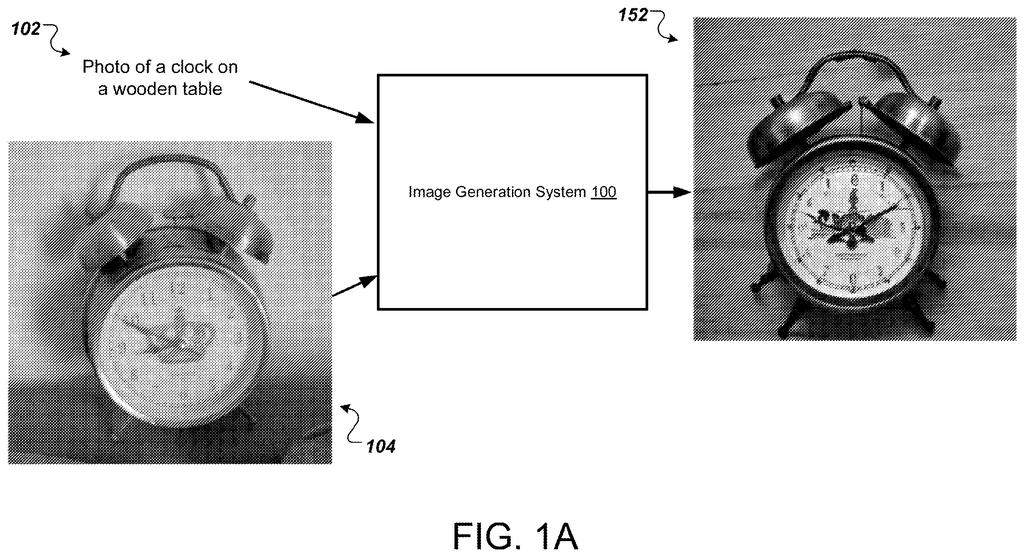
You're typing a prompt into an AI image tool, asking it to generate a painting of a forest at dusk. Right now, every internal part of that AI reads the same instructions you typed, start to finish. Google's new patent describes a different approach: different layers of the AI get different versions of your prompt, each tuned to what that particular layer is best at handling.
Think of it like a kitchen where the prep cook, the line cook, and the finishing chef each get their own instruction card instead of passing around one shared recipe. The idea is that each stage of image building has different needs, and giving each one a specialized prompt could produce better, more precise results.
The system builds a separate text embedding (a numerical translation of your words) for each layer in the model, rather than recycling one embedding across all of them. Google is betting that this expanded instruction space gives the model more room to capture detail and nuance.
generating a first token embedding; generating a second token embedding that is different from the first token embedding; generating an output image by using a diffusion model comprising multiple neural network layers, wherein the multiple neural network layers comprise a first neural network layer followed by a second neural network layer …
Translation: The system creates different text instructions and feeds them into sequential layers of an image generation model.
How each neural network layer gets its own token embedding
Standard text-to-image systems, like those behind tools such as Stable Diffusion or Google's own Imagen, convert your text prompt into a single set of numbers called a token embedding. That embedding is then injected at various points into a diffusion model (an AI that starts with noise and gradually refines it into a coherent image over many steps).
Google's patent changes that by creating multiple distinct token embeddings, one for each layer in the model. Here's what that looks like in practice:
- The first neural network layer receives the image's current rough state plus its own dedicated text embedding.
- That layer produces an updated image state, which is passed to the second layer along with a different text embedding.
- This continues through all layers at every time step of the diffusion process.
The paper behind this approach calls the combined set of all these per-layer embeddings an extended conditioning space. Because each layer is responsible for different aspects of image structure (early layers handle broad composition; later layers handle fine details), giving each layer its own instructions lets the model be guided more precisely at every level of abstraction. The claim covers any diffusion model architecture where at least two consecutive layers receive distinct conditioning inputs.
At each of multiple time steps, the first neural network layer receives a first conditioning input, and the second neural network layer receives a second conditioning input that is different from the first conditioning input.
Translation: As the image builds step by step, each distinct layer gets its own unique set of directions.
What this means for AI-generated image quality and control
For everyday users, this kind of change could mean AI image tools that follow complex prompts more accurately, producing outputs where the overall scene, the mid-level textures, and the fine details each reflect what you actually asked for rather than a blurry compromise across all three. Google's steady investment in diffusion-model control suggests the company is serious about closing the gap between what you type and what appears on screen.
For the AI image industry broadly, the scope of claim 1 is wide. It covers any system that sends different conditioning inputs to consecutive layers of a diffusion model, which is a fairly general description. If granted in its current form, it could create legal friction for competitors building similar multi-prompt architectures, though enforcement questions are always separate from the patent itself.
This is the 30th filing from Google in our AI image and video coverage since May, adding to work like one that grades its own drafts and editing images by gesture.
Claim 1 covers any image-generating system that sends different instructions to different consecutive processing stages during generation, full stop. It does not require a specific architecture, a specific number of stages, or a specific method for creating those distinct instructions. That is a wide perimeter.
If granted, that breadth means any developer building a tool where one layer of the generation process receives different guidance than the next layer could fall inside this patent's reach, regardless of how they arrived at that design.
For everyday users, the underlying idea is meaningful: when a model can respond to different parts of a prompt at different moments in the generation process, the results feel more deliberate and controllable, less like luck. A patent this broad over that general technique would concentrate significant leverage over how future image tools are built and who gets to build them.
There are more where this came from
We read every patent application Big Tech publishes and send you the ones worth knowing. Plain English, free, every week.
The drawings
7 drawing sheets from US 2026/0268553 A1 · click any drawing to enlarge


Want this weekly breakdown for a company we don't cover? Patentlyze Pro →