
Google Patents an AI That Picks the Right Specialist AIs to Answer Your Question
Instead of one AI trying to do everything, Google's new patent describes a system where a "coordinator" AI reads your question and decides which specialist AIs are best suited to answer it — then stitches their answers together into one response.
How Google's AI model-routing system works for you
Imagine you walked into an office and asked the receptionist a complicated question about your taxes, your health insurance, and your legal options all at once. A good receptionist doesn't try to answer everything themselves — they route you to the right specialists and then pull their answers together into one coherent reply. That's exactly what this Google patent describes, but for AI.
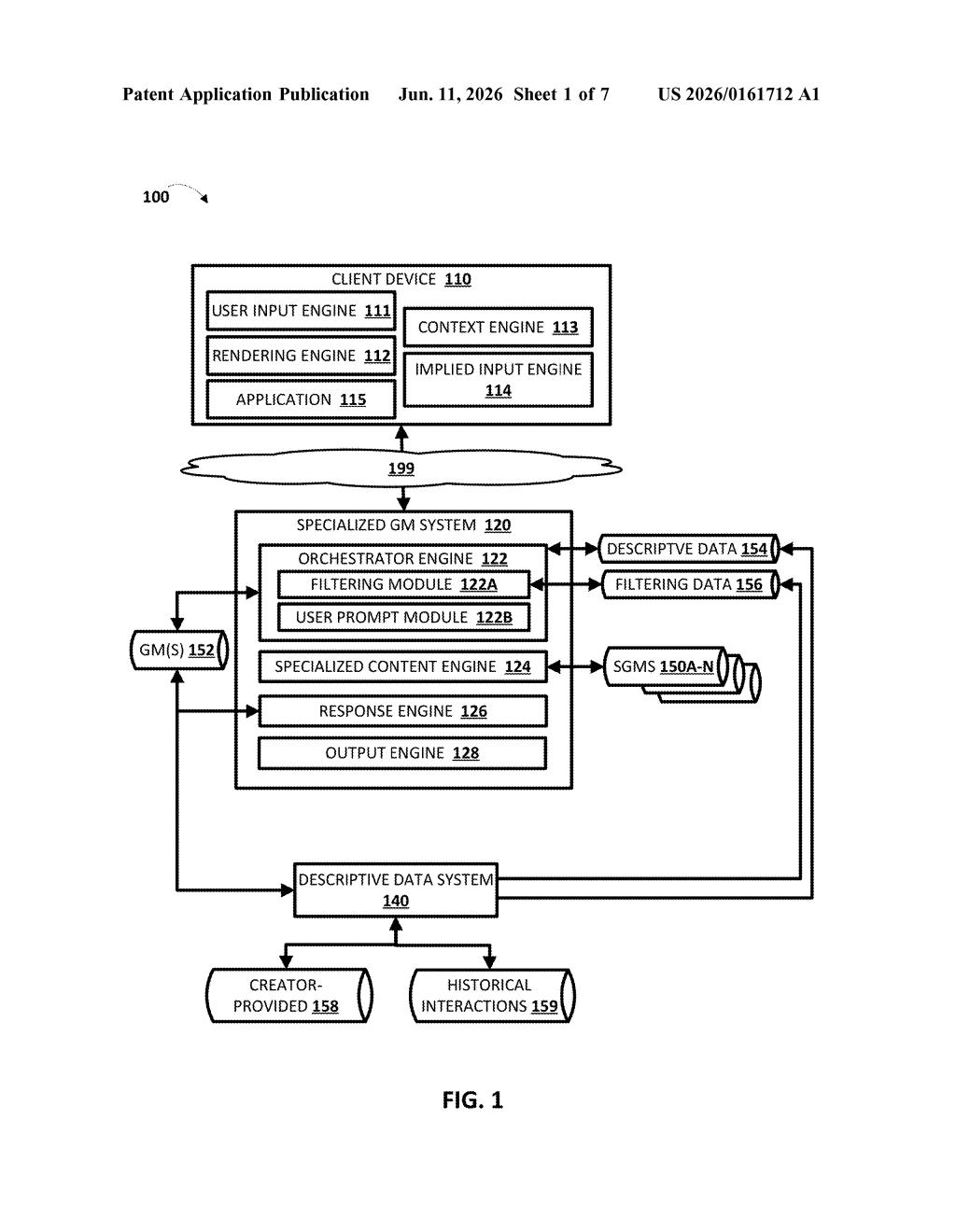
When you send a request to Google's system, a general-purpose AI first reads your question along with short descriptions of several specialist AIs available to it. It then decides which specialists are relevant and hands your question off to them. Each specialist generates its own response, and those responses are combined into a single final answer delivered back to you.
The key insight is that no single AI needs to be great at everything. A coding specialist, a math specialist, and a writing specialist can each do their part — and a coordinator AI manages the handoffs. It's a divide-and-conquer approach to answering complex questions.
How the router prompt selects and combines specialist outputs
The patent describes a multi-stage pipeline built around what Google calls Specialized Generative Models (SGMs) — AI models each trained or fine-tuned to excel in a particular domain (think: code generation, data retrieval, creative writing, or factual question-answering).
Here's how the process flows:
- Your request arrives at the system alongside descriptive data — essentially short capability descriptions — for each available SGM.
- A separate coordinator model (a general-purpose AI that is not one of the specialists) receives a prompt that bundles your request with all those descriptions.
- That coordinator generates initial content — essentially an assessment of which specialists are relevant and possibly a breakdown of sub-tasks.
- Based on that assessment, a subset of SGMs is selected and each one processes the request (either the full original request or a specialized version of it).
- Their individual outputs are merged into a single responsive content that gets sent back to your device.
The coordinator model acts like an intelligent dispatcher. It doesn't try to answer your question — it reads the room, picks the right experts, and synthesizes their work. The patent also allows for a single SGM to be selected when the question only calls for one specialist.
What this means for the future of Google's AI products
For users, this architecture could mean more accurate and nuanced answers to complex, multi-part questions — the kind that currently cause even capable AI assistants to hallucinate or give shallow responses because they're stretching beyond their training strengths.
For Google, this is a blueprint for scaling AI quality without having to build one impossibly large model that excels at everything. Instead of a single monolithic AI, you get a coordinated team of focused models. That's a meaningful architectural bet, and it lines up with the direction the broader AI industry is moving — toward so-called "mixture of experts" and multi-agent systems. If this ships inside Google's Gemini ecosystem or Google Search AI features, the routing logic described here could quietly determine which AI model handles your question every time you ask.
This is a genuinely important architectural patent, not a cosmetic one. Google is essentially filing a blueprint for how to run AI like a well-managed team rather than a single overworked generalist — and that approach is increasingly where serious AI deployments are heading. Whether this exact implementation shows up in Gemini or elsewhere, the direction is clear and worth tracking.
There are more where this came from
We read every patent application Big Tech publishes and send you the ones worth knowing. Plain English, free, every week.
Want this weekly breakdown for a company we don't cover? Patentlyze Pro →