
Google's New Patent Hides the Grid Pattern That Makes AR Glasses Look Strange
One of the biggest reasons AR glasses look strange on your face is that their lenses have a visible grid-like pattern built into them. Google is filing a patent for a coating designed to make that problem invisible.
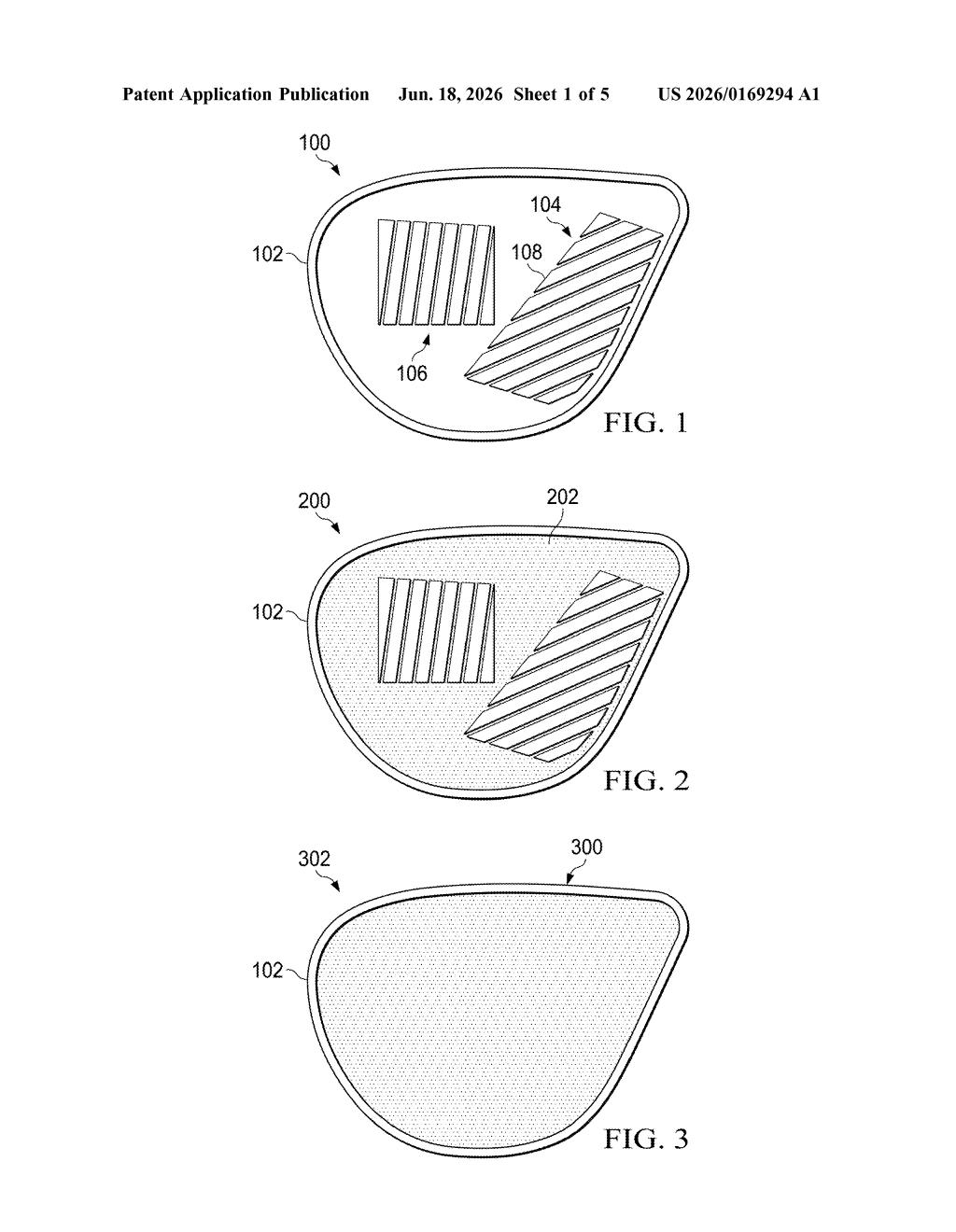
Why AR lenses look patchy — and how Google fixes it
Imagine looking at someone wearing AR glasses and noticing that their lenses have a faint striped or patchy look — not like regular glasses at all. That visual oddity happens because AR lenses are packed with tiny internal mirrors that bounce digital images into your eyes. Those mirror-filled zones and the clear zones around them let through different amounts of light, creating a contrast pattern you can see from the outside.
Google's patent describes a fix: apply a special coating to the lens in the clear zones — the parts without mirrors — so that those areas dim light by the same amount the mirror-filled zones do. The result is a lens that looks visually consistent from the outside, with no patchwork pattern.
It's a subtle but real problem for anyone who cares about wearing AR glasses in public without looking like they have lab equipment on their face. This patent is about making the hardware less conspicuous, not more powerful.
How the coating balances light across the waveguide
The core component here is a reflective waveguide — the flat lens element in AR glasses that both lets you see the real world and projects digital imagery into your eye using internal reflections.
Inside that waveguide sits a grid of semi-transparent louver mirrors (think of them as rows of microscopic angled blinds). These mirrors reflect the projected image toward your eye while still allowing some ambient light through so you can see the world in front of you. The problem is that the regions of the lens with these mirrors transmit a different amount of light than the regions without them — creating visible contrast bands or patches when someone looks at the lens from the outside.
Google's solution is a matching coating applied to the mirror-free regions. The coating is tuned to have the same light transmission characteristic as the louver-mirror zones — meaning it blocks or absorbs roughly the same fraction of light. With both zones now passing equal amounts of light, the lens surface looks uniform.
The patent covers two ways to apply this:
- On the external surface of the waveguide substrate, placed only over the clear zones
- At the internal interface between two bonded glass pieces that form the waveguide, again aligned to the mirror-free regions
What this means for Google's next AR glasses push
AR glasses have struggled commercially in part because they look strange — the optics required to project images into your eyes tend to make the lenses look industrial or asymmetric. A coating that makes the lens appear optically uniform brings the product closer to something that actually looks like eyewear rather than a prototype.
Google has a history with this space, from Google Glass to its acquisition of North and investment in Magic Leap. This patent suggests the company is still working through real optical engineering for wearable AR, not just software. For you as a future wearer, it's the kind of behind-the-scenes fix that determines whether you'd actually put these on before a work meeting.
This is a narrow but genuinely useful engineering patent — it addresses one of the most visible (literally) cosmetic flaws in AR waveguide lenses. It won't make headlines, but it's exactly the kind of detail that separates AR glasses people will actually wear from the ones that sit in a drawer. Worth tracking as a signal that Google is still doing serious optical hardware work.
There are more where this came from
We read every patent application Big Tech publishes and send you the ones worth knowing. Plain English, free, every week.
Want this weekly breakdown for a company we don't cover? Patentlyze Pro →