
Google Patents a Way for AR Glasses to Know When Their Lens Has Cracked
If the optical lens inside a pair of AR glasses cracks, it might not be obvious — the image could still project fine, but the cracked glass could be unsafe or cause subtle display problems. Google's new patent describes a system that catches that break automatically.
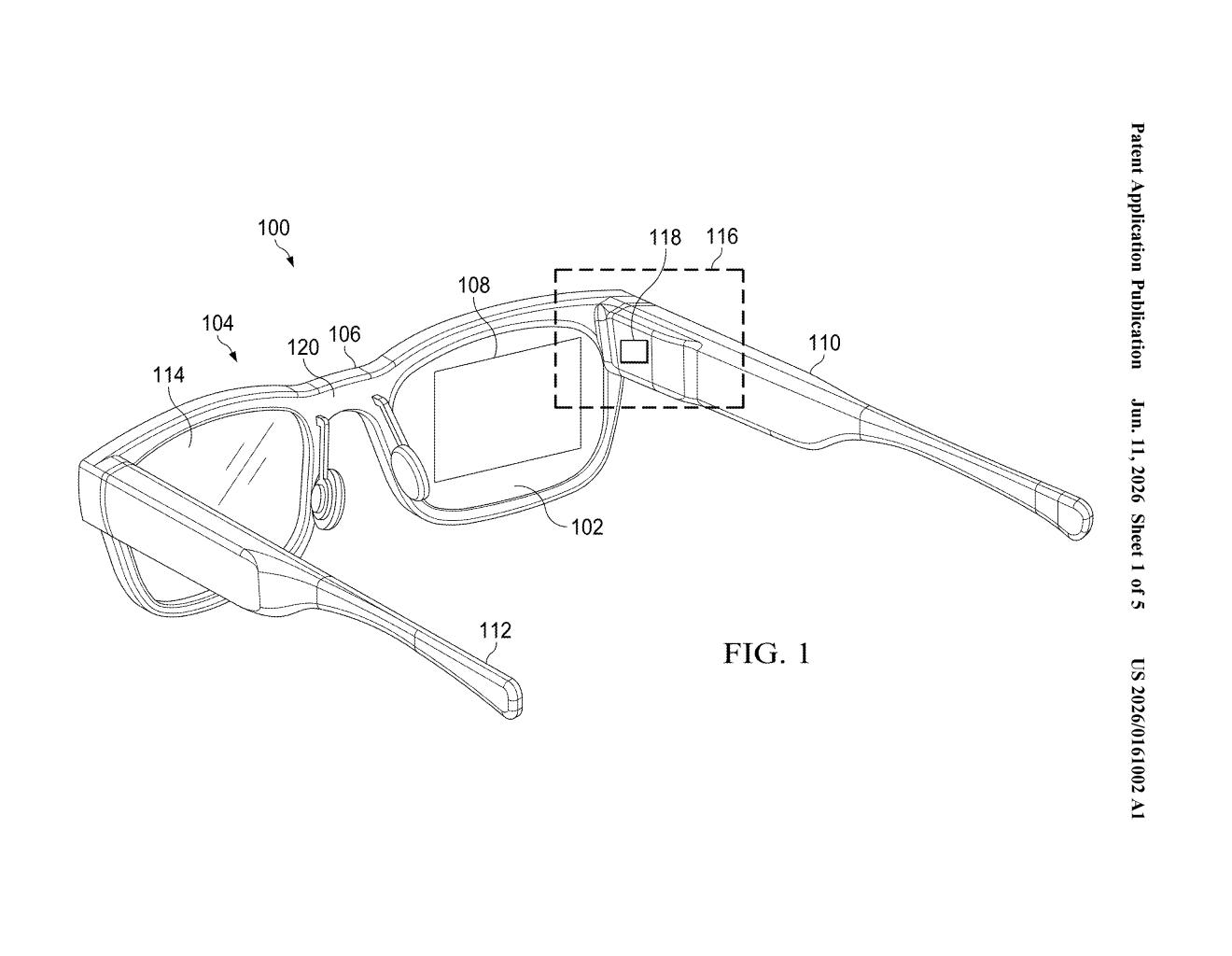
What Google's cracked-lens detection actually does
Imagine buying a pair of AR glasses — the kind that project images directly into your field of view. Now imagine the thin glass lens inside them quietly cracks after a drop. You might not notice right away, but the device could start behaving strangely, or worse, become unsafe to wear.
Google's patent tackles that invisible problem by building a detection system directly into the glasses. The key ingredient is a thin electrically conductive loop that traces around the edge of the optical lens. Think of it like a trip wire: if the glass cracks and severs the loop, the device notices the change in electrical resistance and flags the breakage.
The result is that your glasses can tell you — or the device's software — that something is wrong, rather than leaving you guessing why the display looks off. It's a safety and reliability feature, not a flashy one.
How the conductive loop catches a crack in real time
The patent describes a head-mounted display (HMD) — the category that includes AR glasses — built around three core components working together.
First, an image projector (specifically a micro-display, the tiny screen that generates the picture) fires display light into a display waveguide. A waveguide is a precisely engineered piece of optical glass or crystal that acts like an invisible highway for light, guiding the image from the projector into your eye. These waveguides are thin, fragile, and central to how modern AR optics work.
The third component is the detection controller — essentially a small monitoring circuit. The primary method described uses a conductive loop: a thin trace of electrically conductive material running around the perimeter (or part of it) of the waveguide. Electrical contact pads on either end of the loop feed resistance readings back to the controller continuously.
- If the waveguide is intact, the loop carries current normally and resistance stays stable.
- If the waveguide cracks, it severs or disrupts the loop, and resistance spikes — or goes open-circuit entirely.
- The controller reads that change and updates the device's breakage status accordingly.
The patent also mentions the possibility of additional sensors beyond the conductive loop, giving the system multiple ways to confirm a break.
What self-diagnosing lenses mean for AR wearables
AR glasses live and die by their optical waveguides. These components are precision-engineered and expensive, and a crack doesn't always produce an obvious visual artifact immediately — you might keep wearing broken hardware without knowing it. Automatic breakage detection opens the door to safety alerts, warranty automation, and software that can adjust or shut down gracefully when the display is compromised.
For Google specifically, this patent lands in the context of its ongoing work on AR hardware. A reliable self-diagnostics layer is exactly the kind of unsexy, practical engineering that separates consumer-grade wearables from fragile prototypes. If AR glasses are ever going to be an everyday product, they need to handle the real world — including drops — and tell you when they've had enough.
This is unglamorous but genuinely useful engineering. The conductive-loop approach is simple and elegant — it's essentially the same idea used to protect museum artwork and retail merchandise from tampering, applied to a fragile optical component. If Google is serious about shipping AR glasses that people actually wear daily, this kind of built-in self-diagnostics is exactly the boring infrastructure they need.
There are more where this came from
We read every patent application Big Tech publishes and send you the ones worth knowing. Plain English, free, every week.
Want this weekly breakdown for a company we don't cover? Patentlyze Pro →