
Google's New Patent Stops AR Glasses from Clicking When You Didn't Mean To
Anyone who has used a hand-tracking headset knows the frustration of accidentally clicking something just by shifting your fingers. Google's latest patent tackles exactly that problem — and it does it by treating your two hands differently.
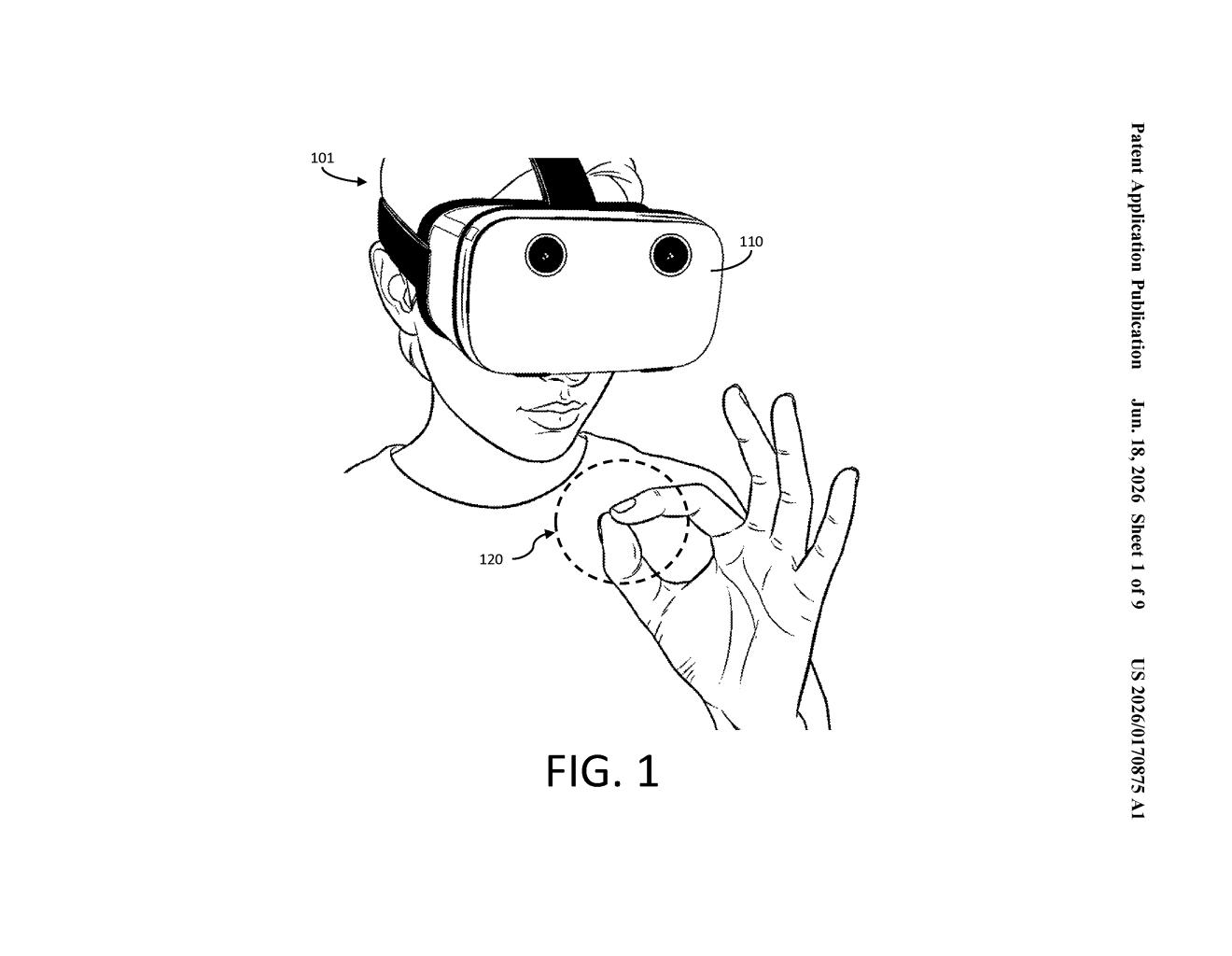
Why your non-dominant hand gets extra scrutiny
Imagine you're wearing AR glasses and browsing a virtual menu. Your left hand drifts slightly while you're gesturing with your right, and suddenly the glasses think you pinched something and trigger an action you didn't want. That's the false-positive problem that Google is trying to fix.
The patent describes a system that watches your hands through a camera and scores how likely it is that a pinch gesture was intentional. The key insight is that it applies different rules to your dominant and non-dominant hands. Your non-dominant hand — the one that tends to just hang around while you work — has to pass stricter tests before any action fires.
One of those tests checks how fast your fingers are closing. A slow, drifting squeeze from your off-hand is probably accidental. A quick, deliberate pinch almost certainly isn't. By filtering out the slow ones, the system only triggers actions when it's confident you actually meant to do something.
How the two-stage filter pipeline scores each pinch
The system works by feeding camera frames through a machine-learning model that outputs two things for every frame: a raw pinch score (a number representing how pinch-like your hand looks) and a set of keypoints — specific tracked positions on your fingers and palm.
Those outputs then pass through a two-stage filtering pipeline:
- Filter 1 — Confidence check: Looks at how reliably the model tracked your keypoints. If the tracking is shaky or low-confidence, the score gets blocked. Critically, the confidence threshold is set higher for your non-dominant hand, meaning it needs cleaner tracking data before anything passes through.
- Filter 2 — Velocity check (non-dominant hand only): If the score made it through Filter 1 and the hand in question is your non-dominant hand, this filter checks how fast your fingers are closing. Slow closure — below a set velocity threshold — suggests an unintentional drift, so the score gets reduced. This filter is skipped entirely for the dominant hand, which is assumed to be acting on purpose more often.
The final score that comes out of the pipeline is what actually decides whether a UI action fires. The system continuously updates which hand is dominant based on recent usage patterns — so it adapts if you switch hands.
What this means for wearable AR glasses like Android XR
Hand tracking in AR and VR headsets is still one of the most error-prone parts of the experience. Every false trigger breaks immersion and erodes trust in the interface. Google's approach here — applying asymmetric filtering based on hand dominance — is a practical engineering fix that doesn't require better cameras or more powerful chips. It's a software-layer improvement to existing hardware.
Google is actively developing its Android XR platform for headsets and glasses, and gesture accuracy is fundamental to making that platform feel reliable in everyday use. If this filtering approach ships in a real device, it could meaningfully reduce the friction that currently makes hand-tracking feel like a party trick rather than a dependable input method.
This is solid, unglamorous engineering work aimed at a real and annoying problem. The insight that your non-dominant hand deserves extra skepticism is intuitive once you hear it, which is usually the sign of a good idea. It won't make headlines on its own, but it's exactly the kind of detail that separates a headset people actually use from one that ends up in a drawer.
There are more where this came from
We read every patent application Big Tech publishes and send you the ones worth knowing. Plain English, free, every week.
Want this weekly breakdown for a company we don't cover? Patentlyze Pro →