
Google Patents a System for Letting Users Block Individual Search Results
When a search result about you is wrong, embarrassing, or just unwanted, your options today are limited. Google is now patenting a structured pipeline that would let users formally request that specific results be hidden, with an automated system deciding whether to approve, deny, or hand the case to a human reviewer.
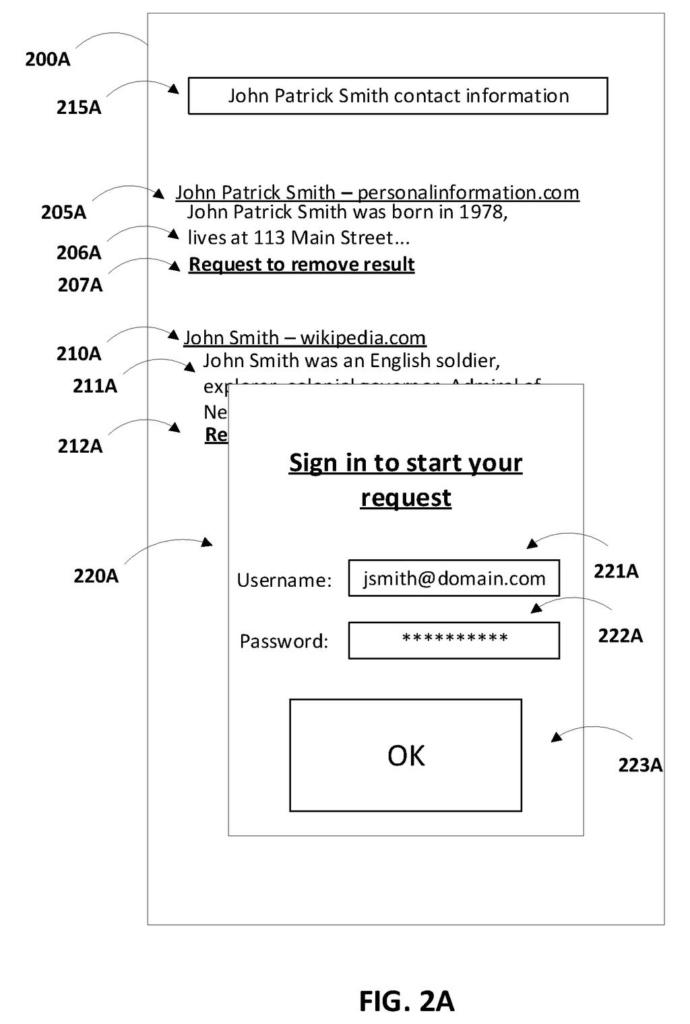
What Google's search result removal request system actually does
Right now, if a search result bothers you, you can fill out a removal request form, but what happens next is largely opaque. Google's new patent filing describes a much more structured system for handling those requests, one that actually tells the software what to do at each step.
Here is how it would work: you flag a specific search result tied to a specific query. Google's system looks at the result itself, the search term you used, and your account information, then makes one of three calls: approve the request automatically, deny it automatically, or send it to a human reviewer who decides.
If your request is approved, that result stops appearing when someone (including you) searches that term in the future. The system can also expand the removal beyond exactly what you asked for, hiding related results or blocking similar search queries you did not even think to mention.
receiving, responsive to one or more user interface inputs provided by a user at a client device, a request to prevent at least a particular search result, that is currently provided by a search engine responsive to a search query, from being provided by the search engine responsive to the search query …
Translation: Users can ask the system to hide a specific search result from showing up again.
How the classifier scores and routes each removal request
The patent covers a method running on Google's servers that processes incoming "prevent this result" requests in a structured triage loop.
When a user submits a request through a client device (a phone, browser, or any interface), the system receives three inputs together: the specific search query, the specific result URL or document, and the user's account information. A classifier (a machine-learning model trained to sort requests into categories) then scores the combination and routes it one of three ways:
- Automatic approval: the result is immediately suppressed for future searches on that query.
- Automatic denial: the result continues appearing; no suppression happens.
- Manual review: the request is forwarded to a separate reviewing interface where a human moderator evaluates it and sends back a decision.
There is also an expansion mechanism: even if you only asked to block one result for one query, the system can choose to also block related results, or apply the suppression to other queries it deems similar. This expansion can happen automatically or be flagged as a suggestion. The claim covers the full loop from submission through resolution, which means the patent stakes out ownership of the entire decision-routing architecture, not just one piece of it.
… process such information utilizing a classifier in determining whether to automatically deny the request, automatically approve the request, or to provide the request for manual review.
Translation: An automated tool decides whether to approve, reject, or manually review the block request.
What this means for people who want search results removed
For everyday users, this matters most in situations involving outdated news articles, old forum posts, or anything that surfaces under your name or personal details. A formal, auditable pipeline with automatic and manual tracks is a meaningfully different experience from today's form-based process, where feedback is rare and timelines are unclear.
Google's ongoing investment in search personalization and content controls fits a broader pattern of pressure from regulators and users alike to give people more say over what results follow them around. The automatic expansion feature is the most consequential piece: a single approved request could suppress a wider set of results than the user explicitly named, which is either a user-friendly shortcut or an overreach, depending on how carefully the classifier is tuned.
That makes this Google's 645th filing in our Google coverage since May, adding to work like readable AI training data and a leaner AI model.
Claim 1 is broad. It covers any software method that receives a block request, classifies it into three buckets, and acts on the outcome. That scope goes well beyond a specific interface or a specific classifier design. Almost any technically similar system another company builds would have to thread a narrow path to avoid it.
The expansion piece, where an approved request automatically generalizes to results and queries the user never named, is the sharpest edge. The claim explicitly covers that behavior, which means the patent would touch any competitor trying to build a user-controlled search suppression tool with proactive coverage.
Whether this ever gets enforced against anyone is a separate question. But as a description of claimed territory, this filing is deliberately wide, covering the scaffolding of a whole category of user-driven content suppression rather than one specific implementation.
Get our take in your Top Stories
Liked this breakdown? Add Patentlyze as a preferred source on Google, and our plain-English take shows up more often in your Top Stories the next time Google patent news breaks.
There are more where this came from
We read every patent application Big Tech publishes and send you the ones worth knowing. Plain English, free, every week.
The drawings
13 drawing sheets from US 2026/0259949 A1 · click any drawing to enlarge


Show the other 5 sheets


Want this weekly breakdown for a company we don't cover? Patentlyze Pro →
Be the first to weigh in