
Google Patents a Search Session That Merges Your Related Questions Automatically
Every time you search for something, Google forgets what you just asked. A new Google patent describes a system that would remember your recent searches and fold related ones together into a single, richer query.
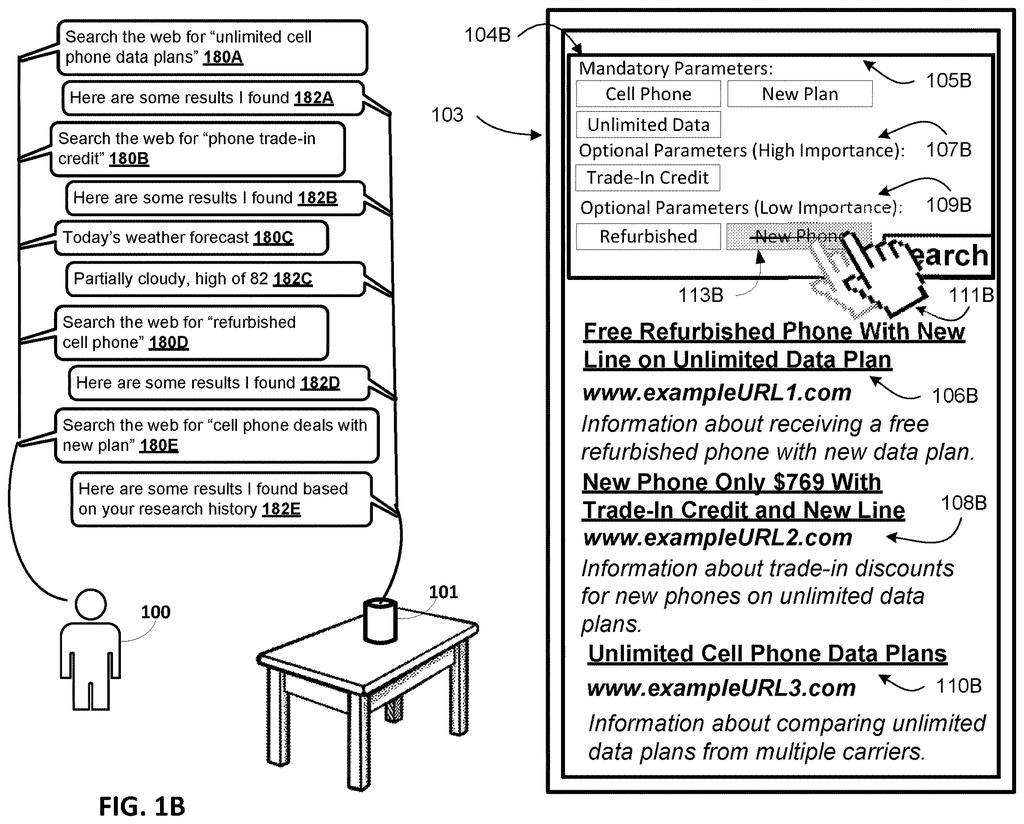
How Google's query-merging session would work for you
A person types "best running shoes for flat feet" into Google, gets some results, then follows up with "running shoes under $120." Right now, Google treats those as two completely separate questions. You have to mentally carry your own context from one search to the next.
This patent describes a "state-maintaining search session", basically a mode where Google tracks your questions and spots when two searches are really about the same thing. When it does, it automatically combines them into one query that includes both your topic and your budget, your location, your shoe size, whatever details you've added along the way.
You'd also be able to tap into those merged search parameters and adjust them directly, rather than typing a whole new search from scratch. Think of it as Google finally keeping up with the conversation you're already having in your head.
… automatically determining that the first search query and the second search query relate to a shared line of inquiry based on their inclusion in the state-maintaining search session; formulating a combined search query comprising a plurality of search parameters derived from the first search query and the second search query …
Translation: The system figures out when your questions belong together and merges them into one query.
How the system detects a shared topic and builds one query
The system introduces what the patent calls a state-maintaining search session, a persistent mode that holds onto the parameters of each search you submit rather than discarding them the moment you start a new one.
When you submit a second query, a machine learning model measures the semantic similarity (meaning: how close in meaning, not just in exact words) between the new query and earlier ones from the same session. If the similarity passes a threshold, the system flags them as sharing a "line of inquiry", the same underlying topic or goal.
Once a shared line of inquiry is confirmed, the system builds a combined search query by extracting and merging the search parameters from both queries. Those parameters could include things like:
- A product category (running shoes)
- A constraint (under $120)
- A physical attribute (flat feet)
- A location or availability requirement
That combined query is then sent to a machine learning model to run the actual search. Users can also interact with the displayed parameters afterward, editing, removing, or adding details without having to retype everything from the start.
Two or more search queries may be determined to share a line of inquiry when it is determined that they are within a threshold level of semantic similarity to one another.
Translation: Queries are grouped together when the system finds they have a high enough level of meaning in common.
What this means for everyday Google Search users
For most people, this would make Google feel less like a blank search box you reset every thirty seconds and more like an assistant that keeps up with a multi-step question. If you're researching a purchase, planning a trip, or troubleshooting a problem across several searches, the system would carry your accumulated context forward instead of making you re-explain yourself each time.
The practical path to shipping this is relatively short. It's a software-only change, no new hardware required. Google already runs large language models across Search, so the semantic-similarity layer described in the patent slots into infrastructure that mostly exists. The bigger question is the user experience: how do you show someone their merged parameters without confusing them? That design problem, not the underlying technology, is probably the real work left to do.
Google's 35th filing we've tracked since May in our AI assistants that remember you watchlist builds on one filling in task details mid-conversation and one on browser memory search.
The patent describes something that should have existed years ago. Search engines have always treated each query as an isolated event, which is fine when you know exactly what you want and can type it in one go. For anything more exploratory, that approach puts all the cognitive work on you.
From a ship-path standpoint, this reads like something close to a deployable feature rather than a far-off research concept. The machine learning infrastructure is already in place; the patent is really about session logic and a UI for surfacing merged parameters. Those are solvable problems on a normal product timeline.
The one real uncertainty is whether Google would offer this as an opt-in mode or try to fold it into the default search experience. Given Google's interest in making Search more conversational, the opt-in path seems safer for launch, but the default path is where it would actually reach most people.
There are more where this came from
We read every patent application Big Tech publishes and send you the ones worth knowing. Plain English, free, every week.
The drawings
6 drawing sheets from US 2026/0300272 A1 · click any drawing to enlarge


Want this weekly breakdown for a company we don't cover? Patentlyze Pro →
Be the first to weigh in