
Google Files Patent for Phones That Tell Cell Towers When VR Data Runs Late
Your cell tower knows how much data your phone has queued up to send, and has no idea how long it has been stuck. Google's patent application adds a report to tell it.
What Google's delay status report actually does
Ever had a video call freeze for a second even though your signal looked fine? One hidden cause can be a waiting line inside your phone. Data you are sending waits its turn, and the cell tower has no idea how long it has been sitting there.
Today your phone tells the tower how much data is waiting. Google's filing adds a second message, a delay status report. The tower sets a time limit, and if your data sits past it, your phone raises a hand and says it is falling behind.
With that report in hand, the tower can give more airtime to whoever is lagging. The filing aims at virtual reality, augmented reality and cloud gaming, where a late update to what your headset sees or does is easy to feel.
… generating a delay status report (DSR) based on a delay of a first data in an uplink buffer for the first channel having reached the delay threshold; and transmitting the DSR to the network entity based on satisfying a triggering condition associated with the DSR.
Translation: The phone creates a delay report when data gets stuck, and sends it once specific rules are met.
How the three timers decide when to speak up
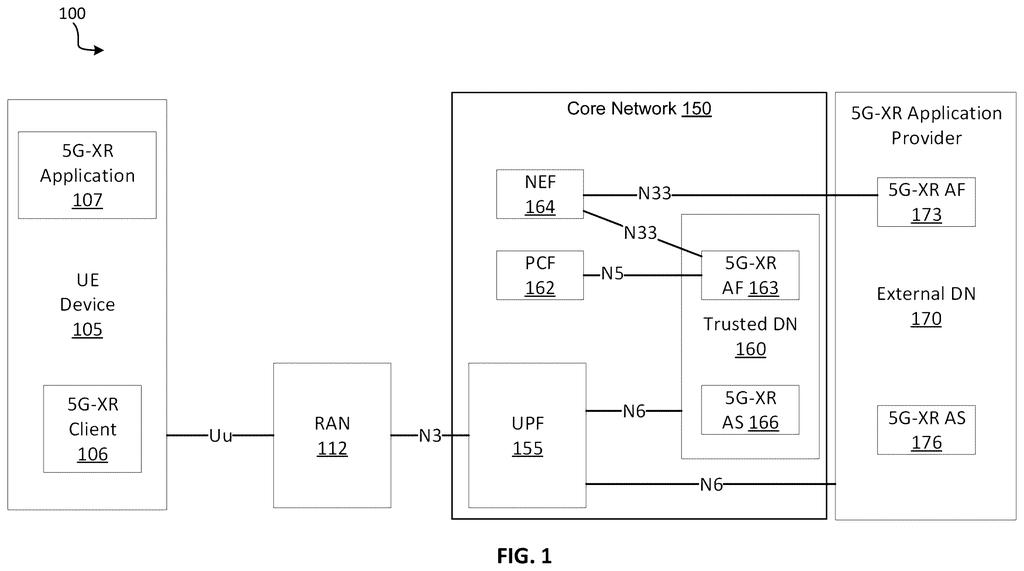
The filing covers both sides of the conversation. First, the network (the cell tower side) sends your device, which the filing calls user equipment, a setup message. It names one channel, or a group of channels, and a delay threshold for each: how long data may wait in the uplink buffer (the holding area for outgoing data).
Your device then runs the checks. The description lays out three timers:
- First timer: starts when data lands in the buffer. If it runs out before the data has been sent, the data counts as delayed and a report is generated.
- Second timer: starts after a report goes out, and triggers a follow-up report if the problem continues.
- Third timer: a cooldown that blocks another report for a while, so reports do not clog the airwaves.
The report rides in a small control message (a MAC control element) that gets priority over ordinary data. It can list which channels are late, how much data is stuck, and how long it has waited, sorted into bands such as within 20 ms, 21 to 40 ms, 41 to 80 ms, and 81 ms or more (a millisecond is a thousandth of a second). Low-priority channels may have to reach the top band before a report is sent.
On the network side, the claims cover receiving the report and sending back a resource allocation to fix the delay. The description says that could mean more bandwidth for one device, or a shift in transmission priorities.
The network entity may then reallocate resources to reduce the data delay status in the UE device.
Translation: The cell tower then shifts network resources around to help clear the bottleneck.
Why VR and cloud gaming users should care
For you, the payoff would show up as fewer stutters in anything that needs constant updates sent from your device: a VR headset tracking your head, a controller in a cloud game, an AR overlay. The filing measures success by how many users in a cell stay within their delay limits (it mentions 90% or 95%), so a single lagging headset matters to the network.
For Google, this is network plumbing. The filing is written around 5G standards, and carriers and device makers would have to agree to use something like it. Still, it shows how much thought goes into making cell networks handle headsets and cloud games as well as video streaming.
Google's 918th filing in our Google coverage since May adds to a run that includes earbud pairing and AI-to-robot commands.
The problem is easy to feel. A tower that knows only how much data is queued has to guess how long it has waited, and for a headset a few dozen milliseconds of lateness can break the illusion. The filing also points out that a person using several devices is unhappy if even one of them lags, so a single late stream can spoil the whole session.
The fix fits the size of that problem. It adds one report, a time limit set by the tower, and cooldown timers so devices do not flood the network with complaints. That last piece shows the authors understood a reporting system can create congestion of its own.
The limit is adoption. The idea only helps if phones, headsets and carriers all speak the same report, and the filing gives no measured results. As an answer to a real but narrow problem, it is a sensible, modest idea.
Get our take in your Top Stories
Liked this breakdown? Add Patentlyze as a preferred source on Google, and our plain-English take shows up more often in your Top Stories the next time Google patent news breaks.
There are more where this came from
We read every patent application Big Tech publishes and send you the ones worth knowing. Plain English, free, every week.
The drawings
9 drawing sheets from US 2026/0333119 A1 · click any drawing to enlarge


Show the other 1 sheets

Want this weekly breakdown for a company we don't cover? Patentlyze Pro →
Be the first to weigh in