
Apple Files Patent for Phones That Tell Cell Towers Their AI Limits
Apple's patent describes a phone that tells the cell network how many AI jobs it can run at once, and which jobs go first when it is overloaded.
What Apple's AI-capacity reporting actually does
A restaurant kitchen has four burners. Before the dinner rush, the head chef tells the servers exactly that, so nobody orders five dishes that all need a flame at once.
Your phone has a version of this problem. Behind the scenes, its modem constantly does math to check signal quality, aim its antennas, and work out where you are. As networks add AI to those jobs, a phone could be asked for more AI calculations than its chips can handle at the same time. Apple's patent has the phone announce how many AI jobs it can run at once, then delay or skip any that would go over the limit.
It also sets a pecking order. In one example, keeping the antenna beams aimed comes first, signal-quality reports come second, and location comes last. A skipped job does not leave the network empty-handed: the phone can send older, stale numbers instead.
generate, for transmission, an indication of a number of simultaneous processing units available for artificial intelligence (AI) enabled computations of at least one type at the UE …
Translation: The device tells the network how many AI tasks it can handle at once.
How the phone counts and ranks its AI jobs
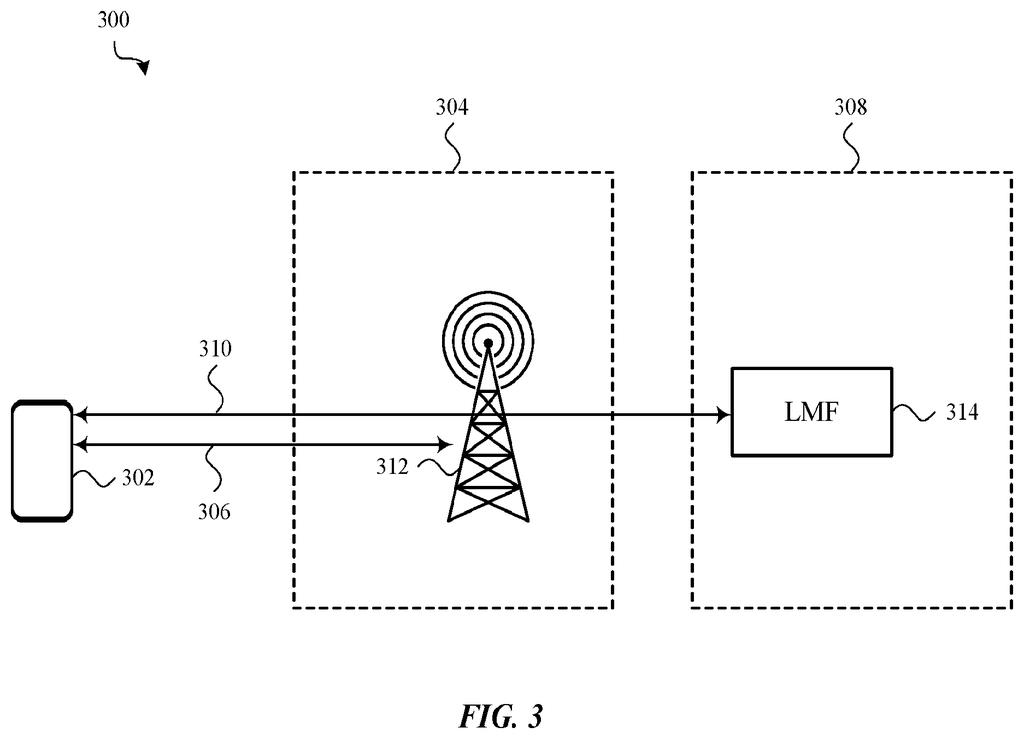
The patent covers a phone (the filing calls it a user equipment, or UE) that reports a number: how many processing units, meaning slices of computing capacity, it has for AI calculations at the same time. If more AI work arrives than that number allows, the phone denies or delays the excess. The cellular industry's standards already have this kind of rule for non-AI math, and the filing says no equivalent exists for AI.
Three kinds of AI work are named:
- Channel state information (CSI): a report on how good the signal path is.
- Beam management: picking which direction the antenna signal points.
- Positioning: working out where the device is.
The filing lays out several ways to count units: one shared pool, separate pools for AI and non-AI math, or a separate pool for each AI type. A count can be given per radio channel (a component carrier) or across all of them. How many units a job uses can depend on the AI model type, and that detail can live in the model's metadata.
When the phone is stretched, one example ranks beam management over CSI over positioning. The network can also send its own ranking, as a chosen pattern or a list. Other claims cover the network side: a base station or location server receives the count, then sends AI requests to the phone.
… deny or delay simultaneous AI enabled computations that exceed the number of simultaneous processing units available for AI enabled computations of the at least one type at the UE …
Translation: The phone blocks or postpones extra AI requests when it runs out of capacity.
Why this matters for AI inside your phone's radio
For you, the effect would sit entirely in the background. Networks that use AI to judge signal quality, aim beams, or find your location need to know what each phone can handle. Without a shared way to say so, a network could ask a phone for more AI work than its chips can run at once. A reported count and a clear pecking order give both sides the same rulebook.
Phone makers build their modems differently. The filing notes that some may use a dedicated neural engine (a chip block built for AI) while others run AI on the same hardware that handles regular calculations. A count the phone reports itself lets each design stay as it is while the network adapts. The filing is written against the cellular industry's own standards documents, so it addresses rulebook territory that phone and network makers share.
Apple's ninth filing we've tracked in the AI chip wars watchlist since August builds on one letting servers multitask and one cutting chip memory use.
You will probably never see this feature, and that is the point. It is a traffic rule for the math inside your phone's radio, and the benefit is a failure that does not happen: a phone told to do more AI work than it can handle, then answering late or badly.
If networks start leaning on AI to aim signals and find your location, someone has to settle who goes first when the phone is busy. Putting beam aiming ahead of signal reports, and both ahead of location, is a sensible order for keeping you connected.
Judge it by what goes missing: no overloaded modem, no phone asked for the impossible. It is routine plumbing, and useful plumbing, but nothing you would notice on a spec sheet.
Get our take in your Top Stories
Liked this breakdown? Add Patentlyze as a preferred source on Google, and our plain-English take shows up more often in your Top Stories the next time Apple patent news breaks.
There are more where this came from
We read every patent application Big Tech publishes and send you the ones worth knowing. Plain English, free, every week.
The drawings
17 drawing sheets from US 2026/0310516 A1 · click any drawing to enlarge


Want this weekly breakdown for a company we don't cover? Patentlyze Pro →
Be the first to weigh in