
Google's New Patent Keeps Your Ad Choices on Your Phone, Not Its Servers
Google is patenting a system where your phone, not a remote server, makes the final call on which ad you see. The idea is that your personal data never has to leave your device to make targeting work.
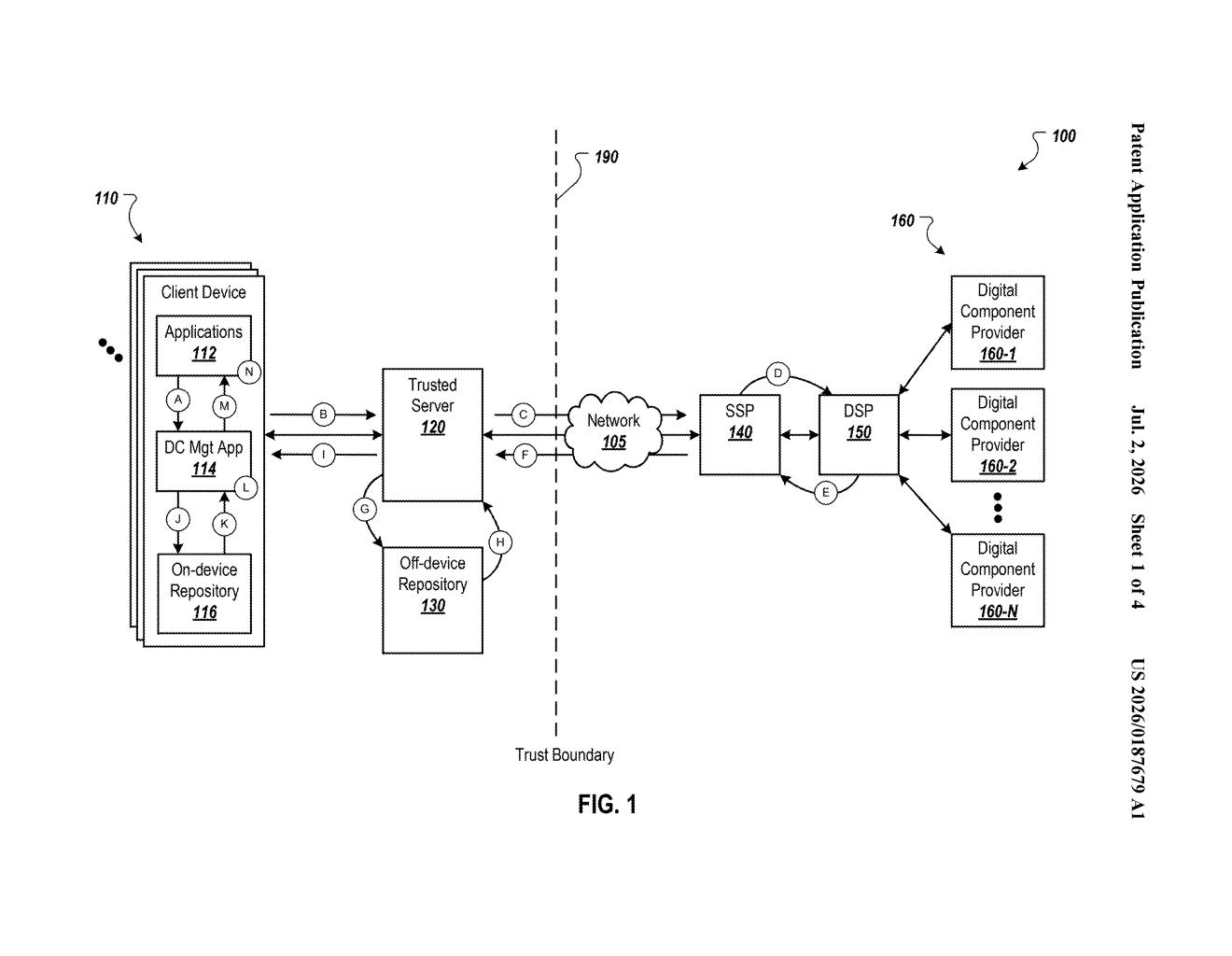
How Google's on-device ad selection actually works
Imagine your phone building a short list of ads that might interest you based on things it already knows about you, your apps, your habits. Normally, that kind of targeting means your data gets shipped off to a server somewhere, matched against your profile, and an ad comes back. This patent describes a different setup.
With Google's approach, your device stores one batch of ad candidates picked using your personal data, entirely locally. When you open an app or a webpage, your phone also asks a server for a second batch of candidates, but only shares contextual information like what kind of content you're looking at, not who you are. Then your phone picks the best ad from both lists, all on its own.
The result is that the ad you see can still feel relevant, but the server never needed to know much about you personally. Your data stays on your device.
How the two candidate pools get merged and ranked on-device
The patent describes a two-track system for selecting what Google calls digital components, which is patent-speak for ads or other sponsored content.
- Track one (local): The device stores a pre-selected set of ad candidates that were chosen using the user's personal data. This selection happens without sending identifying data to an external server at the time of display.
- Track two (contextual): A digital component management application running on the device sends a request to a trusted server, asking for a second batch of candidates. This request only includes contextual data, meaning information about the environment where the ad will appear (the type of app, the content category, screen placement), not personal profile information.
- On-device selection: The app then picks the single best ad from the combined pool of both lists and displays it, all without the server ever seeing the full picture of who the user is.
The architecture is designed to satisfy privacy frameworks that restrict sending personal data off-device while still allowing targeted advertising to function. The trusted server designation also implies a controlled, auditable infrastructure rather than open third-party data exchanges.
What this means for ad targeting and your browsing data
Ad targeting has relied on sending detailed user profiles to remote servers for decades. Regulatory pressure (GDPR in Europe, state-level laws in the US) and browser-level changes like the phase-out of third-party cookies are forcing the industry to find alternatives. Google's Privacy Sandbox initiative is the clearest sign of where this is heading, and this patent fits squarely into that effort by moving the sensitive decision-making onto your device.
For you as a user, the practical upside is that advertisers and ad networks get a less detailed view of your behavior. The trade-off is that Google's own apps and operating system would need deep access to your device to make this work, which shifts trust from ad networks to Google itself. Whether that feels like an improvement depends on your point of view.
This is a real and meaningful piece of infrastructure work, not a flashy concept. Google has been building toward on-device ad selection through Privacy Sandbox for years, and this patent adds a concrete architecture for combining local user signals with server-side contextual signals. The privacy benefit is genuine, but the system also consolidates more of the ad decision process inside Google's own software stack, which is worth watching.
Get our take in your Top Stories
Liked this breakdown? Add Patentlyze as a preferred source on Google, and our plain-English take shows up more often in your Top Stories the next time Google patent news breaks.
There are more where this came from
We read every patent application Big Tech publishes and send you the ones worth knowing. Plain English, free, every week.
Want this weekly breakdown for a company we don't cover? Patentlyze Pro →