
Google's New Patent Stores Ads Directly on Your Phone So Apps Never Have to Fetch Them
Google is patenting a system that caches ads directly on your phone, scores them based on how often you've seen them, and then serves them into apps you're using, all without a fresh trip to an ad server.
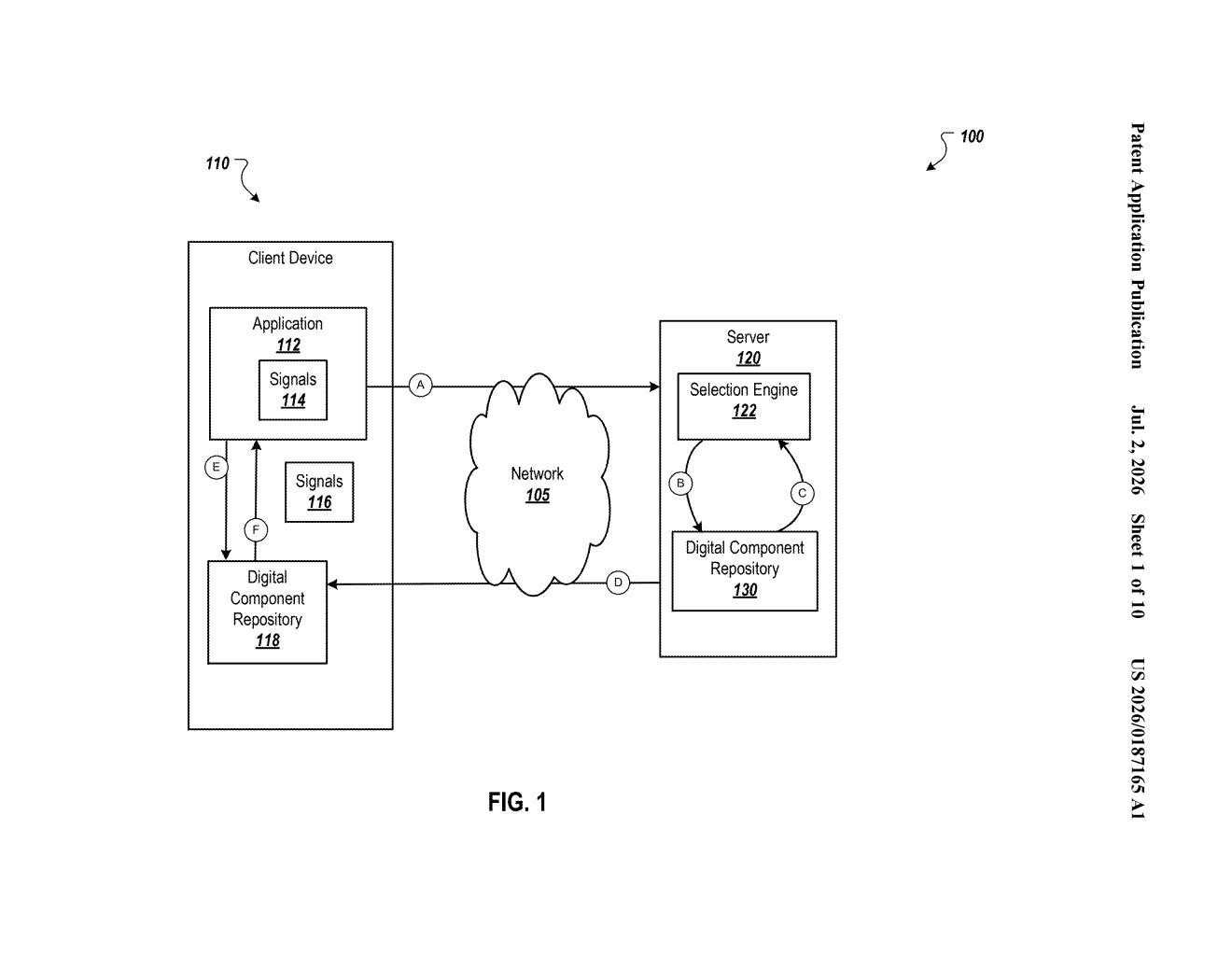
What Google's on-device ad storage actually does
Imagine your phone building a personal stash of ads in the background, drawn from the apps you already use. Instead of fetching a new ad from the internet every time one needs to appear, your device already has a shortlist ready to go.
That's essentially what this patent describes. When you use an app like a shopping or news platform, ads that match your activity get saved locally in a small storage area on your device. Each ad gets a score based on how many times it's been sent to you. Then, when a different app needs to show you an ad, your phone picks the highest-scoring one from that local stash.
The whole process happens on the device itself. Google frames this as a way to keep ads relevant without sending your behavior back to a server every single time. Whether that framing holds up in practice depends a lot on what data fed the stash in the first place.
How the scoring system picks which ad to show
The patent describes a client-side ad repository that lives on your phone or tablet. Here's the flow:
- One or more content platforms (ad networks, apps, or services) send a batch of digital components (ads, sponsored content) to the device.
- Each component is tied to user data from a specific app already running on the device, so the ad relevance is already baked in before it arrives.
- The device tracks a frequency score for each stored component based on how many times that same component has been received. Higher frequency implies stronger relevance signal.
- When a second, different app requests ad content, the device consults the local repository, ranks the stored components by score, and serves the winner without a new network call.
The key technical idea is cross-app ad portability on a single device. App A's behavioral signal (what you browse, buy, or search) pre-populates a local cache. App B then benefits from that cache when it needs to fill an ad slot. The server never needs to re-evaluate you in real time for that second app.
Why privacy watchers should pay attention to this filing
For Google, this is partly a performance and infrastructure play: fewer ad auction round-trips means faster load times and lower server costs. But it also fits into the broader story of on-device processing as a privacy narrative, the same framing Google used when it deprecated third-party cookies and promoted its Privacy Sandbox. The argument is that keeping data on the device is better than sending it to a central server.
For you, the practical effect is that your behavior in one app could influence the ads you see in a completely unrelated app, all managed by software on your own phone. Whether that feels like a privacy improvement or a more invisible form of tracking depends on how transparent the underlying data collection is. Regulators in the EU and UK who are already scrutinizing Google's ad infrastructure will likely want a close look at this.
This patent is worth caring about precisely because it's not flashy. On-device ad caching sounds like a plumbing upgrade, but the cross-app scoring mechanism is doing real behavioral targeting work, just locally instead of server-side. The 'it's on your device so it's private' framing is doing a lot of heavy lifting here, and that argument deserves more scrutiny than it usually gets.
There are more where this came from
We read every patent application Big Tech publishes and send you the ones worth knowing. Plain English, free, every week.
Want this weekly breakdown for a company we don't cover? Patentlyze Pro →
Be the first to weigh in