
Google Patents Earbud Tips That Can Feel You Chew and Yawn
Google has filed a patent application for a soft earbud tip that can sense your jaw moving. It does this by picking up how your ear canal changes shape when you chew, yawn or smile.
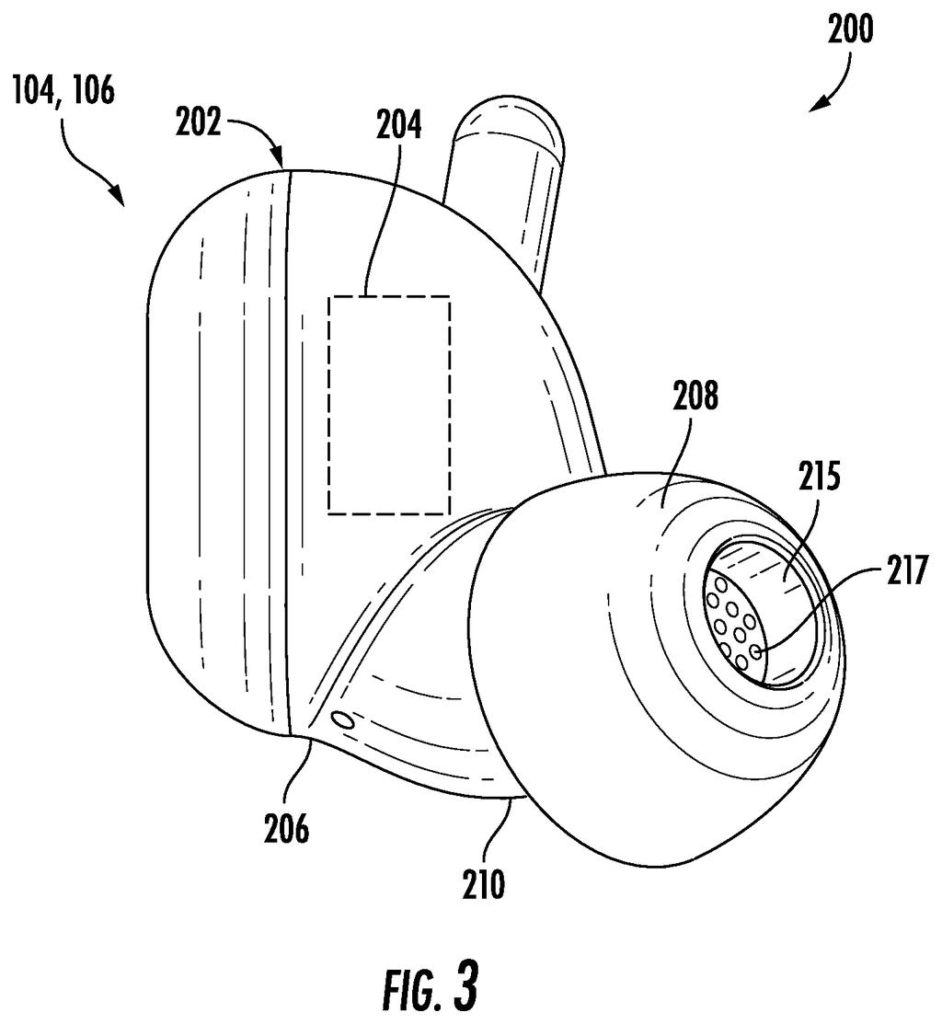
What Google's jaw-sensing earbud tip actually does
Imagine you're chewing a sandwich with your earbuds in. Every bite moves your jaw, and the shape of your ear canal shifts a little each time. Today's soft ear tips simply squish along with that motion so the earbud stays put and keeps its seal.
Google's patent application turns that squish into a signal. A thin stripe of conductive material (think of a stretchy wire) sits on or inside the soft tip. When your ear canal pushes and pulls on the tip, the stripe's electrical resistance changes, and the earbud can read that change as a measure of how far your jaw moved.
The filing says the readings could feed health and wellness features related to jaw movement. It doesn't name specific features. Most of the document covers the practical details: how the sensor is laid out and how it wires into the rigid part of the earbud.
… a flexible sleeve tip secured over at least a portion of the body, the flexible sleeve tip configured to fit within an ear canal of a user; and a strain gauge arranged with the flexible sleeve tip …
Translation: The rubber tip that goes inside your ear contains a sensor that measures bending and stretching.
How the stretch sensor sits in the ear tip
The invention is an earbud with a sensor built into the soft tip that sits in your ear. The earbud has a rigid housing holding the electronics (the filing lists a driver, a speaker, a microphone and wiring). A flexible sleeve tip, made of something like silicone, rubber or memory foam, slides over part of that rigid body.
The sensor is a strain gauge, a thin conductive strip that measures how much an object is bent or stretched. When the strip deforms, its electrical resistance (how hard it is for current to flow) changes, and that change can be converted into an amount of movement. Because the ear canal changes shape when the jaw moves, the squeeze and stretch of the tip tracks the jaw. The strip can be made of conductive ink or a flexible conductive polymer.
The claims and description cover several layouts:
- The strip can sit on the outside of the tip, on the inside, or embedded in the tip's wall.
- It can wrap in rings around the lower, middle or upper part of the tip.
- It can follow a wavy pattern, either a step-up-step-down shape or a smooth undulating one.
- The wiring ends where the soft tip meets the rigid body can have different shapes, to keep a constant electrical connection.
A second independent claim covers the manufacturing method: put the electronics in the housing, slip on a tip that already carries the sensor, and wire the sensor to the electronics.
An earbud assembly includes an earbud housing containing one or more electrical components therein. The earbud housing defines a body.
Translation: The main body of the earphone holds the computer chips and other standard electronics.
Why your earbuds could double as health sensors
Earbuds sit in a spot that is hard to reach any other way: snug inside your ear, worn for hours, already powered and connected to your phone. Adding a sensor to the tip means the same pair you listen to music with could also track how your jaw moves, with no separate device to wear.
The filing points to health and wellness features tied to jaw movement but doesn't say which ones, so what you would actually get is open. It does show a practical problem being worked out: how to run a connection from a soft, stretchy tip to the rigid body without it failing as the tip flexes every time you talk or eat.
Google's 25th filing we've tracked since May in our wearables that read your body watchlist follows earlier applications like fixing sleep misreads and detecting a poor fit.
If this ever reached a pair of earbuds, you would not notice a new button or a new gadget. Your earbuds would simply gain a sense of when your jaw moves. The filing never says what they would do with that, so the benefit to you stays a blank for now.
The most relevant detail for everyday use is the wiring. A sensor that drops out whenever you chew or yawn would be useless, and the filing spends real effort on keeping the electrical contact steady between the soft tip and the hard body. That is the difference between a feature that works through a meal and one that works only when you sit still.
The idea is simple and sensible, but it is a hardware building block. Whether it matters to you depends entirely on the software and health features that Google builds on top of it.
Get our take in your Top Stories
Liked this breakdown? Add Patentlyze as a preferred source on Google, and our plain-English take shows up more often in your Top Stories the next time Google patent news breaks.
There are more where this came from
We read every patent application Big Tech publishes and send you the ones worth knowing. Plain English, free, every week.
The drawings
8 drawing sheets from US 2026/0352991 A1 · click any drawing to enlarge


Want this weekly breakdown for a company we don't cover? Patentlyze Pro →
Be the first to weigh in