
Google Patents a TV That Recognizes Your Face and Loads Your Content Automatically
Walking into your living room and having the TV instantly switch to your shows sounds convenient. Google has filed a patent that would make it happen using facial recognition, no remote required.
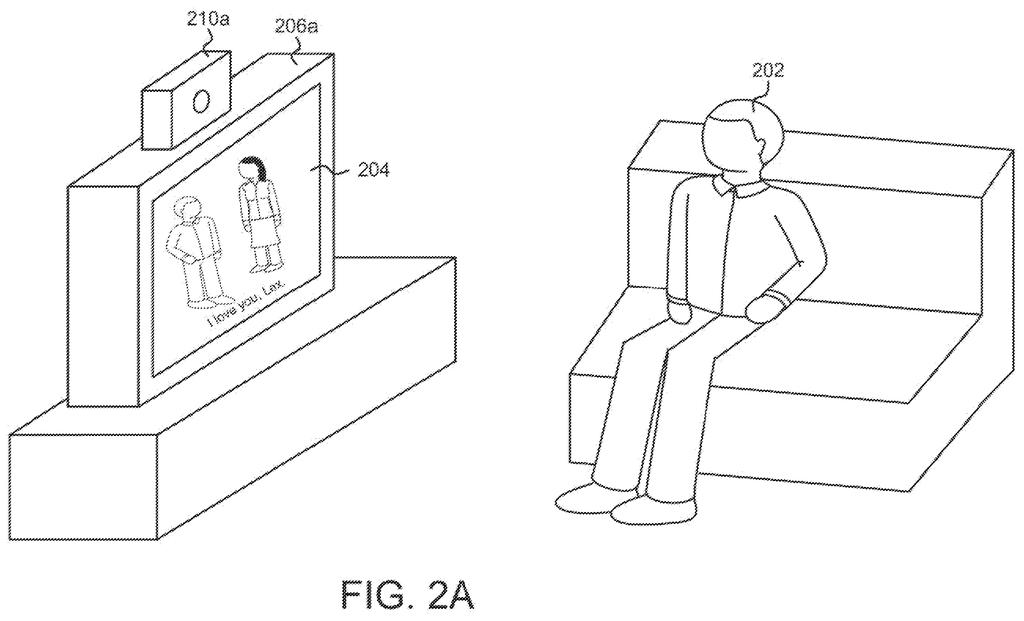
What Google's face-scanning TV system actually does
You walk into the living room, sit down in front of the TV, and it already knows it's you. Your watchlist, your recommendations, your profile appear automatically. That's the scenario Google is describing in this patent.
A camera attached to or built into a display device scans the room, spots your face, matches it to your account, and loads your personalized content. When you leave, the system detects that too and stops playing. No one has to log in or switch profiles manually.
The pitch is convenience for households where multiple people share one TV. No more watching someone else's recommendations or fumbling through account menus. The system does the switching for you, in real time, based on who is physically in front of the screen.
… identifying a face of the first user within the area using a facial recognition module; retrieving a user identifier associated with the identified face of the first user; accessing content associated with the retrieved user identifier; and automatically displaying the content to the first user on a display device.
Translation: The TV uses facial recognition to load and play your specific profile content on the screen.
How the camera spots you and fetches your profile
The patent describes a method that ties a camera feed directly to a content delivery system. Here is how the pieces fit together:
- A camera captures an image of whoever is near the display device.
- A facial recognition module (software that compares a face in the image against stored face data) identifies the person.
- The system retrieves a user identifier, essentially a pointer to that person's account and content preferences.
- The correct content loads on screen automatically, without any input from the viewer.
The patent also covers the reverse: when a second signal indicates that the identified user has left the area, the system stops presenting the content. That could mean pausing playback, returning to a home screen, or switching to another user's profile if someone else walks in.
User identification information in the original signal can come from the camera image itself. The whole loop, from face detection to content loading to stopping when the viewer leaves, is described as automatic and continuous.
A determination can be made that the first user has transitioned away from the media playback device based on the second signal. The media content may then no longer be presented by the media playback device in response to determining that the first user has transitioned away from the media playback device.
Translation: The system figures out when you leave the room and automatically stops playing your media.
What this means for shared TV and household privacy
For anyone who shares a TV with family or roommates, the daily friction of switching profiles is real. This system would eliminate that step entirely by treating physical presence as the login. The TV becomes less of a shared appliance and more of a device that responds to who is actually in the room.
The obvious concern is privacy. A camera that continuously scans your living room and matches faces to accounts is a significant data collection point. How that facial data is stored, who can access it, and what happens if the system misidentifies someone are questions the patent does not answer. Google keeps filing on ambient sensing and presence detection, which suggests this is part of a wider push to make home devices more context-aware, not a one-off experiment.
Google's 29th filing we've tracked since May on our assistants that remember you list builds on earlier ideas like canceling alarms by context and syncing memory across devices.
If you share a TV with anyone, you know the small tax of switching profiles before you can watch something. This removes that. The TV recognizes who sat down and pulls up the right account without you touching anything.
The part that will stop some households cold is that making this work requires a camera reading your face every time you walk into the room. That is a continuous process, not a one-time scan, and it runs in the background whether you are thinking about it or not.
The patent does not describe how users would agree to this or what limits exist on the data collected, though those details typically live outside a patent filing. What the filing does establish is that face recognition becomes the default way the TV knows whose account to load, which is a specific and permanent shift in how a living room device relates to the people in it.
There are more where this came from
We read every patent application Big Tech publishes and send you the ones worth knowing. Plain English, free, every week.
The drawings
12 drawing sheets from US 2026/0292298 A1 · click any drawing to enlarge


Want this weekly breakdown for a company we don't cover? Patentlyze Pro →
Be the first to weigh in