
Google Files Patent for a Trick That Helps Photo-Recognition AI Learn Faster
Before an AI can tell a cat from a couch, it has to be trained, and training is slow and fussy. Google's filing covers a small rescaling step between layers that is meant to speed that up.
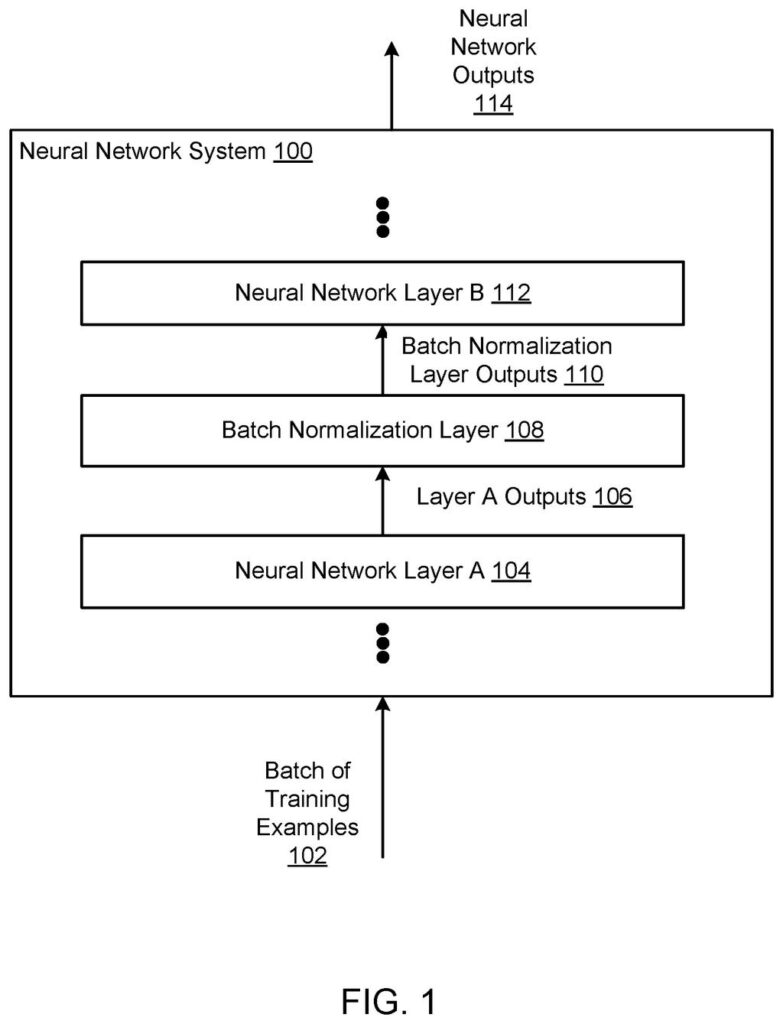
What Google's rescaling layer does for image AI
Imagine coaching a relay team where one runner's time is logged in seconds, another's in minutes, and a third's in hours. Every time you want to compare them, you first have to convert everything to the same scale. Now picture that problem happening thousands of times inside an AI that learns to recognize objects in photos.
Google's filing describes a small rescaling step placed between two layers of such an image-recognition AI. It takes the numbers coming out of one layer, shifts and squeezes them onto a common scale, then hands them to the next layer.
According to the filing, this keeps training from getting thrown off as the numbers drift, so the AI can learn faster and end up just as accurate, if not more so. The same idea could apply beyond photos, to things like speech or ad-click predictions.
… normalize each component of the first layer output to generate a normalized output comprising a plurality of normalized components; generate a transformed version of the normalized output by transforming each normalized component of the normalized output in accordance with a set of normalization parameters for the third layer …
Translation: It adjusts the data values passing between layers to keep the learning process stable and fast.
How the layer recenters and rescales each number
A neural network (software that learns patterns from examples) is built from layers stacked in a row. Each layer takes in numbers, does some math, and passes the result along. The claims add a third layer that sits between a first layer and a second one.
That in-between layer does two jobs:
- Normalize: for each number in the first layer's output, subtract an average and divide by the standard deviation (a measure of how spread out the numbers are). The claims also cover a "numerically stable" version, which keeps the math from going haywire when the spread is tiny.
- Transform: multiply each normalized number by one learned value and add another, so the network can adjust the rescaling if that helps it.
The second layer then receives the result and may apply a non-linear operation (a step that lets the network pick up curvy, complicated patterns instead of only straight-line ones).
The description fills in where the averages come from. During training, they are computed across a batch, a group of training examples processed together. After training, the layer can use saved averages from training, or fresh ones from recent data. That second option matters if an AI trained on user photos is later pointed at video frames, which look different.
… the score for each object category representing a likelihood that that the image contains an image of an object belonging to the category …
Translation: The system calculates the probability that an image matches a specific object type.
Why faster training matters for photo-recognition AI
The filing says networks with this step train more quickly than identical ones without it. It also says they can use higher learning rates (bigger steps while learning), depend less on how the network is first set up, and need less of other safeguards such as dropout (randomly switching off parts of the network so it does not just memorize). Faster, less fussy training means cheaper and quicker improvements to the tools that sort and search your photos, though the filing names no specific product.
This is a continuation, meaning it builds on earlier applications in the same family. The filing lists a chain going back to a provisional application from January 2015, and several earlier members of that chain are already issued patents. It also notes the technique is not limited to pictures and could apply to text, speech, translation and recommendations.
That makes this Google's 47th filing in our AI vision coverage since May, which already spans a blood test risk patent and a gesture learning patent.
Training a system to recognize objects in photos is not a quick experiment. It runs for weeks, consumes expensive computing resources, and a single wrong setting at the start can invalidate the entire effort, forcing teams to begin again from scratch.
The approach described here addresses that cost by inserting one small corrective step inside the recognition system during training, with no need to rebuild anything around it. Small and targeted is exactly the right fit for a problem that recurs on every project, because it means the improvement applies broadly rather than solving one exotic case for one team.
The benefit never appears in any product a person touches, but it shapes what products are financially realistic to build at all. Making photo recognition cheaper to train means more teams can afford to refine it, which expands what shows up in the world.
Get our take in your Top Stories
Liked this breakdown? Add Patentlyze as a preferred source on Google, and our plain-English take shows up more often in your Top Stories the next time Google patent news breaks.
There are more where this came from
We read every patent application Big Tech publishes and send you the ones worth knowing. Plain English, free, every week.
The drawings
3 drawing sheets from US 2026/0340387 A1 · click any drawing to enlarge


Want this weekly breakdown for a company we don't cover? Patentlyze Pro →
Be the first to weigh in