
Google Files Patent to Predict Health Risks From a Single Blood Test
Your lab report decides what counts as normal by comparing you to people your age and gender, a yardstick the filing says explains under 10 percent of normal variation in most tests. Google's patent application describes an AI that tries to make a single blood draw say much more.
What Google's one-blood-test risk model does
Your lab report flags a number as normal or not by comparing you to people of your age and gender. According to the filing, age and gender alone explain less than 10 percent of the normal variation in most blood tests, so that yardstick says little about you. Models built on your own history do much better, but they need several tests over time.
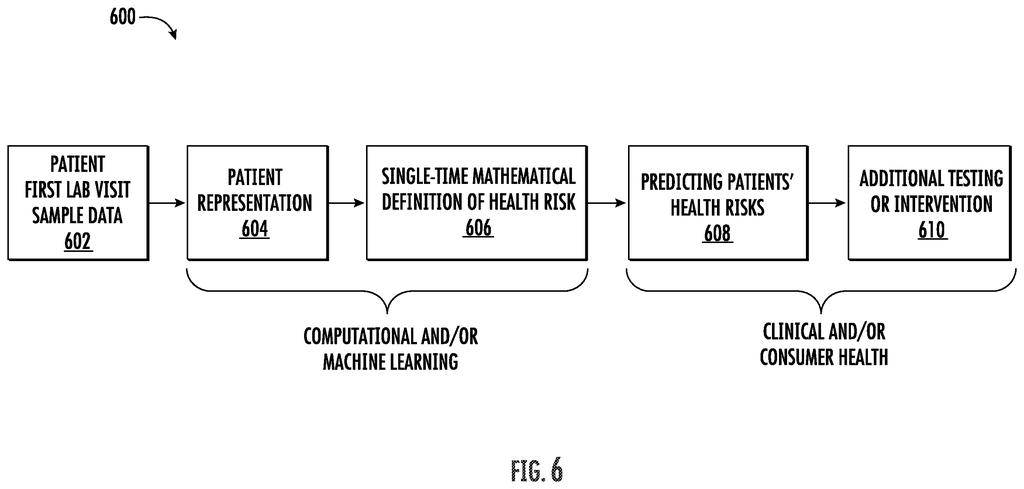
Google's patent application describes a way to get a useful read from just one blood draw. The system learns from a large healthcare dataset that includes genetic, physical-trait and lifestyle information. During training it learns to place similar patients close together and different patients farther apart, a bit like sorting people into neighborhoods by health profile.
Then a new patient's single sample gets matched to the right neighborhood. The output could be a health class, a risk score for a future disease, a diagnosis guess or a prognosis.
training a triplet-based machine learning model using a dataset and a modified triplet-based objective function to create a trained triplet-based machine learning model, the dataset comprising a healthcare dataset having at least one of genetic features, phenotypic features, or lifestyle features; …
Translation: The system builds its predictive brain using medical records that include genetics, physical traits, and daily habits.
How the training rule pulls similar patients together
The core of the filing is a training rule for a type of AI called a triplet-based model (a model that learns from groups of three examples at a time). Each group has an anchor (a reference patient), a positive (someone in the same health class) and a negative (someone in a different class). The model turns each patient into a point in space, called an embedding (a numeric fingerprint), and learns to place similar patients near each other.
Google's twist is a regularization component (an extra penalty added to the training score). It keeps the distance between the positive and the negative equal to or greater than the distance between the negative and the anchor. The filing says this packs each class more tightly and pushes different classes farther apart than existing triplet methods, and it points to comparison figures to show it.
The claims then describe three steps:
- Train on a healthcare dataset with genetic, physical-trait or lifestyle features.
- Take a single time point biological sample from a patient.
- Output a health class, a risk score, a diagnosis prediction or a prognosis prediction.
The filing also describes running the model on a phone or a server, and tuning it on a user's own data if they consent.
A regularization component can be integrated into a triplet-based objective function associated with a triplet-based machine learning model to create a modified triplet-based objective function.
Translation: A mathematical adjustment is added to the AI model to make its health risk comparisons more accurate.
What this could mean for your next lab report
If it works as described, your lab results could come with more context than a normal range printed next to a number. One visit might produce a risk score, a likely health class, or a flag for follow-up testing (the filing lists additional testing or intervention as a next step). That matters because most risk tools today want several measurements over time, and plenty of people have only one recent result.
The filing describes the model running on a phone, a server, or as a web service for health predictions, and it names no product. It also says using less input data cuts computing work and the storage needed for health records. Nothing in the text shows clinical results, so treat the accuracy claims as the company's own.
That makes this Google's 21st filing we've tracked since May in our wearables that read your body watchlist, building on their earlier applications covering learning from failed swipes and gestures without a training session.
Squeezing each group of patients into a tight cluster makes a model easy to train and neat on a chart. The price is that people near the edge between two groups get sorted into one bucket or the other, and a wrong bucket in health means either false comfort or a needless scare.
One blood draw also carries a hard limit: it is a snapshot. A model can learn patterns from thousands of patients, yet it cannot see your trend over time, and the filing gives no accuracy figures in its text.
The trade reads as worth making for a first-pass nudge, such as a suggestion to get a follow-up test. It looks much shakier as a basis for anything resembling a diagnosis, and the filing's own list of next steps, including additional testing, points toward the same cautious use.
Get our take in your Top Stories
Liked this breakdown? Add Patentlyze as a preferred source on Google, and our plain-English take shows up more often in your Top Stories the next time Google patent news breaks.
There are more where this came from
We read every patent application Big Tech publishes and send you the ones worth knowing. Plain English, free, every week.
The drawings
7 drawing sheets from US 2026/0341520 A1 · click any drawing to enlarge


Want this weekly breakdown for a company we don't cover? Patentlyze Pro →
Be the first to weigh in