
Google Patents a Glasses-Free 3D Screen That Works No Matter Where You Sit
Google is working on a 3D display that doesn't need glasses — and unlike older autostereoscopic screens, it's designed to work across a wide range of viewing angles for more than one person at a time.
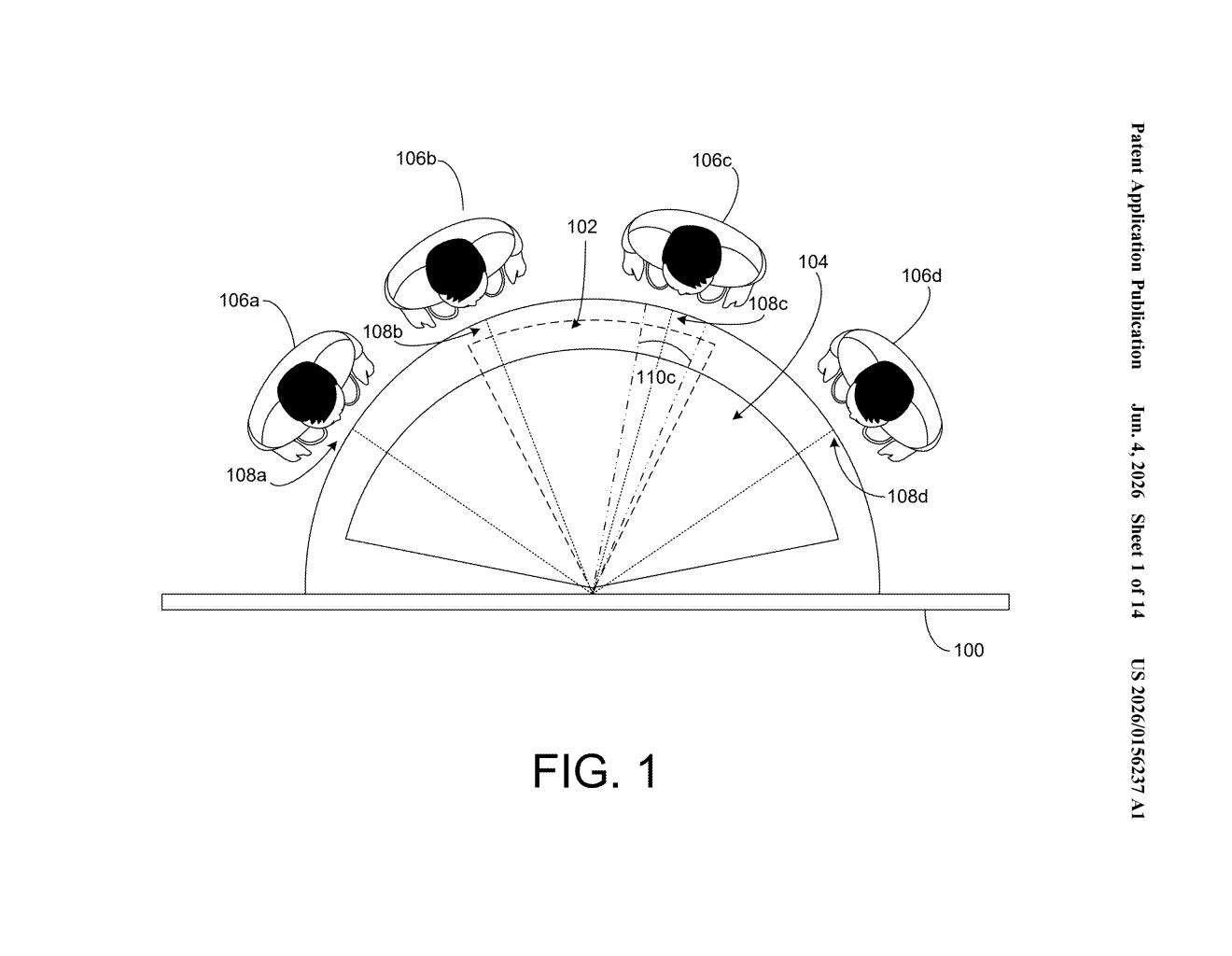
What Google's no-glasses 3D display actually does
Imagine watching a 3D movie without putting on those clunky glasses. The screen just... looks three-dimensional. That idea has existed for years, but the catch has always been the same: you have to sit in exactly the right spot, and the moment you shift, the effect collapses. Add a second person sitting next to you, and things get even worse.
Google's patent describes a display system that tries to fix both problems. It uses a steerable backlight — a layer of individually controllable light pixels sitting behind the main screen — to aim the right light toward wherever each viewer actually is. The light passes through a set of optical layers (a barrier, a diffuser, and a lens array) that together sculpt it into a proper stereoscopic pair of images: one for your left eye, one for your right.
The end result, at least in theory, is a screen that can serve up personalized 3D views to multiple people sitting at different positions, without any of them needing to wear special hardware.
How the steerable backlight builds a 3D image per viewer
The system is built around a layered optical stack. At the back is an array of backlight pixels — think of it like a second, lower-resolution display whose only job is to control where light goes. In front of that sits a parallax barrier (a grid of opaque and transparent slits that separates light paths for each eye) and a diffuser (a layer that spreads and smooths the light so it doesn't look harsh or uneven).
The main display panel — the one showing actual image content — sits between the backlight stack and a lenticular array (a sheet of tiny cylindrical lenses, like the ribbed plastic you see on old 3D postcards). The lenticular array bends the outgoing light to steer it toward specific viewing positions.
The key claim is that the system can activate a subset of backlight pixels at any given moment to aim a stereoscopic image pair at a specific viewer pose — essentially, a snapshot of where a person's head and eyes are located. By rapidly switching which backlight pixels are on, the display can theoretically serve different 3D views to multiple people sitting at different angles.
- Backlight pixel array: controls light direction at the source
- Parallax barrier + diffuser: separates and conditions the light per-eye
- Display pixel matrix: carries the actual image content
- Lenticular array: bends outgoing light toward the correct viewer position
What this means for glasses-free 3D screens
Most glasses-free 3D displays — the tech category is called autostereoscopic — have a narrow "sweet spot." Move your head a few inches and the 3D effect breaks. That's made the technology mostly a novelty for phones and small screens, not something you'd want in a living room or a public display. Google's approach, with its steerable backlight, is explicitly aimed at large-angle viewing, which is the harder engineering problem and the one that's blocked mainstream adoption.
If this works at scale, it's relevant anywhere you'd want shared 3D visuals without the friction of wearable hardware — think retail displays, collaborative workstations, entertainment screens, or even future AR/VR-adjacent form factors. It's also worth noting that Google has active hardware lines (Pixel, Nest, and its ongoing work in AR) where a display breakthrough like this could eventually surface.
This is a technically ambitious patent targeting a real unsolved problem: glasses-free 3D that actually works when you're not sitting perfectly still or alone. The multi-user, wide-angle framing is the meaningful differentiator here — plenty of autostereoscopic patents exist, but most don't seriously address the sweet-spot problem. Whether Google has actually cracked it is another question, but the engineering direction is credible and worth watching.
There are more where this came from
We read every patent application Big Tech publishes and send you the ones worth knowing. Plain English, free, every week.
Want this weekly breakdown for a company we don't cover? Patentlyze Pro →