
Google Files Patent for a Toy Wand That Floats When Charging Is Done
Google has filed for a toy wand that hovers inside its charging stand. The wand floats when it's fully charged, bounces when something is happening, and resists when you pull it out too early.
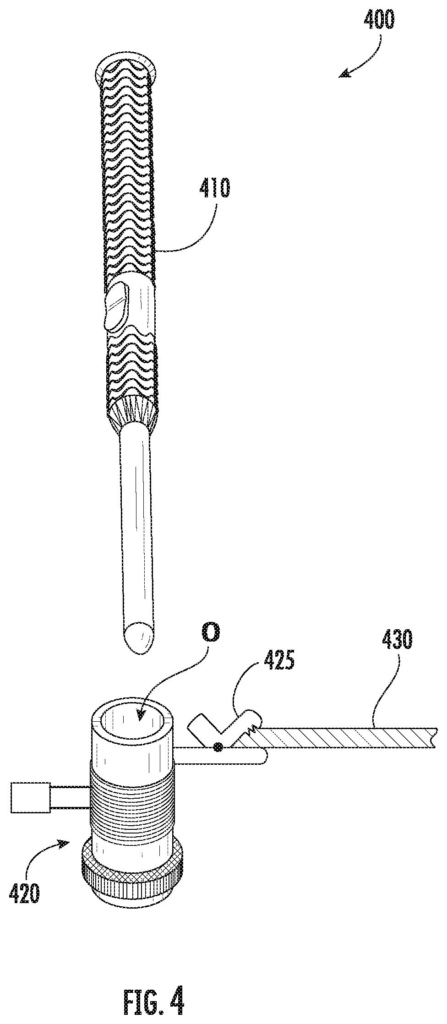
What Google's floating toy wand actually does
A child's toy wand sits in a tube-shaped stand on a bedroom shelf, charging overnight. Normally you only know when it finishes by checking a tiny light or an app.
Google's patent application describes a stand that handles this differently. A coil of wire around the opening creates a magnetic field, and a magnet hidden in the wand's shaft reacts to it. The stand holds the wand in place while it charges, then lets go so the wand floats and bobs inside the tube once it's full.
The same trick can carry other messages. A wand might bounce when a special event starts in a story world, or get more restless the longer you leave it alone. If you tug it out early, the stand can pull back to tell you it's still charging.
… cause levitation or levitation-like movement of the toy wand within said opening by virtue of electromagnetic interaction with the magnetically-reactive element of the shaft portion …
Translation: The base uses magnets to make the wand hover inside the hole.
How the coil holds and releases the wand
The filing covers a cradle (a tube-shaped charging stand) and a device that fits into it, with a toy wand as the main example. The wand has a magnetically-reactive element (a magnet or similar metal part) inside its shaft. The cradle has a solenoid coil (a spool of wire that acts as a magnet when current flows through it) around the opening, plus wireless circuitry and a controller.
In the charging claims, the cradle gets a wireless command to charge, from a phone or the wand itself. It uses the coil to hold the wand at one position while it charges. When an event occurs, such as a stop command or a set battery level, charging ends and the coil makes the wand levitate at one or more positions.
In the notification claims, the controller receives data about an event, picks a motion pattern, and drives the coil so the wand moves that way. The filing lists these examples:
- A message from a remote server sent to many wands at once
- Another wand nearby, with different motion for "friendly" and "unfriendly" ones
- A long stretch since the wand was last removed, causing more vigorous bouncing
- A low battery, or removal before charging is done
The controller shapes the motion by changing the current's waveform, frequency, duty cycle (how long it stays on in each cycle), strength and direction.
… upon occurrence of an event, ceasing charging of the user device; and causing, by the controller, an electrical current to flow in the solenoid coil thereby causing the user device to levitate within the opening at one or more levitating positions …
Translation: When the battery is full, the power stops and the wand floats.
Why a floating wand could replace charge lights
The practical payoff is a charge indicator you can read across a room without a screen. A wand that floats means it's ready, and one that sits still or resists your pull means it isn't. For a toy built around a magic theme, that fits the product in a way a blinking light doesn't.
The description also points to a bigger idea: the stand becomes a way to send you messages. A server could tell every wand about a story event, and nearby wands could trigger different movements. Nothing here says Google plans to sell this, and the filing only describes the hardware and the rules for when it moves. It is a division of an earlier application, so it carries claims from that earlier family.
Google's sixth filing in the Battery & power patents we cover since May follows a tap-case smartwatch idea and drone charging pad recognition.
If you have ever grabbed a wand toy off the shelf and found it dead at the moment a child wanted to play, you know the gap this fills. A wand that hovers in its cradle when fully charged tells you the answer from across the room, with no app and no squinting at a tiny light.
The gentle resistance when you pull it out too early is a quiet but real benefit: it stops the mistake as it happens rather than letting you discover the problem mid-play.
The event alerts may be what you notice most over time. A wand that bobs and lifts when a story moment triggers turns a shelf object into a physical invitation to play, which is something a phone buzz on a parent's pocket never quite manages for a six-year-old.
Get our take in your Top Stories
Liked this breakdown? Add Patentlyze as a preferred source on Google, and our plain-English take shows up more often in your Top Stories the next time Google patent news breaks.
There are more where this came from
We read every patent application Big Tech publishes and send you the ones worth knowing. Plain English, free, every week.
The drawings
13 drawing sheets from US 2026/0332066 A1 · click any drawing to enlarge


Show the other 5 sheets


Want this weekly breakdown for a company we don't cover? Patentlyze Pro →
Be the first to weigh in