
Google Patent Shows Plain Language Requests Can Automatically Build Custom Screen Controls
Instead of hunting through app settings to pin information to your home screen, Google is patenting a system that lets you just ask for it in plain English and have the widget appear automatically.
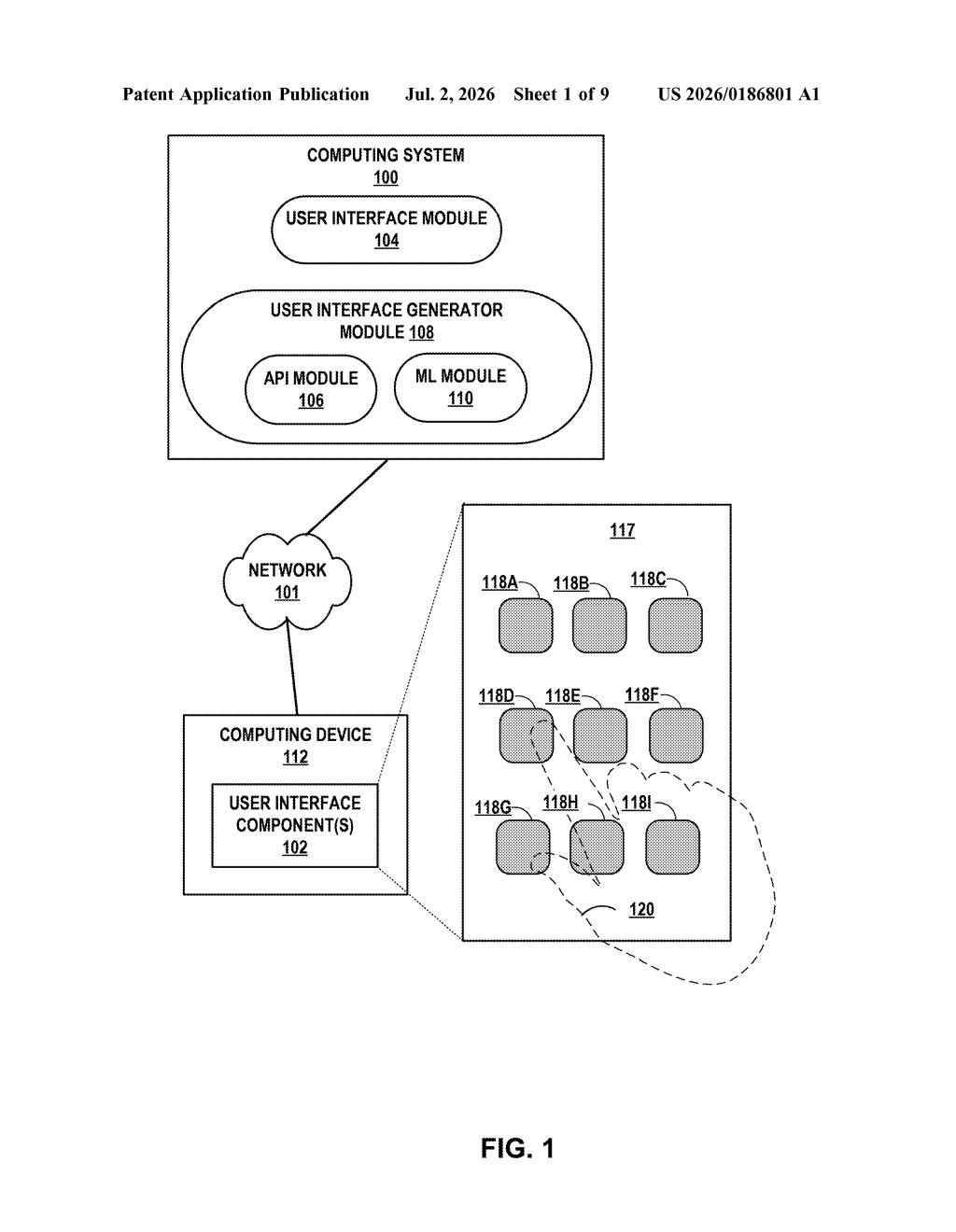
What Google's AI widget builder actually does
Imagine you want a little block on your phone's home screen that shows your next three calendar events alongside today's weather. Right now, you'd dig through widgets menus and hope someone built exactly that combination. This Google patent describes a system where you just type or say what you want, and the phone's AI builds the widget for you on the spot.
The system pulls live information from your installed apps, reads your request, and writes the code to display a custom widget that fits your ask. It also handles time-sensitive updates: if you ask for something like "show me this week's workouts," the widget knows to refresh as the week progresses.
The result is a home screen that adapts to what you actually want, rather than what a developer decided to pre-build.
How the LLM reads your apps and writes widget code
The patent describes a pipeline with three main stages.
First, the system retrieves context from your apps, pulling structured data like calendar entries, fitness stats, or task lists. This gives the AI something concrete to work with before it ever touches your request.
Second, a large language model (LLM), the same class of AI behind chatbots like Gemini, takes both your natural language input and that app data and generates instructions for rendering a graphical component, essentially writing code or a markup description for a custom widget on the fly.
Third, and those instructions can include a temporal parameter (a built-in rule about time, like "refresh every morning" or "expire after this event ends"). The system watches that parameter and automatically updates the widget's instructions when the time condition is met, so the display stays accurate without you doing anything.
- App data retrieval feeds the model real context
- The LLM generates widget rendering instructions
- Time-aware parameters keep the widget current automatically
What this means for Android home screens and AI assistants
For everyday Android users, this closes a longstanding gap: the widget ecosystem has always been limited to whatever developers chose to build and publish. A system that generates widgets from a prompt means your home screen could reflect exactly your workflow, not a generic approximation of it. That's a meaningful quality-of-life shift if it ships in a polished form.
For Google, it's also a strategic move to make Gemini feel like a genuine operating-system layer rather than a chat window you open separately. If the AI can reach into your apps and build live UI from them, the assistant becomes the interface, not just an add-on to it.
This is one of the more consequential AI-assistant patents Google has filed in a while because it targets a concrete, frustrating limitation rather than an abstract capability. The temporal-refresh detail is the part worth watching closely: widgets that know when to update themselves without user input are the difference between a parlor trick and something people actually keep on their home screens.
There are more where this came from
We read every patent application Big Tech publishes and send you the ones worth knowing. Plain English, free, every week.
Want this weekly breakdown for a company we don't cover? Patentlyze Pro →