
Google Patents a Way for the Stronger Earbud to Rescue the Weaker One Mid-Call
When one earbud loses its Bluetooth signal mid-call, the other one usually just gives up — Google's new patent describes a smarter handoff where the stronger earbud quietly rescues the weaker one.
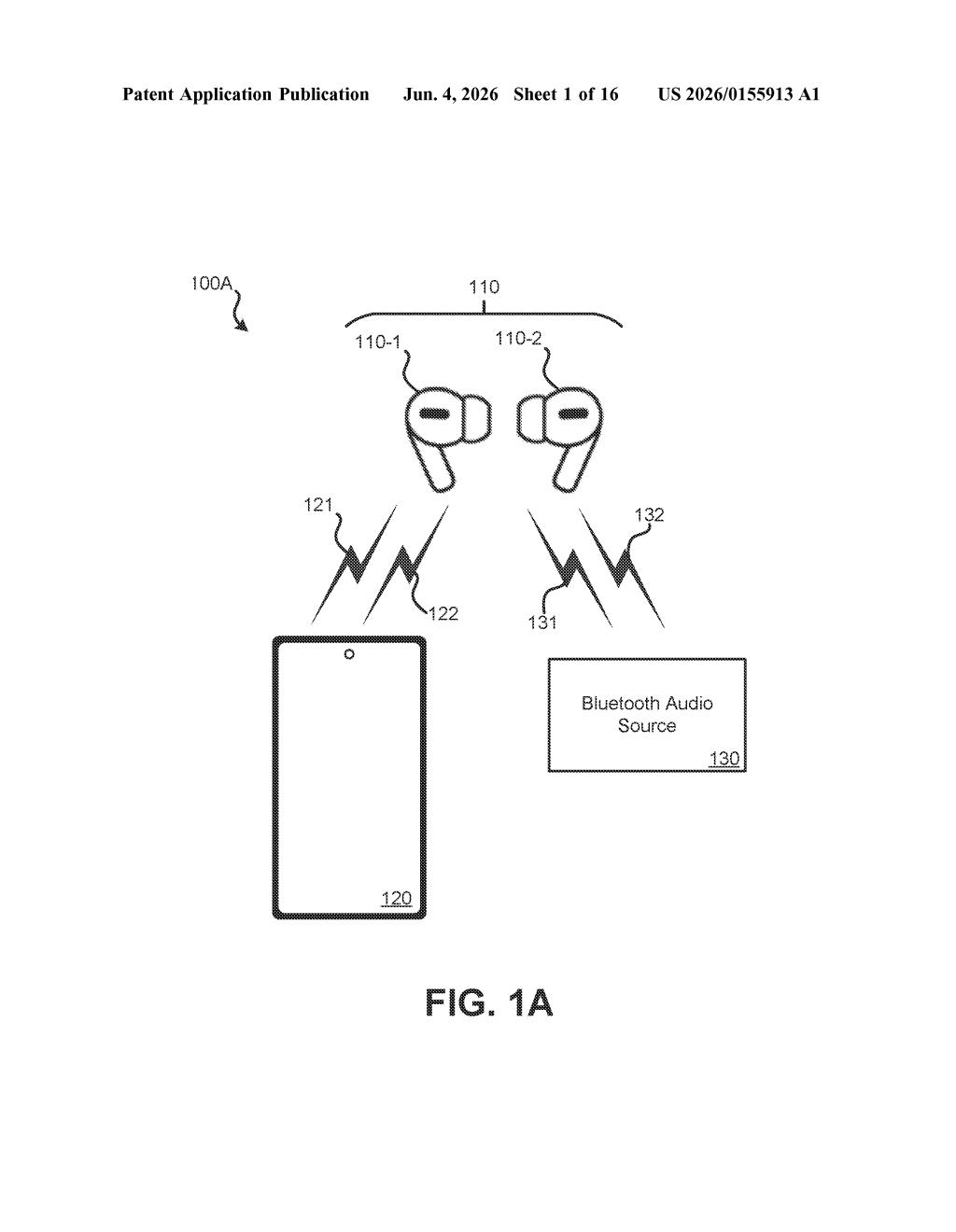
How Google's earbud relay fixes patchy call audio
Imagine you're on a phone call with wireless earbuds in. Your phone is sending audio to both earbuds at once, but one of them — say, the left one — is tucked behind your ear at a bad angle and keeps missing packets of sound. The result: choppy audio on that side, or worse, silence.
Google's patent describes a fix where the earbuds work as a pair rather than two independent receivers. The right earbud (the one with the stronger connection) tells your phone it got the audio just fine — and then forwards the audio itself to the struggling left earbud directly. Your phone doesn't have to resend anything; the earbuds sort it out between themselves.
The key is a little feedback loop built into every exchange: each earbud reports back to your phone about which packets it received and which it missed. That receipt system lets the pair coordinate repairs without you ever noticing the hiccup.
How the primary earbud forwards missed voice packets
The patent describes a coordination protocol between a primary earbud and a secondary earbud in a true-wireless set, designed to recover dropped audio packets during voice calls.
In normal Bluetooth audio, a source device (your phone) sends voice packets and both earbuds try to intercept the same transmission. If the secondary earbud misses a packet — due to interference, distance, or a weak link — it simply has a gap. This patent changes that dynamic:
- The primary earbud sends acknowledgment packets back to the phone confirming what it received.
- If the secondary earbud fails to intercept a voice packet, the primary earbud retransmits it directly to the secondary earbud.
- Both upstream (earbud-to-phone) and downstream (phone-to-earbud) exchanges are tracked across connection intervals — small, scheduled time windows in Bluetooth Low Energy (BLE) — so the system knows exactly which packets need rescuing.
The acknowledgment mechanism (essentially a per-packet receipt system) is what makes the coordination possible without requiring the phone to retransmit data. The phone only knows one earbud is healthy; the earbuds handle the repair relay themselves. This keeps latency low because the round-trip to the phone is bypassed.
What this means for wireless earbud call quality
For anyone who's ever had one earbud drop out mid-sentence on a call while the other stayed clear, this is the exact problem being solved. Current true-wireless earbuds typically depend on each bud maintaining its own independent Bluetooth link quality — if one side is weak, there's no fallback. Google's approach turns the earbud pair into a cooperative mesh, where the stronger side covers for the weaker.
This is particularly relevant for Pixel Buds, which compete against AirPods and Galaxy Buds in the premium wireless earbud market. Call quality is one of the most-cited differentiators in that space, and a patent like this suggests Google is investing in the earbud-to-earbud communication layer, not just the phone-to-earbud link.
This is a focused, practical patent solving a real and annoying problem in true-wireless audio. It's not flashy AI work — it's careful protocol engineering. The fact that it comes from a single inventor and targets a very specific failure mode (secondary earbud packet loss) suggests this is close to shipping, not exploratory research.
There are more where this came from
We read every patent application Big Tech publishes and send you the ones worth knowing. Plain English, free, every week.
Want this weekly breakdown for a company we don't cover? Patentlyze Pro →