
Google Patents a Search Tool That Listens to Background Audio Before You Type
You open Google Search with nothing in mind, and it already knows you might want to look up the show playing in the background. That's the premise of Google's latest patent, which describes search suggestions built from what your microphone happens to hear.
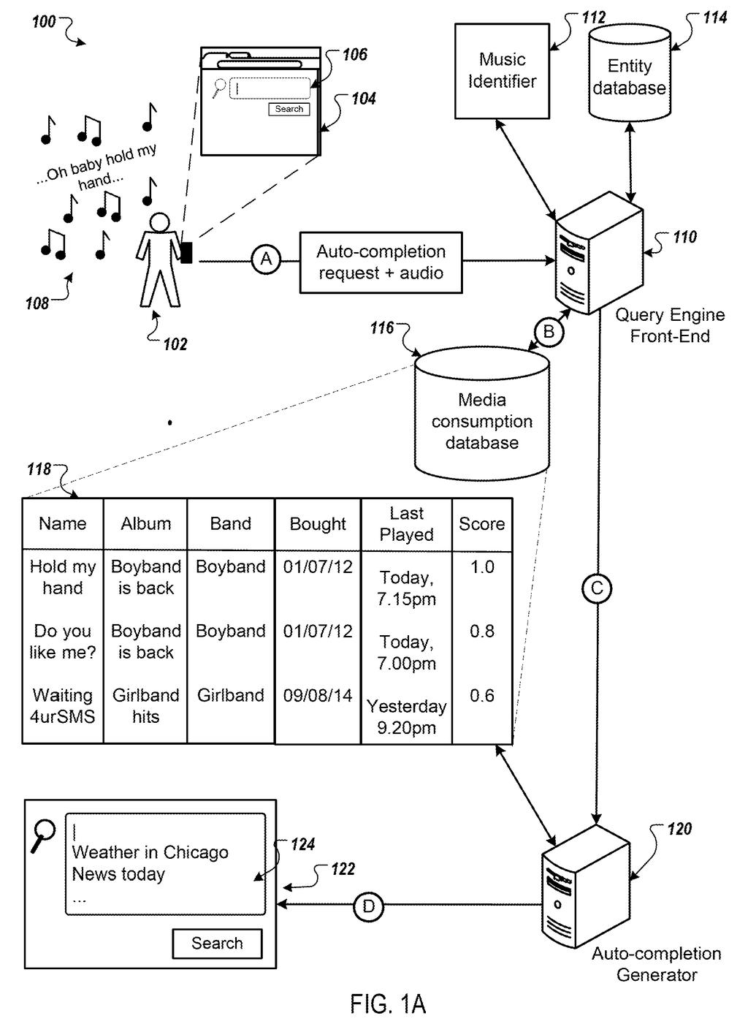
How Google's audio-aware search suggestions would work
Ever opened a search bar without knowing exactly what to type? Google is working on a way to skip that blank-stare moment entirely.
The idea: when you open Google Search, your phone's microphone picks up whatever audio is playing nearby, whether that's a TV show, a podcast, or a song. The system identifies what's in that audio, such as a character name, a show title, or an artist, and uses that to generate search suggestions before you've typed a single letter. You'd see those suggestions appear the moment you open the search interface.
This is different from typing a few letters and watching autocomplete kick in. Here, the suggestions come from context, not from your keystrokes. The system is essentially asking, "what are you probably curious about right now?" and trying to answer that before you even form the question.
receiving an indication that a user has initiated a search session at a client device, wherein the indication does not include any characters input by the user …
Translation: The system knows you want to search even though you haven't typed a single letter yet.
How the system pulls entities from background audio
The patent describes a system that monitors a search session from the moment it begins, even before the user types anything. When a user opens the search interface, the client device captures background audio using its microphone. That audio is analyzed to detect playback of media content nearby.
From that audio, the system identifies entities (a technical term for named things like people, shows, songs, brands, or places) associated with what's playing. So if your TV is running a documentary about a particular musician, the system might extract that musician's name as an entity.
Those extracted entities feed directly into query generation: the system constructs one or more suggested search queries based on those entities and pushes them to the user's screen. All of this happens without the user typing a single character.
Key elements the patent covers:
- Audio capture triggered by opening a search session, not a separate app or mode
- Entity extraction from the audio signal, linking sound to searchable concepts
- Query suggestion delivery to the UI before any keyboard input
- The entire flow operating in the background, invisible to the user until the suggestion appears
… identifying an entity that is associated with an item of media content; generating a suggested search query based on the identified entity …
Translation: It figures out what song or show is playing nearby and turns that into a ready-to-use search phrase.
What this means for how Google Search feels in real life
For everyday users, this changes the start of a search from a blank, effortful moment into something that already has a head start. If you're watching a nature documentary and wonder about a species you just saw, you might open Google and find a suggested query already waiting. That's a small but real friction reduction.
For Google, the implications are larger. Google's run of ambient-context search filings points to a broader push to make search feel less like a form you fill out and more like a conversation. This particular patent puts the microphone at the center of that shift, which will also raise questions about when audio capture starts, how long it lasts, and what happens to it afterward. The patent describes the mechanism, but the privacy implementation would determine whether most users ever feel comfortable turning it on.
Google's 43rd filing we've tracked since May in our AI agents that act for you watchlist follows one on researching topics from scratch and one on reading screens and apps.
The gap between this patent and a real product is mostly a software question. Google's phones already recognize songs playing nearby and already serve up search suggestions as you type, so the missing piece is simply linking those two systems: when you open the search bar, what's playing nearby shapes what gets suggested.
The shortest path to shipping this is a settings toggle on an existing device, nothing new to build or buy. The engineering challenge is speed, the suggestion has to appear before you've even typed, which means the recognition has to happen in the background fast enough to feel effortless rather than eerie.
The real gate is trust. A feature that listens and responds before you ask will make people uncomfortable if it isn't explained well, and Google has learned that lesson the hard way before. Whether this moves from patent to product depends almost entirely on whether the privacy framing lands.
There are more where this came from
We read every patent application Big Tech publishes and send you the ones worth knowing. Plain English, free, every week.
The drawings
5 drawing sheets from US 2026/0288857 A1 · click any drawing to enlarge


Want this weekly breakdown for a company we don't cover? Patentlyze Pro →
Be the first to weigh in