
Samsung Patents a System That Reads Your Screen to Control Connected Devices
Every object on your phone screen could become a remote control. Samsung has filed a patent for a system that watches what you're looking at and uses it to trigger effects on your phone or any device linked to it.
What Samsung's on-screen object detection actually triggers
Every time you open an app or tap on a photo, your phone knows exactly what's on the screen. Samsung's patent describes a way to make that awareness actually do something beyond just showing you content.
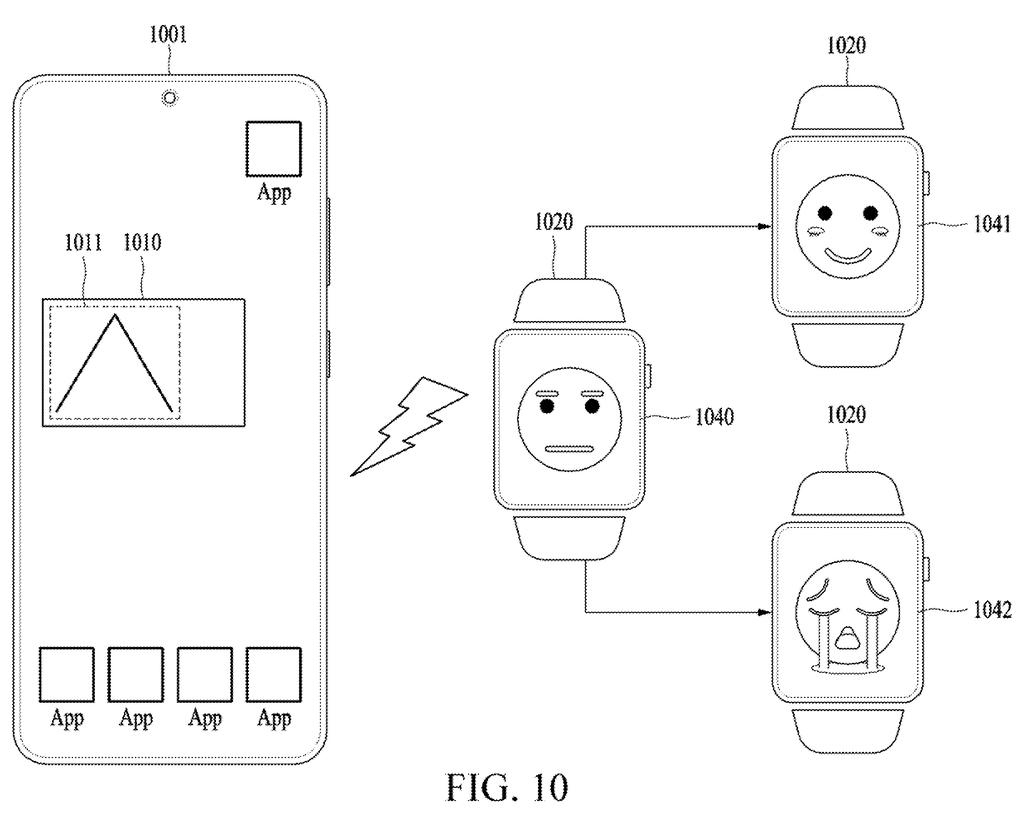
The idea is that when you focus on an object, say a product in a shopping app, a song in a music player, or a character in a game, the phone generates instructions based on that moment and uses them to trigger an effect. That effect could be something on the phone itself, like a haptic buzz or a display change, or something on a connected device, like smart lights, a speaker, or a TV.
You don't configure anything manually. The phone detects the object, figures out what response fits, and sends the command. It's the kind of ambient, automatic reaction that turns your screen into something closer to a sensor for the room around you.
detect an occurrence of an event related to an object of interest disposed or to be disposed on a screen of the electronic device; …
Translation: The system notices when something happens on your display.
How the prompt gets built and sent to connected devices
The patent describes three core steps the device runs through each time a relevant moment occurs.
- Event detection: The processor watches for an event tied to an "object of interest" on the screen. That object could be something already displayed or something about to appear. An event might be a tap, a hover, a gaze trigger, or an automatic detection that the object has entered the frame.
- Prompt generation: Once the event fires, the system builds a prompt (a structured set of instructions or queries, similar to how you'd ask a chatbot something) based on what the event was and what the object contains or represents.
- Effect determination: That prompt is used to decide which effect to apply. The effect can target the phone itself or any externally connected device, meaning a smart speaker, lighting system, or screen in the same network.
The claim is intentionally broad. It doesn't specify which AI model processes the prompt, which communication protocol reaches the external device, or which categories of effects are valid. The system is defined by the detect-prompt-effect loop, not by any particular implementation.
"Object of interest" is also left wide open in the claim language, which means the system could theoretically respond to anything the device can identify on screen, from a product image to a music album cover to a face.
… determine an effect to be applied to the electronic device or an external device communicatively connected to the electronic device based on the generated prompt.
Translation: It figures out what action your phone or smart gadgets should take next.
What this means for Samsung's connected-home ambitions
If this patent translates into a real feature, it would let Samsung tie its Galaxy phones more tightly to its SmartThings ecosystem. A song playing on your phone could warm up the living room lights; a cooking video could trigger a timer on a connected display; a fitness prompt could pulse a connected speaker. The screen becomes a context engine for the whole room, not just a window for apps.
The claim language covers a lot of ground. "Object of interest" and "effect" are defined so loosely that the patent, if granted, would sit upstream of many specific implementations, and new Big Tech patents in the ambient computing and smart-home space are increasingly racing to lock down these broad architectural claims before competitors ship the same idea under a different name.
That makes this Samsung's eighth filing we've tracked since July in our agents that act for you watchlist, following work on separating commands from casual talk and turning conversations into images.
Claim 1 is strikingly short and deliberately abstract. It covers detecting an event, generating a prompt, and applying an effect. That's it. No sensor type, no AI architecture, no device category, no effect type. A patent this broad, if granted as written, would cover a huge range of possible products and could give Samsung a structural claim over almost any screen-aware ambient-effect system.
The practical question is whether the patent office will let that breadth stand. "Generating a prompt based on an event" and "determining an effect" describe a loop that could map onto software that already exists in various forms, which is exactly the kind of prior-art argument that narrows claims during examination. What Samsung filed is a wide tent; what gets granted will likely be much more specific.
Even in a narrowed form, this filing points clearly at Samsung's interest in making the Galaxy ecosystem reactive to screen content in real time. That's a real product direction, not a filing-cabinet exercise.
Get our take in your Top Stories
Liked this breakdown? Add Patentlyze as a preferred source on Google, and our plain-English take shows up more often in your Top Stories the next time Samsung patent news breaks.
There are more where this came from
We read every patent application Big Tech publishes and send you the ones worth knowing. Plain English, free, every week.
The drawings
12 drawing sheets from US 2026/0252206 A1 · click any drawing to enlarge


Show the other 4 sheets


Want this weekly breakdown for a company we don't cover? Patentlyze Pro →
Be the first to weigh in