
Google's New Patent Lets Search Results Do Things Inside Your Apps
What if a Google search didn't just find a webpage, but actually did the thing you were looking for inside an app? That's the core idea behind this patent.
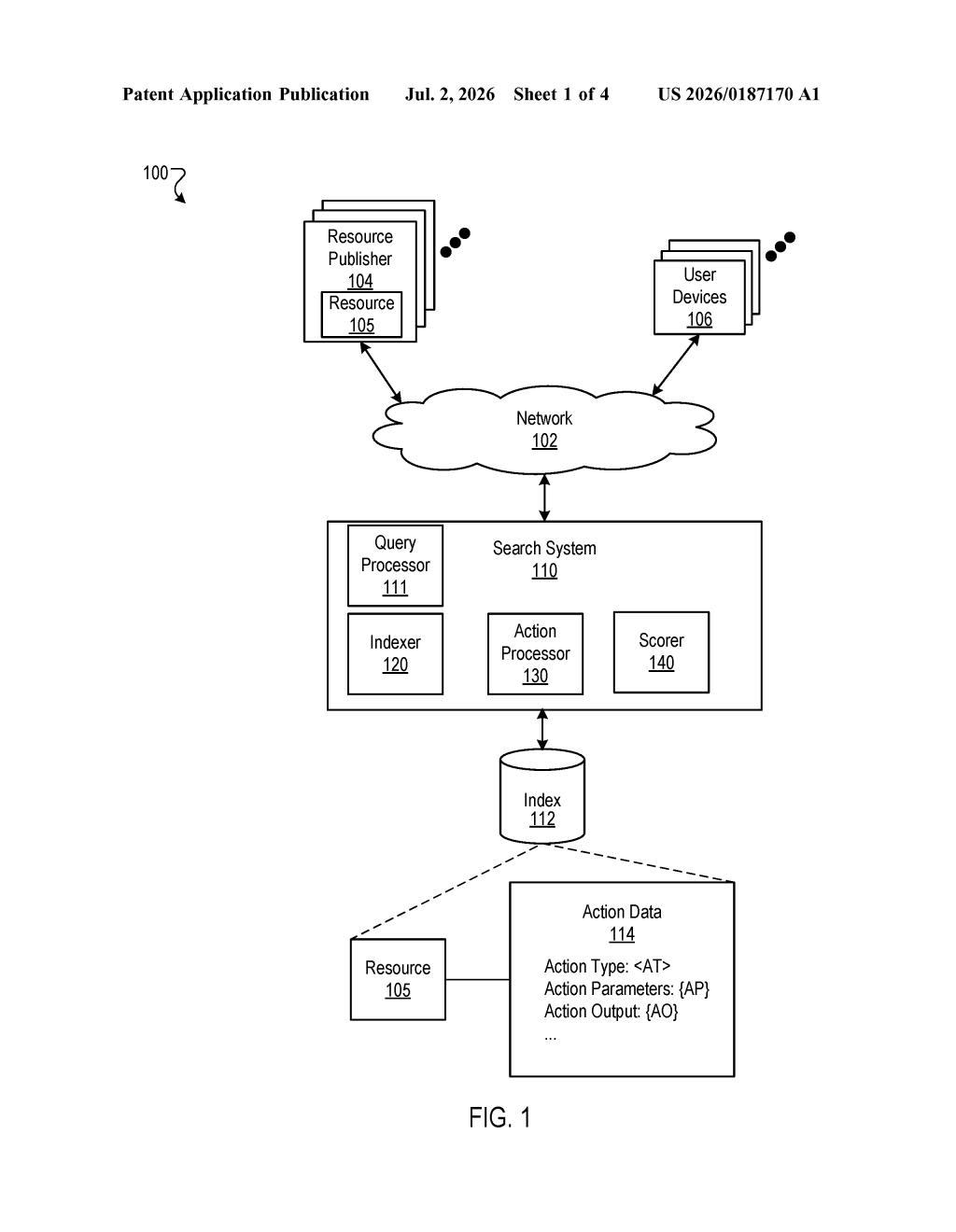
What Google's app-action search system actually does
Imagine searching for 'order a large pepperoni pizza' and instead of getting a list of links, your phone just places the order inside your pizza app. That's roughly what Google is describing here.
The patent covers a system where apps register a catalog of things they can do, things like 'place an order,' 'play a song,' or 'book a table,' along with the details each action needs. Google's search engine indexes all of those registered capabilities, just like it indexes web pages today.
When you type or say a query, the system matches it to one of those registered actions, fills in the required details using information from your query, and fires off the command to the right app, all without you having to open the app yourself first.
How Google maps a search query to an in-app command
The patent describes a two-part system: an indexing layer and an execution layer.
On the indexing side, apps submit action data describing each task they support. For every action, the system records the action type (what category of task it is) and the action parameters (the specific inputs that task needs, like a destination address or a song title). All of this gets stored in a structured index that a search engine can query.
On the execution side, when a user submits a query, the system:
- Identifies a matching action and its required parameters from the index
- Retrieves a command template, essentially a pre-built instruction form with blank fields
- Fills in those fields by extracting relevant values from the user's query
- Sends the completed command to the target app's environment to run the action
The phrase 'cross-application function' in the claim is important: it means the search engine can trigger actions across many different apps using a single standardized pipeline, rather than needing a custom integration for each one.
What this means for how you search and use apps
For you as a user, this would collapse the gap between searching for something and actually doing it. Right now, a search result is a door you still have to walk through. This patent describes a system where the search engine walks through it for you.
For Google strategically, this extends its search dominance further into the app layer, the part of the phone experience that has historically been harder for Google to control on competing platforms. If apps register their capabilities with Google's index, Google becomes the universal remote for your installed software, not just a directory of websites.
This is a meaningful patent, not because the idea is new (app indexing and deep linking have been around for years on Android and iOS) but because the architecture here is more systematic. Formalizing action parameters into a searchable index and a templated command format is the kind of plumbing that could make Google's on-device AI assistant genuinely useful rather than just a novelty. Worth watching.
Get our take in your Top Stories
Liked this breakdown? Add Patentlyze as a preferred source on Google, and our plain-English take shows up more often in your Top Stories the next time Google patent news breaks.
There are more where this came from
We read every patent application Big Tech publishes and send you the ones worth knowing. Plain English, free, every week.
Want this weekly breakdown for a company we don't cover? Patentlyze Pro →