
Google Patents a Security Platform That Diagnoses and Fixes Itself
Most security platforms tell you something went wrong — Google's patent describes one that figures out why and fixes itself before you have to get involved.
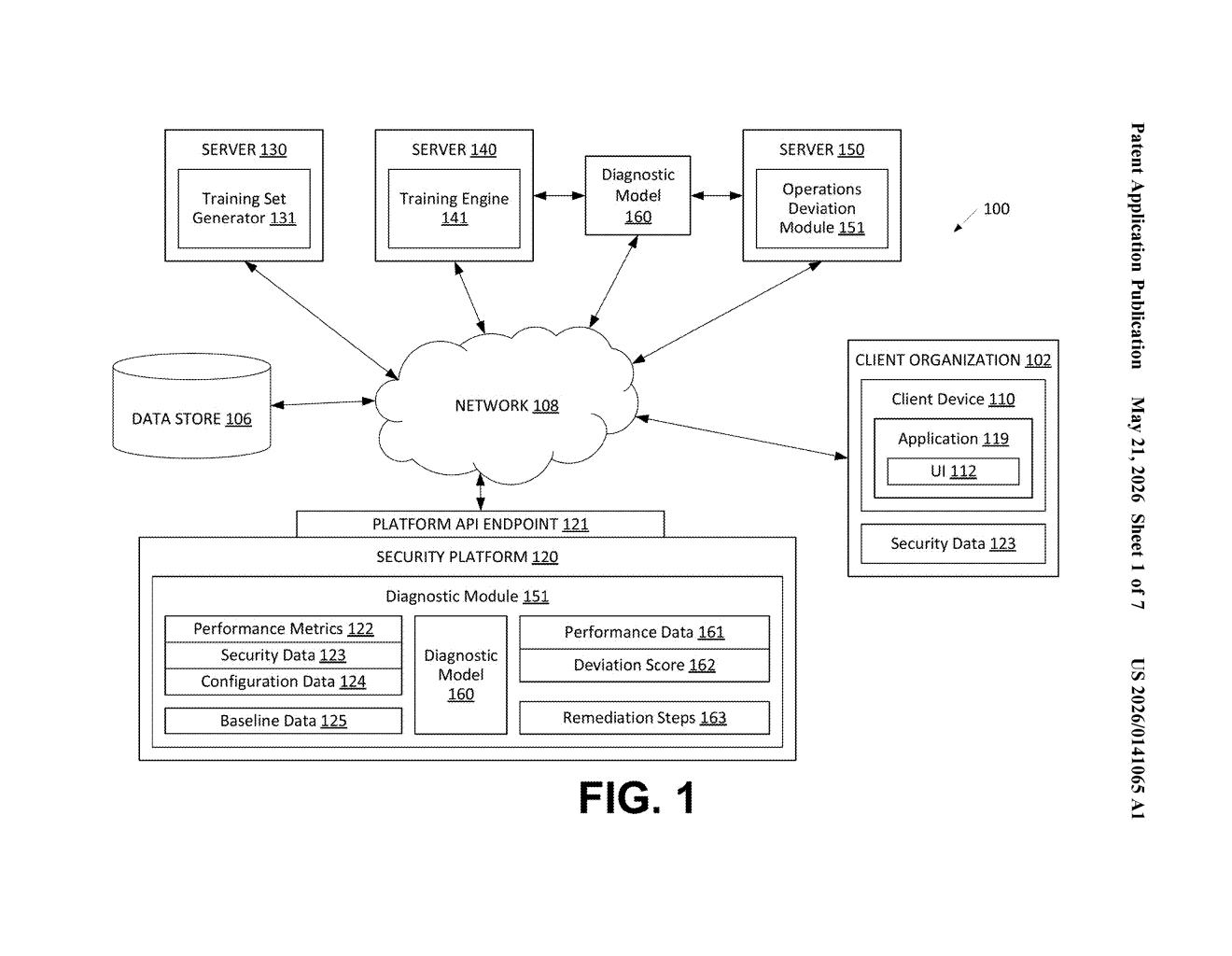
What Google's self-correcting security system actually does
Imagine your company's security software quietly watching its own health in the background, not just looking for hackers, but checking whether its own internal components are behaving the way they should. If something drifts out of normal range — say, a monitoring module starts processing data slower than usual — the system doesn't just log a warning. It diagnoses which part is underperforming and automatically pushes a configuration fix.
That's essentially what this Google patent describes. The system tracks performance metrics across all its components, compares them against a baseline tailored to your specific organization, and treats unusual performance as a potential security signal — not just a maintenance issue.
When a deviation triggers a threshold, the system identifies the specific component at fault and applies updated settings to bring it back in line. No waiting for an IT ticket. No manual triage. The platform essentially runs its own incident-response loop on itself.
How the platform detects deviations and applies fixes
The patent describes a processing pipeline with three core responsibilities: measurement, evaluation, and remediation.
First, the system continuously collects a set of performance metrics from each component of the security platform — think things like processing latency, throughput, error rates, or detection accuracy. These get aggregated into a unified performance data snapshot.
Next, that snapshot gets evaluated against a performance baseline — a per-organization reference that represents what "normal" looks like for that customer's environment. The key design choice here is that the baseline is organization-specific, meaning a company running high-volume log ingestion won't get flagged for behavior that would look anomalous somewhere else. The evaluation checks whether the performance data satisfies a security threat criterion — essentially asking, "does this deviation look like a security problem, not just routine drift?"
If that criterion is met, the system:
- Identifies which specific component is responsible
- Determines the appropriate configuration data — new settings or parameters — for that component
- Applies the configuration automatically, without waiting for human intervention
The feedback loop means the platform is, in effect, performing continuous self-triage and auto-remediation against its own components.
What this means for enterprise security operations
For enterprise security teams, alert fatigue and slow response times are chronic problems. A platform that can identify when one of its own modules is misbehaving — and reconfigure it without a human in the loop — compresses what's normally a multi-step incident response process into an automated cycle. That's meaningful when the window between detection and breach keeps shrinking.
This also fits neatly into Google's broader push with Google Security Operations (formerly Chronicle). If you're already running your SOC on Google's platform, baking self-healing diagnostics into the platform itself reduces your dependence on ops staff to babysit the tooling. The per-organization baseline approach is the detail worth watching — it suggests this isn't a one-size-fits-all heuristic, but a system that learns your environment's normal.
This is a solid, practical patent — not flashy, but the kind of infrastructure work that makes enterprise security products meaningfully better. The organization-specific baseline is the genuinely interesting piece; generic thresholds are one of the reasons security tooling generates so much noise. If Google ships something like this inside Google Security Operations, it's a real operational advantage for large customers.
There are more where this came from
We read every patent application Big Tech publishes and send you the ones worth knowing. Plain English, free, every week.
Want this weekly breakdown for a company we don't cover? Patentlyze Pro →