
Google Files Patent to Keep Prices in Search Results From Going Stale
Google has filed a patent for a crawler that learns which product pages are likely to change price and rechecks those first. The aim is that the price you see in search matches the price on the store's own page.
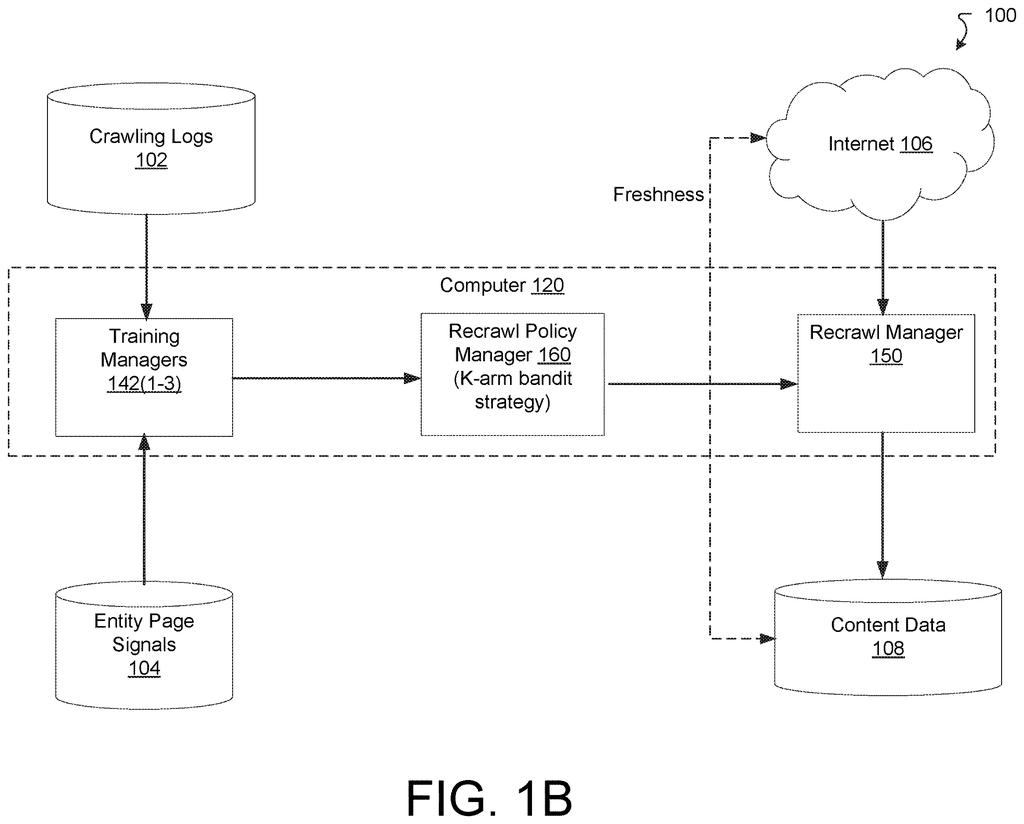
What Google's price-page recrawl patent does
Ever clicked a search result for a $40 jacket, only to land on a page that says $55? That mismatch happens because the search engine's copy of the page is out of date.
Google's patent tackles it by changing how its web crawler (the program that revisits pages to copy their contents) decides what to recheck. Visiting every page equally often wastes effort on pages that never change. So the system predicts which product pages are about to change price, and which ones people actually click on, and rechecks those more often.
It also keeps several recheck strategies on hand and learns over time which one is working best, instead of betting everything on a single rule.
… generating, via a model, a value of a recrawl parameter for the first webpage at a current time step, wherein the value of the recrawl parameter is based on the static value of the attribute; determining a recrawl rate for the first webpage based on the value of the recrawl parameter; and performing a recrawl operation on the first webpage based on the recrawl rate …
Translation: The system calculates how often to revisit a webpage by analyzing shared traits and past data.
How Google's crawler picks which pages to recheck
The filing describes a system for deciding how often to revisit pages whose facts change quickly, such as product offers with prices. The claims center on a model that looks at stable details about a page, like the brand or merchant it shares with other pages, and uses them to set a recrawl rate (how often that page gets revisited). The crawler then revisits the page at that rate to fetch the current price.
The description adds two layers on top. First, a neural network (a pattern-learning program) predicts three things for each offer: the chance its price changes in the next day, how often it gets clicked, and how often it shows up in search results. It learns from past crawl history plus details such as brand, merchant, country, product category and day of the week.
Second, the system picks among several recrawl strategies:
- Uniform: every page gets equal attention.
- Change-weighted: pages likely to change get more visits.
- Click- or impression-weighted: popular pages get more visits.
- Resource-optimized: a formula that balances all of it under a fixed crawl budget.
A "bandit" algorithm (a method that tries options and shifts toward what pays off) rewards a strategy whenever a recheck finds a changed price. The filing reports that combining history and details predicted price changes better than history alone.
… each strategy is an arm of a K-armed adversarial bandits algorithm with reinforcement learning. Moreover, in some implementations, the multiple strategy approach also uses a machine learning algorithm to estimate parameters such as a click rate, impression rate, and likelihood of price change, i.e., change rate …
Translation: Google uses complex machine learning models and reinforcement algorithms to predict when prices actually shift.
What fresher prices mean for Google Shopping
If this approach is in use, the benefit lands in the one place you'd notice: shopping results showing the price you will actually pay. Stale prices waste your clicks and make a search engine feel unreliable, and merchants lose sales when old, higher prices scare buyers off.
It also matters for Google's costs. Crawling uses real network capacity and can strain the sites being visited, so spending visits where prices are changing is cheaper than visiting everything. The filing also says the method is not limited to prices and could cover other fast-changing facts such as event times, which hints at wider use. The text describes only the technique, not any named product rollout.
Google's 112th filing in the Language AI work we've tracked since May adds to a run that includes one on catching near matches and plain English to robot code.
The tradeoff here is that the system leans hard on prediction. A crawler that rechecks popular, fast-changing pages most often can end up neglecting quieter ones, so a small shop whose price changes rarely may sit stale for longer.
The design tries to soften that with a built-in dose of random exploration, so strategies and pages outside the favorites still get tested now and then. That is a sensible cost to pay, since it gives up a little efficiency to avoid locking in its own mistakes.
The other cost is complexity: a neural network, several strategies and a learning loop all have to run and stay tuned at huge scale. For a problem as everyday as wrong prices, that seems a fair price. Still, this is plumbing, and you will only ever notice it when it fails.
Get our take in your Top Stories
Liked this breakdown? Add Patentlyze as a preferred source on Google, and our plain-English take shows up more often in your Top Stories the next time Google patent news breaks.
There are more where this came from
We read every patent application Big Tech publishes and send you the ones worth knowing. Plain English, free, every week.
The drawings
7 drawing sheets from US 2026/0329950 A1 · click any drawing to enlarge


Want this weekly breakdown for a company we don't cover? Patentlyze Pro →
Be the first to weigh in