
Google's New Patent Uses Sound to Check If Your Face Is Real
Unlocking your phone with your face is convenient until someone holds up a photo and your phone falls for it. Google's new patent uses ultrasound to check whether a real, three-dimensional human face is actually in front of the camera before granting access.
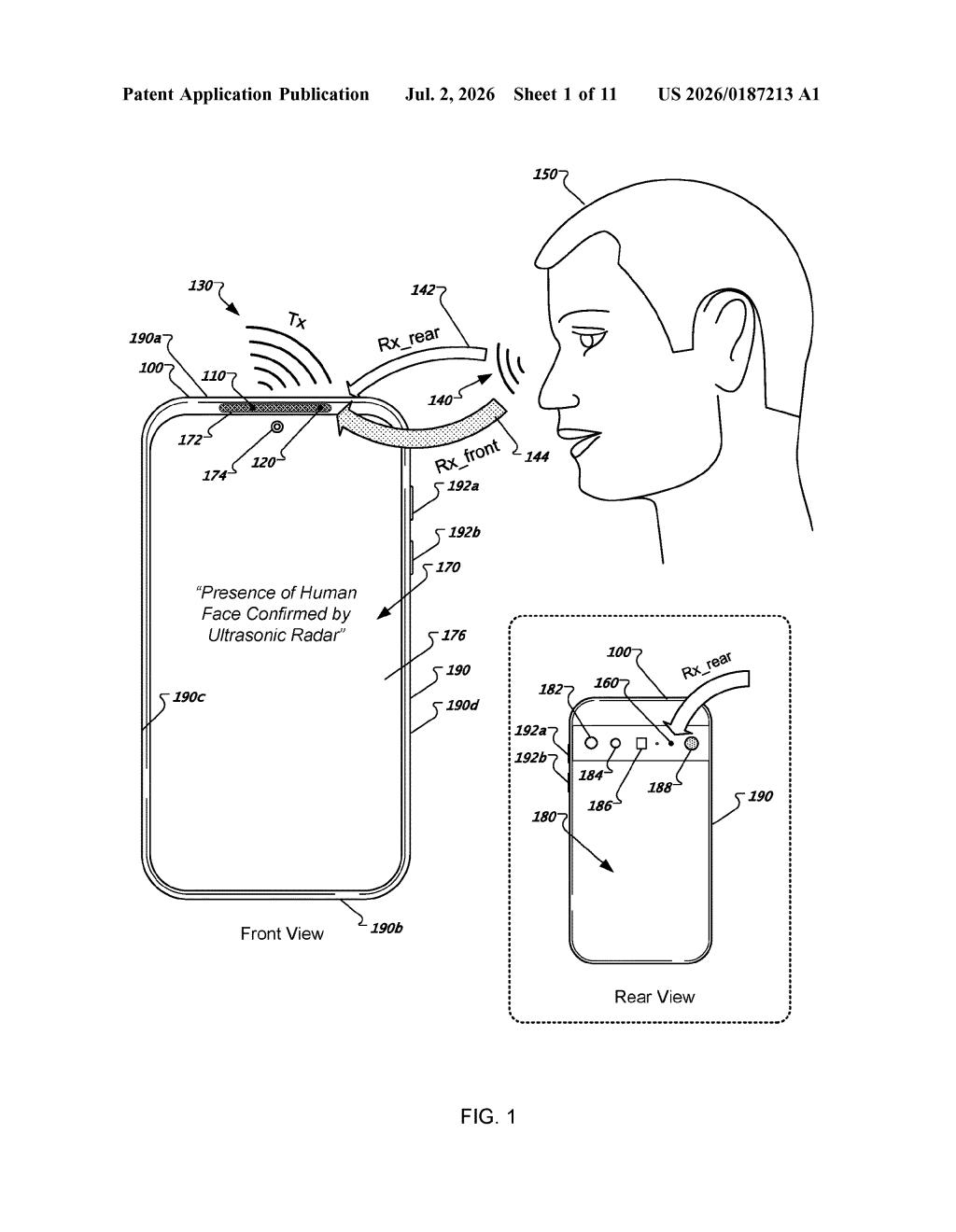
How Google's sound-based face check actually works
Imagine someone tries to unlock your phone by holding up a printed photo of you, or even a video playing on another screen. Most face-unlock systems rely purely on the camera, and a convincing image can sometimes fool them. Google's patent describes a way to catch that kind of trick using sound you can't hear.
The idea is to fire a brief pulse of ultrasonic sound from your phone's speaker, then capture the echoes with two separate microphones. Because sound bounces differently off a flat photo than off a real human face with depth and curves, the system can build a rough acoustic map of whatever is in front of the device.
That acoustic map gets fed into a machine-learning model trained to recognize the shape of a genuine human face. If the reflection pattern doesn't match what a real face would produce, the system flags the attempt. It's essentially the same idea as sonar, just running silently on hardware your phone already has.
How two microphones map the space in front of your phone
The patent describes a method where a computing device's speaker emits an acoustic waveform (a sound pulse, likely in the ultrasonic range so it's inaudible to humans). Two microphones then independently record the echoes that bounce back from whatever is in front of the device.
Using both reflections together, the device constructs a computed representation of the surrounding environment (essentially a low-resolution acoustic snapshot of the space in front of the screen). Because the two microphones are physically separated, their slightly different echo timings and intensities give the system depth information, similar to how two eyes produce stereoscopic vision.
This acoustic map is passed to a computational model (a trained classifier, likely a neural network) that has learned what a real human face's reflection signature looks like versus a flat surface like a photo printout or a screen displaying a face image.
- Speaker emits an ultrasonic pulse
- Two microphones capture independent echo returns
- Device combines reflections into a spatial representation
- A model classifies the result as a real face or a spoof attempt
What this means for beating photo-and-video spoofing attacks
Face unlock is already everywhere, but its weakest point has always been spoofing: holding up a photo or a video of the phone's owner. Adding an acoustic depth check that runs on existing speaker and microphone hardware means no extra sensors are required. That's a meaningful security upgrade that could apply to any Android device with stereo microphones, not just premium flagship hardware.
For you as a user, the practical effect is a face-unlock system that's much harder to fool with printed or displayed images. For Google, it's a way to close a well-known vulnerability in biometric authentication without redesigning the physical device.
This is a genuinely useful security idea. Using the phone's existing audio hardware to add a layer of depth verification to face unlock is elegant and cost-free from a hardware standpoint. The interesting open question is latency: ultrasonic echo processing needs to be fast enough that you don't notice a delay when you raise your phone to unlock it.
There are more where this came from
We read every patent application Big Tech publishes and send you the ones worth knowing. Plain English, free, every week.
Want this weekly breakdown for a company we don't cover? Patentlyze Pro →
Be the first to weigh in