
Red Hat Patents a Security Checkpoint System for Software Container Builds
Every time a developer adds a new code layer to a software container, they create a potential security gap. Red Hat's patent describes an automated way to slip a security checkpoint into that gap before the container is ever finished building.
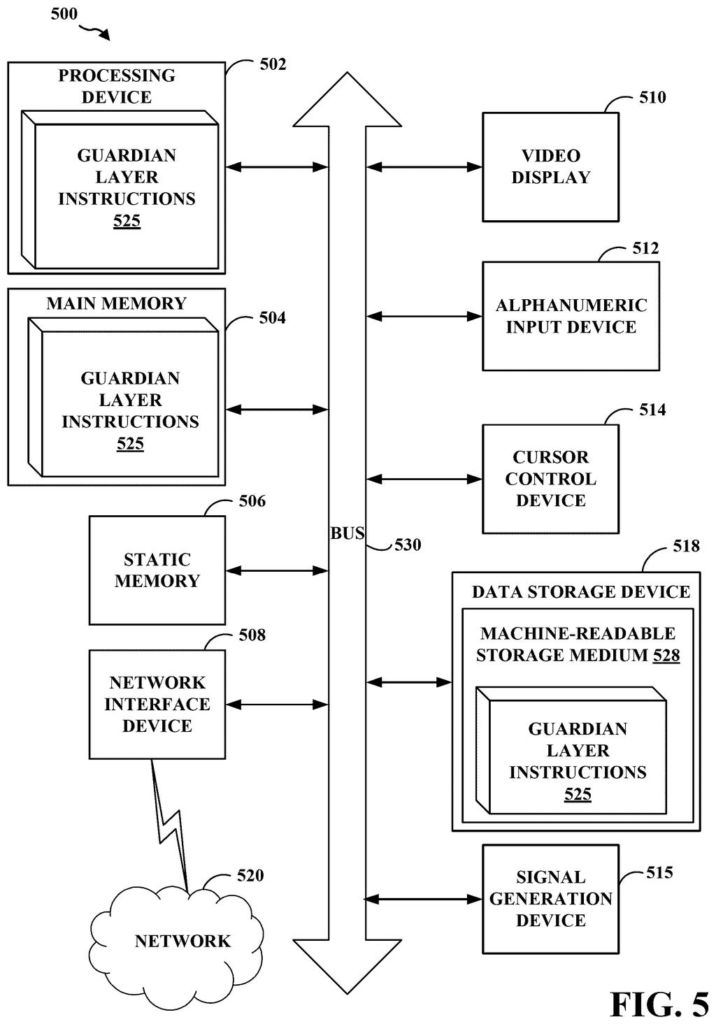
What Red Hat's guardian layer system actually does
Think of a software container like a layered cake. Each layer is a piece of code or a dependency that a developer stacks on top of the last one. The problem is that when someone adds a new layer from an outside source, nobody automatically checks whether it plays nicely, or safely, with everything beneath it.
Red Hat's idea is to insert what it calls a guardian layer automatically between any new incoming layer and the layers already in place. This guardian acts like a checkpoint at a border crossing: it sits in the stack and can inspect, validate, or isolate the new arrival before the whole container gets assembled and shipped.
The process happens during the build step, which is the moment developers assemble all the pieces into a finished container image. Because it is baked into the build itself, you do not have to remember to add security checks manually. The system detects when a new layer appears in the build instructions and inserts the guardian on its own.
How guardian layers slot into the container build process
Container images are built from stacked layers, each representing a filesystem change, an installed library, or a configuration file. When a build system processes a Dockerfile or similar set of build instructions, it reads each step sequentially and assembles layers on top of one another.
This patent describes a method that watches those build instructions for new layers, meaning layers sourced from outside the existing, trusted stack, such as a freshly pulled base image or a third-party package layer. When one is detected, the system automatically inserts a guardian layer between the new arrival and the adjacent existing layers.
The guardian layer is not just a passive spacer. It is a purpose-built layer that can carry security policies, integrity checks, or isolation logic. Key components of the approach include:
- Parsing the build instruction set to identify which layers qualify as "new"
- Injecting the guardian layer at the correct position in the layer stack without requiring the developer to modify their build file manually
- Completing the container image build with the guardian layers in place
The patent does not pin down exactly what each guardian layer does at runtime, leaving that flexible. The core innovation is the automatic detection and insertion step during build time.
What this means for enterprise software supply chain security
Software supply chain attacks, where malicious code sneaks in through a trusted-looking dependency or base image, have become one of the more common ways enterprise systems get compromised. Red Hat's approach targets that problem at the build stage, which is earlier and cheaper to fix than catching issues after a container is already running in production.
Because Red Hat sells heavily into enterprise Kubernetes and OpenShift environments, a feature like this would fit naturally into those pipelines. Developers would get an automated safety net without having to redesign their workflows. Whether this ends up as a standalone tool or gets folded into existing Red Hat build tooling is not clear from the patent, but the practical target audience is any team running container-based workloads at scale.
This is a focused, practical security patent rather than a flashy one. The idea of inserting an automated checkpoint during container builds is genuinely useful, and the timing makes sense given how much attention software supply chain security has received since incidents like SolarWinds and the Log4j vulnerability. It is not transformative computer science, but it is the kind of defensive infrastructure work that actually ships and gets used.
There are more where this came from
We read every patent application Big Tech publishes and send you the ones worth knowing. Plain English, free, every week.
The drawings
5 drawing sheets from US 2026/0212003 A1 · click any drawing to enlarge


Want this weekly breakdown for a company we don't cover? Patentlyze Pro →
Be the first to weigh in