
IBM Patents a Two-Layer System That Catches and Fixes Its Own Mistakes
IBM has patented a system where AI agents don't just do a job, they watch themselves do it and flag their own mistakes before passing results along. It's a built-in quality-control loop, baked into the architecture.
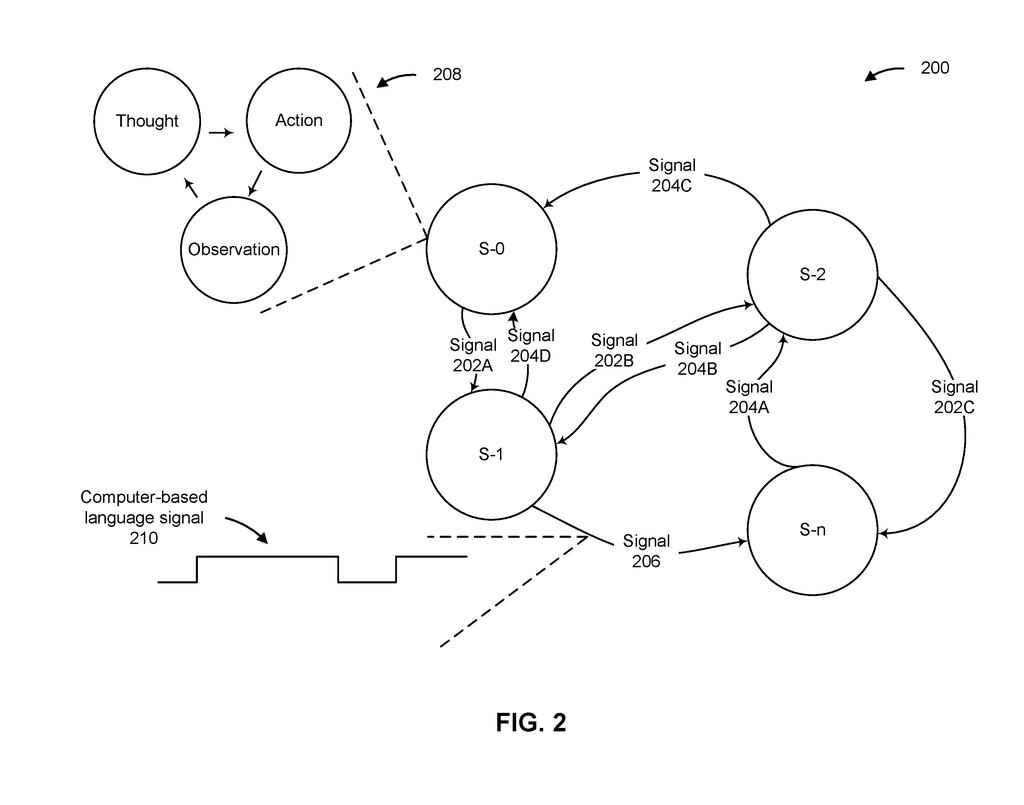
How IBM's self-checking AI agent loop works
An assembly line robot welds a car door, and a camera overhead checks every seam before the door moves on. If the weld looks off, the robot gets a signal to fix it on the spot. IBM is applying that same idea to AI software.
The patent describes a two-layer system for AI agents, programs that carry out tasks autonomously. The first layer does the work and produces an answer. The second layer reviews that answer, spots any errors, and sends a correction signal back down. The first layer then either revises its answer or confirms that it already fixed the underlying problem. The whole loop happens before any bad output leaves the system.
For you as a user, this matters because AI agents are increasingly being trusted to write code, draft reports, and make decisions with minimal human oversight. A system that can catch its own mistakes internally is a step toward AI pipelines that don't require a person to babysit every result.
… receive a second output, as an indication of a second state of the first layer, from the first layer, the second output being revised from the first output based at least in part on the indication of the error …
Translation: The supervisor layer gets a corrected answer back after pointing out the original mistake.
Inside IBM's two-layer error-reflection architecture
The patent describes a hierarchical workflow made up of at least two layers, where each layer is a stage in an automated AI pipeline.
- Layer one executes a task and produces a first output, which the patent calls a record of the system's "first state." Think of it as a draft answer.
- Layer two acts as a reflection layer: it ingests that draft, evaluates it against some criteria or known-good baseline, and generates an error signal pointing back at layer one.
- Layer one responds by either revising its output (a new "second state") or confirming that it corrected the underlying operation that caused the error, leaving the output unchanged but fixing the process.
The key engineering idea is that the feedback loop is structural, not bolted on. The second layer is generated as part of the same workflow-construction step, so the reflection capability is built into the pipeline from the start rather than added as an afterthought.
This pattern is closely related to what AI researchers call self-reflection or critic-agent architectures (where one AI model evaluates another's work), but IBM's claim frames it as a general hierarchical workflow method that can apply to any multi-step automated process, not just large language model chains.
… the second output may be the same as the first output after correcting performance of one or more operations at the first layer.
Translation: Sometimes the output stays the same, but the underlying steps are fixed to run correctly.
What self-correcting AI agents mean for enterprise software
As companies deploy AI agents for real business tasks, the central worry is reliability. An agent that writes a wrong answer confidently and passes it downstream can cause cascading failures in automated pipelines. IBM's approach embeds a correction checkpoint inside the workflow itself, which means errors can be caught and resolved without a human having to monitor every step.
The practical target here is enterprise automation, the kind of multi-step AI workflows IBM sells through its watsonx platform. A built-in reflection layer could reduce the need for manual review in high-stakes pipelines like compliance checks, code generation, or document processing. IBM's AI-agent filings sit alongside a broad wave of new Big Tech patents targeting the reliability layer of autonomous AI systems, a space that is heating up fast as production deployments expose the real cost of unchecked agent errors.
The design trades latency and compute for reliability: every task now takes at least two passes, execution then reflection, meaning slower outputs and higher inference costs. For low-stakes or time-sensitive work that overhead could outweigh the benefit, and the patent gives no signal for when the system skips reflection. The deeper risk is that the reflection layer itself can be wrong, shifting the reliability problem up one level rather than solving it. Still, for enterprise workflows where a wrong answer costs real money, a second pass is almost certainly worth paying for.
There are more where this came from
We read every patent application Big Tech publishes and send you the ones worth knowing. Plain English, free, every week.
The drawings
10 drawing sheets from US 2026/0236340 A1 · click any drawing to enlarge


Want this weekly breakdown for a company we don't cover? Patentlyze Pro →
Be the first to weigh in