
IBM Patents a System That Stops Its AI From Inventing Fake Database Answers
AI chatbots famously make things up — and when they're answering questions about your company's live database, that's a serious problem. IBM's new patent describes a pipeline designed to catch those invented answers before they cause real damage.
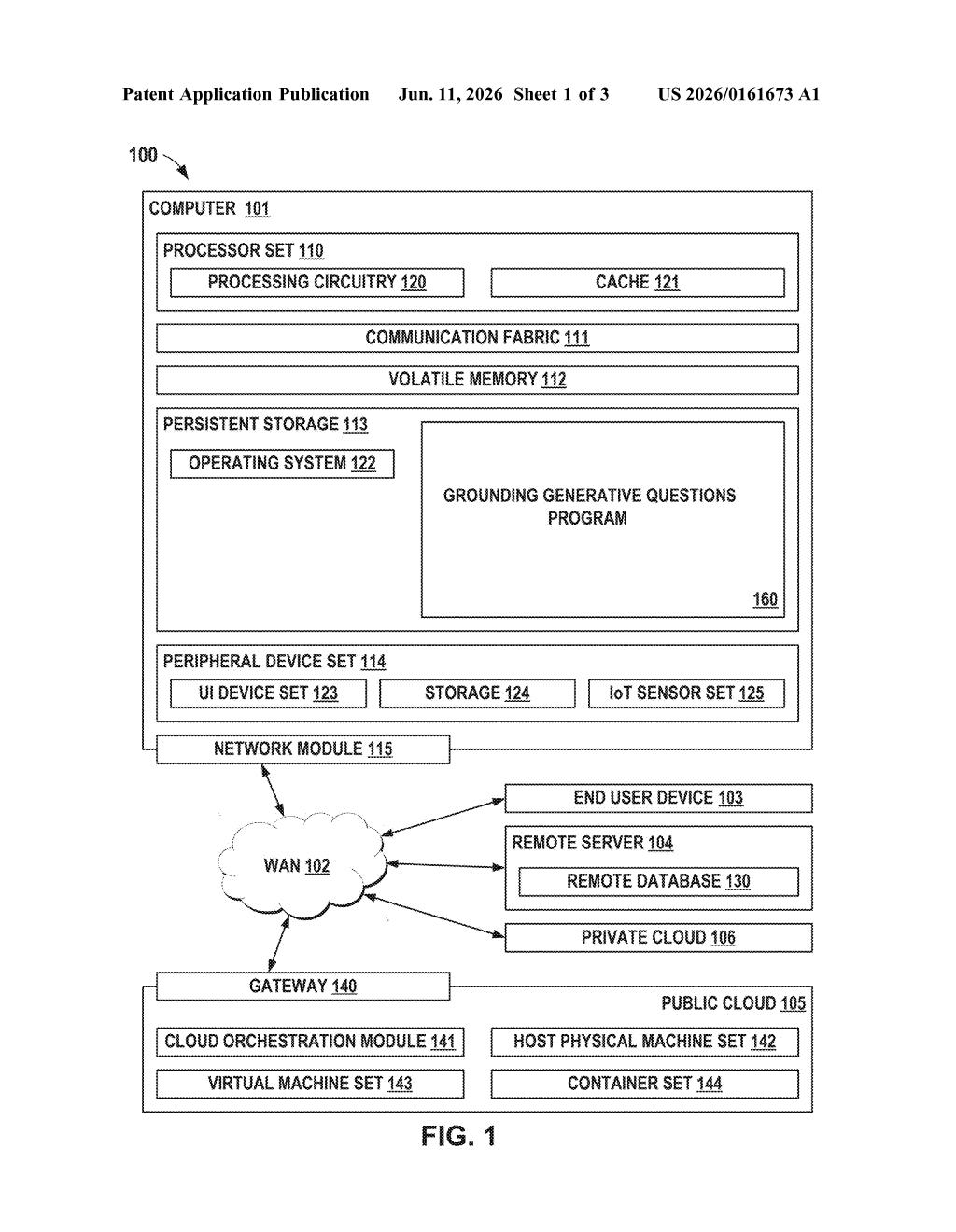
What IBM's hallucination-prevention system actually does
Imagine asking an AI assistant, "How many orders did we ship last quarter?" and the AI confidently gives you a number — except it pulled that figure from thin air, not your actual database. That's called a hallucination, and it's one of the most frustrating failure modes of modern AI tools.
IBM's patent describes a system that fights this by giving the AI a tightly controlled map of your database before it ever generates an answer. Instead of letting the AI roam freely, the system first reads your database's structure, simplifies it into something the AI can reliably work with, and then forces the AI to produce answers that can be checked against real table columns and data fields.
Every question the AI generates also comes with a matching SQL query — essentially a formal, checkable instruction to the database. A separate validation tool then confirms whether that query actually makes sense given your real data. If it doesn't, the question gets flagged. Think of it as a fact-checker that runs in the background every time the AI opens its mouth.
How the SQL parser catches bad AI-generated questions
The patent describes a multi-step pipeline for keeping an LLM (large language model) honest when it's tasked with generating questions and queries against a real corporate database.
Step one: read the database map. The system retrieves the database's schema — a technical blueprint that lists every table, column, and data type. It then uses an AI algorithm to simplify that schema, stripping out complexity that might confuse the main language model.
Step two: build a constrained prompt. Using the simplified schema, the system automatically builds a custom prompt (a set of instructions) that tells the LLM exactly what it's allowed to reference. The LLM doesn't just get a free-form question; it gets guardrails.
Step three: generate questions with built-in receipts. The LLM produces questions — but it must also produce a corresponding SQL representation (a formal database query) and label each question by type. This gives the system something concrete to check.
Step four: validate with an SQL parser. An SQL parser (a tool that reads and analyzes database query code the way a grammar checker reads sentences) inspects each generated query. It confirms that every column and table the AI referenced actually exists in the real schema. If the AI invented a column name, the parser catches it.
What this means for businesses using AI to query their data
For any business using AI to interact with its own databases — think enterprise analytics, customer service bots, or internal reporting tools — hallucinated answers aren't just embarrassing, they can drive genuinely bad decisions. An executive who gets a confident but fabricated sales figure may act on it. IBM's approach attempts to make AI-generated database queries verifiable by design, not just accurate by luck.
This also points to a broader trend: rather than trying to make LLMs less prone to hallucination in general (a hard problem), companies like IBM are building structural guardrails — forcing the AI to work within provably real data before it ever surfaces an answer to a user. That's a more practical near-term fix for enterprise deployments where data accuracy is non-negotiable.
This is unglamorous but genuinely useful engineering. Hallucinations in enterprise database contexts are a real blocker for AI adoption, and IBM is tackling the problem with a concrete, checkable mechanism rather than vague prompting tricks. It won't generate headlines, but it's exactly the kind of reliability infrastructure that makes the difference between a demo and a deployed product.
There are more where this came from
We read every patent application Big Tech publishes and send you the ones worth knowing. Plain English, free, every week.
Want this weekly breakdown for a company we don't cover? Patentlyze Pro →