
IBM Files Patent for Trimming the Run Time of AI Gene Analysis Without Changing Results
IBM has a patent application for making gene-analysis AI run faster, plus a built-in check that going faster didn't change what the AI concludes.
What IBM's gene-ranking speed check does
You're a biologist waiting on a computer to work out which of roughly 20,000 genes are most closely tied to a certain kind of cell. The job can take days instead of hours, and sometimes it simply breaks partway through.
You could speed it up by feeding the AI shorter chunks of data, but how do you know the answer didn't change? IBM's patent application lays out a check. It runs the same analysis ten times at each setting, records where the top genes land in the ranking, and measures how much those rankings wobble.
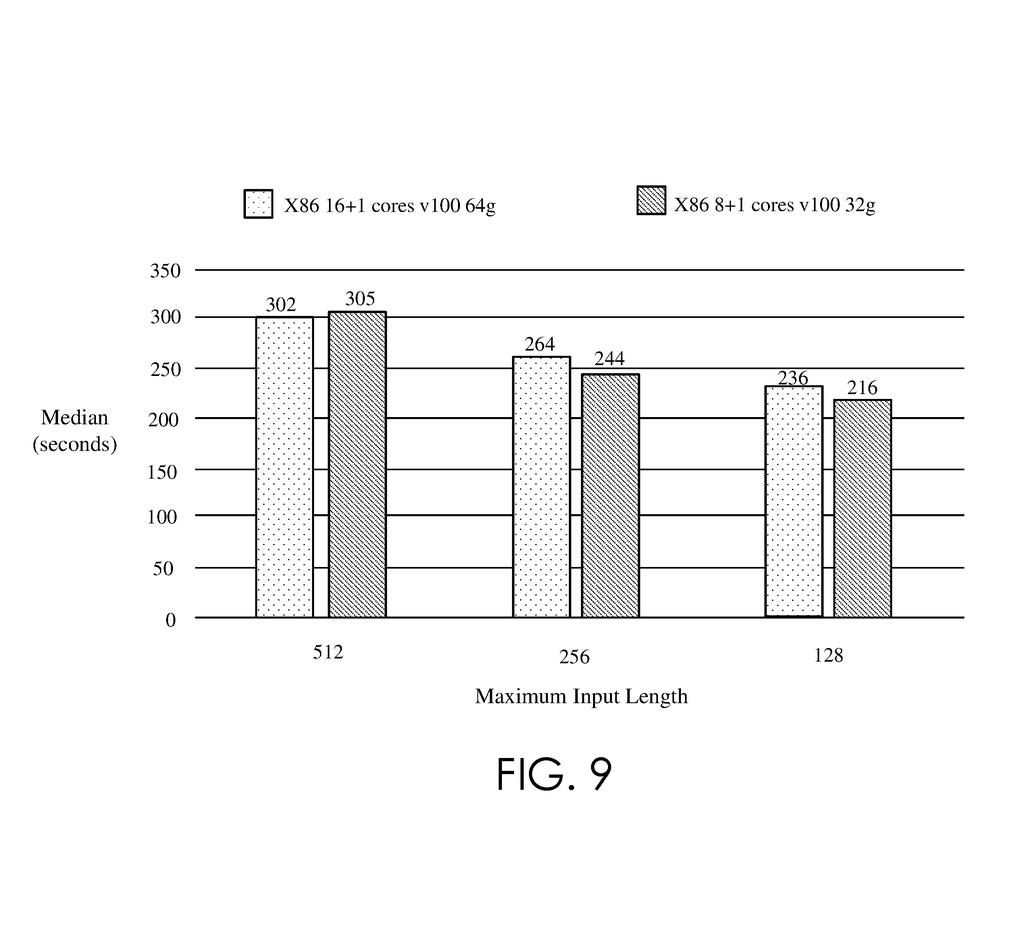
If the wobble stays under a limit you set, the faster setting is safe to use. In IBM's example, shortening the input from 512 to 256 bytes cut run time by 13% to 20% while the rankings held up.
Different sets of configuration parameter values are evaluated by ranking genes based on their association strengths with a given cell type.
Translation: The system tests different settings by sorting genes according to how strongly they link to a specific cell type.
How IBM tests settings by repeating runs
A foundation model is a large, general-purpose AI trained on huge amounts of data, then adapted for specific jobs. Here the filing uses one built for single-cell genetic analysis (reading gene activity inside individual cells), such as a model called scBERT. Before data reaches the model, a data collator (a preprocessing step that cuts, pads and arranges the input) is configured with a few settings:
- Pad to multiple: pads inputs so their lengths line up, for example in multiples of 16.
- Maximum input length: caps how much data goes in at once, for example 128, 256 or 512 bytes.
- Sequence order: whether data goes in as-is or shuffled.
- Batch size: how many fragments of the same cell the model sees together.
For each candidate set of settings, the method runs the model on one cell type (the example uses a goblet cell) and gets a score for how strongly each gene is linked to it. It ranks the genes, keeps the top three plus three extra ones (the 28th to 30th), and repeats this ten times. It then takes each gene's median rank (the middle value across runs).
Next it measures the standard deviation (how spread out the results are) and compares it to a threshold. It also records the median running time, then picks the fastest setting that stays consistent. In one example, 128 bytes made the lower-ranked genes jump around too much, so 256 was recommended.
Why faster gene analysis matters to labs
If you run or depend on gene-analysis software, the practical payoff is time. The filing says careless settings can stretch a job from hours to days or make it fail outright, and its examples show median run times dropping 13% to 29% at shorter input lengths. It also says this kind of analysis feeds work such as finding candidate medications.
One detail stands out: a bigger machine did not automatically win. In the filing's tests, an 8-core setup finished sooner than a 16-core one at the two shorter input lengths. The method is aimed at developers and scientists, so you won't see it as a button in an app. It is a way to tune AI tools that scientists use behind the scenes.
IBM's 59th filing we've tracked in our AI guardrails race watch since May adds to earlier work like a two-layer tracing system and live security rule rewriting.
Claim 1 describes a specific routine. It runs the model on one cell type, ranks the genes, keeps a set of top genes plus a set of extra ones, repeats the runs, takes median ranks, checks the spread against a threshold, and weighs that against median running time. Every one of those steps is required.
The claim stays open on the details. It names no particular setting and gives no gene count. The later claims fill that in with four named settings and three genes per set. If granted, the main claim would cover anyone tuning a gene-analysis AI by this repeat-and-compare routine, whichever settings they adjust.
It is a housekeeping idea for labs, and a sensible one. The filing's own examples show run times 13% to 29% shorter with consistent rankings, which makes it a practical tool for scientists who run these models.
Get our take in your Top Stories
Liked this breakdown? Add Patentlyze as a preferred source on Google, and our plain-English take shows up more often in your Top Stories the next time IBM patent news breaks.
There are more where this came from
We read every patent application Big Tech publishes and send you the ones worth knowing. Plain English, free, every week.
The drawings
11 drawing sheets from US 2026/0311814 A1 · click any drawing to enlarge


Want this weekly breakdown for a company we don't cover? Patentlyze Pro →
Be the first to weigh in